Embarking on a Journey: Crafting Your Own Fantasy World

In the realm of literature, there are few experiences as exhilarating as the creation of a fantasy world. It’s a process that combines the boundless potential of your imagination with the structured craftsmanship of storytelling. Whether you’re an aspiring author looking to pen your first fantasy novel or a seasoned writer aiming to delve deeper into the genre, the adventure of world-building and character creation is both rewarding and intricate. Let’s explore the essentials of creating your own fantasy universe, rich in detail and vibrant with life, while drawing inspiration from my own journey with the current novel I’m writing.

The Foundations of Your World

1. Geography and Landscapes

Topography: Begin by sketching the physical features of your world. Are there sprawling mountain ranges, dense forests, or vast deserts? Each landscape can influence the culture and lifestyle of its inhabitants. For example, in my work, the varied terrains shape the resilience and adaptability of the characters. Think about how different environments can provide unique challenges and opportunities for your characters.

Climate and Weather: Consider how the climate affects the environment. Does your world have distinct seasons, or is it perpetually shrouded in mist? Weather patterns can add layers of realism and affect plot progression. The shifting seasons in my stories often play a crucial role, testing the endurance and survival skills of the protagonists. Imagine how extreme weather events could force characters to make pivotal decisions or alter their paths.

Natural Resources: Identify the resources that are abundant or scarce. This can shape economies and lead to conflicts or alliances. A region rich in magical crystals, for instance, could become a hub of power and conflict. Think about how access to resources affects social structures, trade, and power dynamics in your world.

2. Cultures and Societies

Races and Species: Populate your world with diverse beings, each with unique traits, histories, and societies. Think beyond humans to include elves, dwarves, dragons, or entirely new creations. The diversity of races in my stories adds depth and richness to the narrative. Consider how different species can bring unique perspectives and skills to the story.

Languages and Dialects: Create languages or dialects that reflect the diversity of your world. Even a few unique words can add depth to your setting. In my writing, the use of ancient languages holds secrets and power, providing a sense of history and mystery. Developing a lexicon for your world can enhance immersion and provide clues to cultural nuances.

Traditions and Customs: Develop cultural practices, festivals, and rituals. These elements enrich your story and give readers a sense of continuity and history. For example, annual festivals and rituals in my work serve as both cultural touchstones and pivotal plot events, bringing characters together and revealing societal values. Think about how traditions can reveal character traits and advance the plot.

3. History and Mythology

Ancient Legends: Craft myths and legends that have been passed down through generations. These stories can influence present-day events and character beliefs. The legends in my current projects provide unifying myths that drive the characters’ quests and shape their destinies. Consider how ancient legends can create a sense of depth and continuity in your world.

Historical Events: Outline major historical events that have shaped your world. Wars, alliances, natural disasters, and technological advancements can provide a backdrop for your narrative. In my stories, past conflicts and their aftermath set the stage for current tensions and alliances. Think about how historical events can influence the current political landscape and character motivations.

Breathing Life into Characters

1. Heroes and Villains

Protagonists: Your main characters should be relatable and complex. Give them strengths, flaws, and motivations that drive their actions and decisions. In my writing, each character has distinct strengths and weaknesses that contribute to their individual arcs and interpersonal dynamics, creating a rich, character-driven narrative.

Antagonists: A compelling villain is as essential as a memorable hero. Develop their backstory and motivations to create a nuanced adversary. The antagonists in my projects are not just sources of conflict but characters with their own goals and history, making them formidable and believable opponents. Think about how your villain’s actions and motivations can challenge your protagonist and drive the plot.

2. Supporting Cast

Allies and Mentors: Introduce characters who aid the protagonist, offering guidance, skills, or resources. They can provide support and challenge the hero’s beliefs. The mentor figures in my stories help the protagonists navigate their journeys, providing wisdom and skills crucial to their success. Consider how mentors can shape the protagonist’s growth and development.

Rivals and Foils: Characters who oppose or compete with the protagonist add tension and conflict. Their presence can highlight the protagonist’s growth and development. Rivals in my writing constantly challenge the protagonist’s decisions, pushing them to become better leaders. Think about how rivals can create dynamic and engaging subplots.

3. Character Arcs

Personal Growth: Ensure your characters evolve throughout the story. Their journeys, both external and internal, should be marked by challenges and revelations. Each character in my projects undergoes significant personal growth, learning to balance their individual desires with their responsibilities to each other and their world. Consider how challenges and successes shape your characters’ development.

Relationships: Develop meaningful relationships between characters. Friendships, romances, and familial bonds can drive emotional investment in your story. The bonds between characters in my writing provide strong foundations for their adventures and conflicts. Think about how relationships can enhance the emotional depth and complexity of your narrative.

The Magic of Plotting

1. Building a Strong Narrative

Conflict and Resolution: Every great fantasy novel revolves around conflict. Whether it’s a battle against dark forces or a personal struggle, the resolution should feel earned and satisfying. In my work, central conflicts involve both external battles and internal struggles, creating layered and compelling narratives. Consider how different types of conflict can enrich your plot.

Subplots: Weave in secondary storylines that enrich the main plot. These can involve supporting characters or delve into the history and politics of your world. Subplots in my stories explore themes of loyalty, betrayal, and redemption, adding depth and complexity to the main storyline. Think about how subplots can enhance the thematic richness and character development of your story.

2. Pacing and Structure

Tension and Release: Maintain a balance of high-stakes moments and quieter, character-driven scenes. This rhythm keeps readers engaged and invested. My writing balances intense action sequences with moments of introspection and character interaction, creating a dynamic and engaging narrative flow. Consider how pacing can enhance the emotional impact and readability of your story.

Cliffhangers and Hooks: End chapters with questions or revelations that compel readers to keep turning the pages. Each scene should contribute to the overall narrative momentum. In my projects, cliffhangers and revelations keep readers on the edge of their seats, eager to discover what happens next. Think about how you can use suspense and intrigue to maintain reader interest.

3. Themes and Messages

Core Themes: Identify the central themes of your story. Whether it’s the battle between good and evil, the quest for identity, or the power of friendship, these themes should resonate throughout your narrative. Themes of brotherhood, sacrifice, and destiny are central to my writing, providing a unifying thread for the story. Consider how themes can add depth and coherence to your narrative.

Moral Dilemmas: Challenge your characters with ethical choices that reflect the complexity of real life. These moments can add depth and provoke thought in your readers. Characters in my stories face numerous moral dilemmas that test their values and beliefs, adding complexity and realism to their journeys. Think about how moral challenges can enhance character development and thematic richness.

Creating an Immersive Experience

1. Sensory Details

Visuals: Paint vivid pictures with your words. Describe the colors, shapes, and movements within your world. The richly described landscapes and environments in my writing transport readers into the heart of the story. Consider how detailed visual descriptions can enhance immersion and create a vivid setting.

Sounds: Incorporate the sounds of your environment, from the rustling of leaves to the clashing of swords. The auditory details in my stories add an extra layer of realism. Think about how sounds can create atmosphere and enhance the reader’s experience.

Smells and Tastes: Engage all the senses by mentioning the scents of a marketplace or the taste of a celebratory feast. The sensory details in my work bring the world to life, making it tangible and immersive. Consider how incorporating smells and tastes can add depth and richness to your descriptions.

2. Emotional Depth

Inner Monologues: Delve into your characters’ thoughts and feelings. This insight creates a strong connection between the reader and the character. The introspective moments in my stories provide valuable insights into the characters’ motivations and fears. Think about how inner monologues can enhance character development and reader empathy.

Symbolism: Use symbols and motifs to add layers of meaning. These can be objects, colors, or recurring elements that reflect broader themes. For example, in the first book of my “Brothers Three series, there is an item called the Spindelum of Time,” the Time Spindelum itself represents the fluidity and fragility of time, adding a layer of meaning to the characters’ quests and journey through the world. Consider how symbols can subtly reinforce themes and add a sense of continuity and cohesion to your narrative.

Conclusion: The Art of Fantasy Writing

Creating a fantasy world is an art that requires imagination, patience, and attention to detail. It’s a journey of discovery, where every element you design contributes to a rich and immersive narrative. As you embark on this adventure, remember that your world is a reflection of your creativity and passion. Embrace the process, and let your story unfold with all the wonder and complexity that fantasy offers.

Personal Reflections and Encouragement

As I work on my own novel called The Brothers Three which is a coming-of-age high fantasy novel with multiple books in the series, I find that the most rewarding part of writing fantasy is the ability to explore new ideas and push the boundaries of my imagination. This genre allows us to create worlds where anything is possible, where the only limits are those we set for ourselves.

For those of you venturing into fantasy writing, I encourage you to dive deep into your creativity. Let your imagination guide you, and don’t be afraid to take risks. Your unique voice and vision are what will make your world stand out. Happy writing!

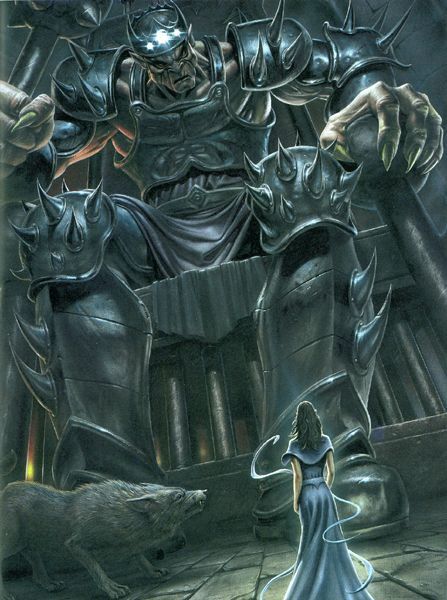
The Origins Of Evil – Part Four – The Death of Morgoth

Hail and Well Met Everyone!

You might have been wondering where in the world I had vanished…. well I won’t lie, it’s been a nice little three week break over the holidays and beginning of the new year.  I’m finally back on a regular schedule of writing, planning, and getting new topics lined out for the website.  This is a rather long article of lore….So let’s not dilly-dally any longer and get to it shall we.

When we left off last time we had just seen the Battle of Flames and a small band of men called the Edain who were able to withstand the corruption of Morgoth and began feeding the elves information about the dark lords every move.

AnghbandSiege of Angband

The siege of Angband was broken 455 years after Fingolfin came to Middle-earth, when Morgoth started the War of Sudden Flame or it’s Sindarin name “Dagor Ballogach”. One cold winter night, when the Elves were off guard, Morgoth brought terrible rivers of fire and lava from Thangorodrim and poisonous fumes from the Iron Mountains. The Elves were completely unprepared for such an assault, and many Noldor perished on the Ard-galen, as the fires consumed it and transformed it into a lifeless wasteland, forever after known as the Anfauglith.

With the exception of Maedhros and his fortress upon the Hill of Himring, the sons of Feanor and Finarfin were overthrown and defeated. Fingolfin and Fingon only just barely managed to defend Hithlum from Morgoth’s onslaught, as the mountains surrounding it provided an effective barrier against Morgoth’s fires. The Elves were completely driven from the forests of Dorthonion, and many of the Grey elves forsook the war altogether and went to Doriath. When news came to Fingolfin of the defeat of the Elven forces, a great despair came upon him. Believing the Noldor to have been defeated beyond any hope of recovery, he rode forth from Hithlum to the gates of Angband in a wrath so potent that he was said to have resembled Orome himself.  When he arrived at Morgoth’s fortress he challenged the Dark Lord to come forth and fight. Though Morgoth did not wish to, Fingolfin’s challenge was heard by all in Angband, and was given in such an insulting manner that to ignore it would have been to lose face before his captains.

Morgoth came forth dressed in his black armour from Angband to confront Fingolfin. Wielding the terrible hammer Grond in which he attempted to kill the Elven-king repeatedly, but succeeded only in carving many fiery pits in the ground from his missed strikes. Fingolfin managed to avoid Morgoth’s blows, and wounded the Dark Lord seven times. But at last, Fingolfin grew weary, and Morgoth brought him to his knees. Fingolfin arose each time to continue the fight, but eventually he fell backwards into one of the many pits formed by Morgoth’s missed attacks. Morgoth took his foot upon Fingolfin’s neck and killed him, but not before Fingolfin, cut Morgoth’s foot with his sword.  Morgoth enraged broke the Elven-king’s body, but Thorondor, the King of the Eagles, swooped down on Morgoth, marring his face with his talons, and rescued the body of the Elf-king.

Fingolfin’s last stroke gave Morgoth a permanent limp, and the pain of his seven wounds could not be healed, nor were the scars ever erased.

After the battle, Morgoth sent out spies to watch over the Edain men, but when the Edain refused his false offers of peace he summoned the Easterlings over the Blue Mountains. However, he soon realized that he had underestimated the resolve and valor of his foes, for the Elves and Edain, recovering from the initial shock of Morgoth’s onslaught, had begun to make small gains against his outlying forces. He therefore checked his advances, and withdrew the main groups of Orcs to Angband.  Though Morgoth’s victory had been great, his own losses had been as numerous as the losses that had been accrued by the Elves. Seven years passed before Morgoth renewed his offensive abilities. He assailed Hithlum with great strength but just as he was on the verge of victory, Cirdan and a large army under his command came at the last moment and helped Fingon to turn the Orcs back.

Morgoths CourtThe Quest of the Silmaril

Some time later, the Elven-maiden Luthien and her human lover Beren, seeking to recover a Silmaril, came disguised to Morgoth’s court. Morgoth was able to see through her disguise, but she was undaunted by his eyes, and offered to sing for him. As she sang, Morgoth conceived a lust and an evil more abominable than any he had yet committed, and allowed her to continue singing. This was his downfall; suddenly shadow hid her, and she sang a terrible song of power that cast a spell of sleep.

All Morgoth’s court was cast down in a deep sleep by her song, but the Silmarils burned, and became so heavy that the head of Morgoth sagged upon his chest. He fell from his throne, the Iron Crown rolled away with a clang, and Beren cut a Silmaril from the neck of Morgoth.  However, rather than leaving immediately with his prize, he tried to take another of the Silmarils.  As he attempted to pry the second jewel loose, his knife snapped.  One shard struck Morgoth’s face, and he began to awaken. Beren and Luthien fled, but the dreaded werewolf Carcharoth bit off Beren’s hand. Then Morgoth awoke, and in a rage he and his court roared up in pursuit, only to see Thorondor carrying off the raiders. Morgoth’s rage at the loss of the Silmaril caused the Iron Mountains to begin erupting, but Morgoth wasn’t able to recover the Silmaril.

Soon after, Morgoth became aware that Maedhros was making a great army against him, and driving his orcs off the northern heights.  He took council against them and prepared his forces for a major confrontation. When the Elves made it to Angband, the Battle of Nirnaeth Arnoediad, began. Ultimately, the battle was a complete and decisive victory for Morgoth. The power of the Elves and the Edain were broken against Morgoth. The Noldor from the north of Beleriand, and all their great kingdoms besides Gondolin were destroyed. The Edain who did not flee were enslaved by Easterlings, and Hurin was taken captive.

tumblr_static_tumblr_static_bbp7i3c1334gos0wsc0o88k8w_1280The Cursing of Hurin

Morgoth was also well known for the imprisonment of Hurin of the House of Hador during the Nirnaeth Arnoediad. In the last hours of the battle Hurin and his kin defended Turgon, for he was the last heir to the throne of Gondolin and of Fingolfin after his brother, Fingon, died in battle. Turgon narrowly escaped the clutches of the orcs due to the valor of Hurin and Huor and their men.

Unfortunately, all but Hurin fell after the onslaught of Morgoth’s forces. After slaying untold numbers of Trolls and Orcs, Hurin was captured by Gothmog and sent to Angband. Morgoth knew that Hurin had been to Gondolin, and knew of its location. Morgoth sought to extract the information from him but, despite inflicting terrible torment upon his captive, was unsuccessful.

hqdefaultMorgoth sentences Hurin

From a distance Morgoth put the son and daughter of Hurin, Turin and Nienor, under a species of diabolic oppression: his thought followed them and gave them bad luck, though they were not possessed. By this means he drove them at last to madness and despair; though there is doubt as to whether in the extremity of his malice he cheated himself, as their madness saved them from damnation.

Morgoth brought a great curse upon the people – “Behold! The Shadow of my thought shall lie upon them wherever they go, and my hate shall pursue them to the ends of the world.” But all whom you love my thought shall weigh as a cloud of Doom, and it shall bring them down into darkness and despair. Wherever they go, evil shall arise. Wherever they speak, their words shall bring ill counsel. Whatsoever they do shall turn against them. They shall die without hope, cursing both life and death.

And so Hurin stayed and was chained atop Thangorodrim, forever watching his homelands fall under the shadow of Morgoth until he released him. Turin, who was valiant and powerful, nearly escaped the curse, as feared by Morgoth, but could not leave it. He and his sister perished and the curse of Morgoth on the Children of Hurin was fulfilled.

howe_gondolinNZThe Fall of Gondolin

Though he had been unable to force Hurin to reveal the location of the last great Elven kingdom, Morgoth eventually captured Maeglin, son of Turgon, the King of Gondolin. Threatened with unimaginable torment, Maeglin offered the secrets of Gondolin’s defenses in exchange for his own wellbeing. Additionally, he made a promise to kill Tuor personally, and was given permission by Morgoth to take Idril for himself.  With the promise of having Idril, Maeglin became Morgoth’s servant and sent him back to Gondolin to aid the invasion from within when the time came.

Soon after, Morgoth assaulted Gondolin, the last great realm of the Noldor, and with a superior force and Maeglin’s treacherous information, the city was destroyed without hope and quickly fell.


angliflin the blackFinal defeat and War of Wrath

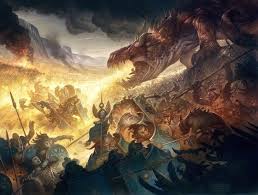
However, Morgoth’s triumph was relatively short lived. Due to the plea actions of Earendil, the Valar were persuaded once again to take up arms against Morgoth’s tyranny. Morgoth himself did not expect that the Valar would ever help the Noldor after the terrible sins they had committed, and did not foresee the assault from Aman. But the Valar took pity on the Noldor, and a great battle began between Morgoth and the Host of Valinor. Morgoth emptied all of Angband, and his devices and engines and armies of slaves were so various and powerful the fighting spilled across all Beleriand.

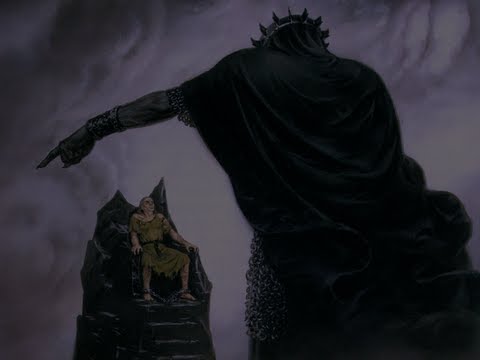
In the end, Morgoth’s forces were completely defeated. The Balrogs were destroyed, except a few that fled and hid themselves in the caverns of the earth, and the Orcs were slaughtered. Morgoth hid in fear, and dared not come forth himself, but he had one last weapon at his command; the monstrous Winged Dragons. From out of the pits of Angband he called them to battle, with great power and fire, they drove back the Valar. But then Earendil came with Vingilot, accompanied by Thorondor and all the great birds, and killed Ancalagon The Black, whose great body fell upon the towers of Thangorodrim destroying them. Morgoth, utterly defeated stood and watched. He fled into the deepest of his mines, but his feet were cut from under him, and he was cast down upon his face. He was bound with the chain Angainor, his Iron Crown was beaten into a collar for his neck, and he was thrust through the Door of Night into the Timeless.

This concludes our lore series on the dark lord, but next week we kick off a brand new series (The Kings of Gondor) so until next weeks episode, I’m your host Iogro Merrybelly and I bid you a fine farewell!

scr.ee tags:

A Years Journey With A Hobbit – 2014 Review

Hail and Well Met Friends!

I just want to say thank you to everyone for a year full of community, gaming, making new friends and its been a huge pleasure connecting with you all! I wanted to share the journey and how you all helped keep things fun and exciting!  Can’t wait for what 2015 holds and the new connections awaiting to be made. Everyone have a fantastic New Years and I’ll see you in 2015.

The WordPress.com stats helper monkeys prepared a 2014 annual report for this blog.

Here’s an excerpt:

A New York City subway train holds 1,200 people. This blog was viewed about 7,100 times in 2014. If it were a NYC subway train, it would take about 6 trips to carry that many people.

Click here to see the complete report.

scr.ee tags:

#2014 #ayearinreview

I Once Was a Hobbit

Hail friends!

This week we continue in our lore series of villains in Middle Earth.  We are taking a look at a very mysterious creature.  I hope you enjoy the story!

a-08The Corruption Takes Place

Once a predecessor of the Stoorish Hobbits, Smeagol spent the early years of his life living with his family under the Matriarch, which was his grandmother.  Around the year 2463 in the third age, Smagol became the fourth Bearer of the One Ring, after Sauron, Isildur, and Deagol, who was his cousin.  On Smeagol’s birthday, his cousin and him went fishing in the Gladden Fields north of the mountains.  It was there that Deagol found a gold ring, after being pulled into the water by a large fish.  Almost immediately, Smeagol fell to the power of the ring and demanded it as a birthday present.  When Deagol refused, Smeagol promptly went into a panicked rage and began fighting with Deagol over the ring.  Smeagol was so engulfed with rage he strangled his cousin to death and finally took the One Ring.  For seven years Smeagol was corrupted by the ring and finally banished by his people…he was forced to find a home in the nearby Misty Mountains.  The Ring’s malignant influence twisted his body, as well as his mind, and prolonged his life far beyond its natural limits. He called the ring his “Precious” or his “Birthday Present,” the latter as a justification for killing his cousin.

121217_r22934_p465A Home in a Cave

He lived in the Misty Mountains for over four hundred years, living on raw blind fish (which he caught from his small row boat), bats and Goblins when he could get them as Goblin City was very close to his home.  In later years, he found Hobbit and Elven food completely repulsive.

During his centuries under the Ring’s influence, he developed a sort of dissociative identity disorder: Smeagol, being his former hobbit personality, still vaguely remembered things like friendship and love, while Gollum, his now corrupted personality, was a slave to the Ring and would kill anyone who tried to take it. Years later, Samwise Gamgee gave him the nicknames, “Slinker” (for his eager-to-please demeanor), and “Stinker” for his corrupted personality.  His two personalities often argued when he talked to himself and he had a love/hate relationship, which mirrored Gollum’s love and hatred for the Ring and for himself.

In the year 2941, during the Quest of Erebor, Bilbo Baggins stumbled upon the lake on which Gollum lived and found the One Ring.  Gollum had lost the Ring while squabbling with an imp goblin in the caves leading to the lake, though in some fact it is thought that the ring abandoned Gollum, as it was known to have a will of its own. As Gandalf says later, it looks after itself, trying to get back to Sauron.  After the infamous Riddle Game that Bilbo played with Gollum and in beating him, Gollum refused to show Bilbo the promised way out and had plotted to murder him. When he went to get his “Precious,” he found that it was gone. He suddenly realized the true answer to Bilbo’s last riddle—”What have I got in my pocket?” – breaking into a rage he began to chase Bilbo into the tunnels. Bilbo stumbled across the Ring’s power of invisibility as he ran, allowing him to follow Gollum to the back entrance of the cave and make his way out safely.

We shall pick up next week and continue our episode to find out what happens with Gollum and the Ring!

Until then, I’m your host Iogro Merrybelly and I bid you a fine farewell!


scr.ee tags:

A Watchtower Stands

images (10)The Great Watchtower

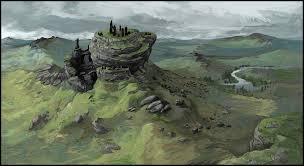
Weathertop as a lot of fans know it, but it’s true name was known as Amon Sul, which was a hill in the Eriador region of Middle-earth, the southernmost and highest summit of the Weather Hills, hence the name “Weathertop”. The watch tower at its top overlooked the Great East Road in central Eriador, east of Bree, about halfway between the Shire and Rivendell.

This great hill was a watchtower and according to the Atlas of Middle Earth, it was around a thousand feet tall and stood abroad against relatively flat lands around it.  The lower Weather Hills stretched northwards and offered a very commanding view of every direction.  There was a path that led from the north side of Weathertop to the other surrounding Weather Hills.

The strategic importance of Weathertop was recognised early, and during the reign of Elendil the Dunedain of Arnor built a watchtower on its summit, installing the most powerful of Arnor’s three Palantíri in the tower. This Palantír further enhanced Weathertop’s value, as it could be used for intelligence gathering and rapid communication with the King in Annuminas, or later in Fornost.

images (9)The Great Dividing Fall

In the third age around year 861, Arnor was divided into the kingdoms of Arthedain, Cardolan and Rhudaur.  Weathertop stood at the junction of their borders, and became the focus of a long-running territorial dispute between the three kingdoms, with frequent border skirmishes and minor wars. During this time, Weathertop may have changed hands on several occasions. By the latter part of the 14th century, Weathertop was controlled by Arthedain and Cardolan, which were at that time allied against Rhudaur and Angmar, and was the chief fortress in their fortified border with Rhudaur. The watchtower and fortifications were burned and destroyed in the year 1409 by forces of the Witchking.

King Arveleg I was slain while defending the watchtower, but the Dunedain of Arthedain saved the Palantír and took it to their capital at Fornost. By the time of the War of the Ring only a ring of broken stonework remained of the watchtower forever leaving it a broken ruin of Middle Earth’s great past.

scr.ee tags:

A Wizard For Himself – Part Three

Hail and Well Met Everyone!!

Last week when we left off Gandalf had just escaped Sarumans keep by the help of Gwaihir the Windlord. This week we pick up with more of the treacheries Saruman has been planning.

Gandalf EscapesDevious Plans Indeed

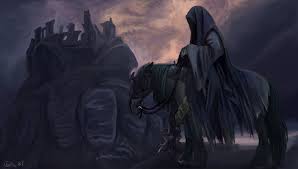
Two days after Gandalf’s escape the Nazgul came but Saruman persuaded the Lord of the Nazgul that he did not know the Ring’s location but Gandalf did and should seek him out. In search for Gandalf the Nazgul found Grima Wormtongue instead…Grima being the one who went to Saruman and told him Gandalf had been to Edoras, and where Gandalf learned Saruman had been hiding his knowledge of the Shire from them.  The Nazgul later learned that Saruman knew far more than he had revealed. On their way to the Shire, the Nazgul met one of Saruman’s Shire spies, from whom they got detailed maps of the Shire made by Saruman. They sent the spy back to the Shire after warning him that he was now in the service of Mordor.

Believing that he would find no pity from either quarter (a false assumption, since he was later offered pardon by Gandalf); Saruman now put all efforts into obtaining the One Ring for himself. Not all of these efforts ever became known, but they included sending spies to detain Frodo Baggins on his journey from the Shire, attacking Rohan with Uruk-hai, and dispatching raiding parties of Uruk-hai accompanied by Moria Orcs on likely routes the Fellowship might take through Rohan to go towards Gondor. One of those parties captured Peregrin Took and Meriadoc Brandybuck and shot Boromir “with many black-feathered arrows” when he tried to defend the Hobbits. This led Aragorn, Legolas, and Gimli on a search which eventually led to the Battle of Helms Deep as well as the Destruction of Isengard by the Ents, leading to the end of Saruman’s reign of power in the north.

lotr-board_ISENGARDHis Power Destroyed

“ You have become a fool, Saruman, and yet pitiable. You might still have turned away from folly and evil, and have been of service. But you choose to stay and gnaw the ends of your old plots. Stay then! But I warn you, you will not easily come out again. Not unless the dark hands of the east stretch out to take you! ”
–Gandalf the White

Saruman’s plans have failed, and he suffered a series of massive setbacks.  His network of spies in the Shire didn’t capture Frodo Baggins, and Eomer destroyed his only partially successful raiding party. His invasion of Rohan ended in disaster with the utter defeat of his army at the Battle of the Hornburg.  Leaving Isengard undefended resulted in its destruction at the hands of the Ents.

250px-John_Howe_-_SarumanConfined to Orthanc and with his servants scattered or killed, Saruman made one final unsuccessful attempt to turn Theoden and Gandalf over to evil.  Gandal then offered Saruman a chance for redemption, which involved surrendering his staff and the Keys of Orthanc as a pledge. Saruman had a moment of doubt but in the end pride, anger, and hate won over and he refused the chance of redemption.

Gandalf, who had returned from death to replace Saruman, as the White and the head of the Istari, expelled Saruman from the order and broke his staff. Saruman also lost the Palantír of Orthanc when Grima Wormtongue threw it off a balcony of Orthanc, undecided about which he hated more, Saruman or Gandalf, and hitting neither.


?????????????????????????????????????

A Wizards Great Fall

Left out of the final stages of the War of the Ring, Saruman eventually managed to persuade the Ents who kept him captive into letting him leave Isengard after he met the conditions of handing over the Keys of Orthanc. He then went to the Shire, which his agent Lotho Sackville-Baggins had brought under control. He spent his final days as a small-time criminal master in Hobbiton known as Sharkey, until he was beaten in the Battle of Bywater. In the aftermath of that battle, Frodo confronted Saruman and exiled him from the Shire, but before he could leave Gríma Wormtongue slit Saruman’s throat on the very doorstep of Bag End.

Though his physical body was dead, Saruman was a Maia and did not truly die.  His spirit separated from his body much like Sauron’s after the Downfall of Numenor. As an incorporeal spirit, he should have been called to the Halls of Mandos, but the story implies that he was barred from returning. Tolkien indicated that his spirit was left naked, powerless and wandering, never to return to Middle-earth.

Well friends, this wraps up our series on Saruman but we still have more dark villains of Middle-Earth to cover….so stay tuned.

Until next week I’m your host Iogro Merrybelly and I bid you a fine farewell.