Before Barakthûn was cursed, before the shadow consumed the land, there was Noctharion — the Seventh Throne. It was not yet the Fallen Kingdom. It was the Twilight Realm.
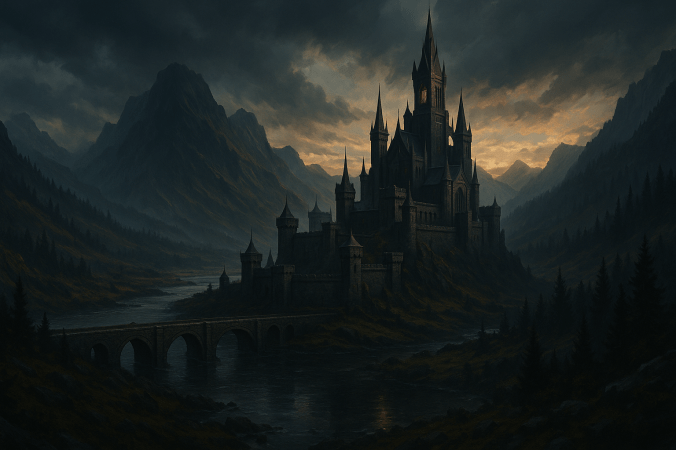
Where Gallandor gleamed with marble and sunlight, Noctharion stood in basalt and obsidian. Its skies were often storm-shrouded, its rivers deep and dark, its mountains black as iron. And yet, in this brooding beauty, there was majesty.
Noctharion was meant to be balance. Where Gallandor raised banners of gold and white, Noctharion flew crimson and midnight. Where Gallandor built temples to the Light, Noctharion raised citadels of endurance — fortresses meant to hold the line when others faltered.
They were not cruel, but they were proud. Not shining, but steadfast. Not joyous, but resolute.
It was dusk made kingdom.
The Twilight Realm
The Seventh Kingdom was carved from black stone cliffs, its fortresses rising like thorns against the horizon. Obsidian spires crowned its citadels, and basalt roads cut across the valleys like veins of shadow.
Its people believed themselves guardians of the dusk — the shield between the brilliance of Gallandor and the wild darkness beyond. They found beauty not in brightness, but in the strength to endure.
Among the Seven Thrones, they were the Iron Fist — the kingdom others trusted to hold the borders when the world trembled.
House Draemyr – The Twilight Bloodline
The rulers of Noctharion sat upon the Seventh Throne, proud and unyielding. The Draemyr line was famed for its fortress-lords, warrior-queens, and generals who shaped dusk into a weapon.
Ancestral Legacy
Valryon Draemyr – Founder of the line, called the Twilight Lord. Built the first obsidian citadels, declaring dusk as the shield between light and dark.
King Athelion Draemyr – The Stone Sentinel. Known for fortifying the borders of Eldoria with unbreakable bastions and commanding legions that never broke rank.
Queen Seranyth Draemyr – The Iron Rose. A warrior-queen who rode at the head of her armies and is said to have slain a giant alone at the Battle of Duskwatch.
Lord Malrec Draemyr – The Iron Voice. Famous for his uncompromising discipline and oratory; his decrees were said to echo across the mountains long after he was gone.
King Kaelor I Draemyr – The Shadowed Crown. Questioned why Noctharion should kneel beneath Gallandor’s light, planting the first seeds of ambition that would one day bloom into ruin.
The Later Line
Lord Veyric Draemyr – The most ambitious of his line. His reign marked the first whispers of division within the House, as branches of the family split between loyalty to Gallandor and hunger for power. His name would one day give rise to the Veylric Divide.
Lady Thalyss Draemyr – A courtly mastermind whose cunning words bent lords as surely as blades. Whispers claimed she courted shadows long before the kingdom itself fell to them.
Prince Althar Draemyr – The last heir before the fall into Morghast. A brilliant commander and tactician, but too proud to see the corruption seeping into his own bloodline.
Legacy of the Seventh Throne
The Draemyr dynasty embodied dusk — not light, not darkness, but the strength of the in-between. Yet within that strength grew a fatal flaw: the belief that they should not guard the crown, but be the crown.
That flaw fractured their House, leaving it vulnerable to whispers of power and, eventually, to the corruption that would make Noctharion the seedbed of Barakthûn.
Themes of Noctharion
Majesty of Shadow – Beauty found in endurance, dusk, and storm. Pride of Guardianship – The conviction that they alone were strong enough to defend Eldoria. The First Cracks – Seeds of ambition, jealousy, and hunger for dominion that set them apart from Gallandor’s unity.
Behind the Writing
Noctharion was always meant to stand apart. If Gallandor was the crown, Noctharion was the clenched fist.
Writing it as a kingdom of dusk and brooding beauty gave me the contrast I wanted against Gallandor’s marble light and Silvermoon’s starlit grace.
I wanted readers to feel the tragedy of it — that this kingdom wasn’t born wicked. It was noble, strong, even necessary. But nobility turned to ambition, and ambition turned to ruin. To me, that makes the fall into Barakthûn all the more heartbreaking.
Until Next Time…
Noctharion is only the beginning of the Seventh Kingdom’s tale.
Next, we’ll explore The Veylric Divide — how ambition split House Draemyr, how whispers of power fractured their unity, and how the Twilight Realm began its slow descent into shadow.
If dusk can be corrupted… what hope then for the crown of day?
Before the Brothers Three, before the Spindelum of Time, there was the war that nearly broke the world. The old songs call it the First Sundering. The people remember it as the Age of Ashes.
The War of All
It began over a thousand years ago, when Malakaroth, the Dread King, rose from the shadows. His power was unlike anything the world had faced before — a hunger not for land or gold, but for the very soul of creation. His armies moved like a tide across Eldoria, burning, corrupting, consuming.
This was no simple clash of kingdoms. It was a war of the world itself. Every people, every race — elves in their silver towers, dwarves in their deep halls, men in their fledgling kingdoms, halflings in their quiet valleys — were drawn into the struggle. Even creatures now lost to memory are said to have taken part, their names surviving only in half-sung songs.
It was the one time in all of Eldoria’s history when unity became a necessity. The banners of Silvermoon, Greenwood, Ironclad, Stormwatch, and countless lesser realms flew side by side. Differences were set aside, though not without struggle — the proud dwarves distrusted the elves, men fought among themselves even as they fought the shadow, and many wondered if peace among allies was possible at all.
But the greater darkness left them no choice. The War of All had begun.
The Shadow’s Legions
Malakaroth’s strength was not only in his will but in the armies he summoned. Songs speak of the Blackened Hosts — men twisted by shadow, their eyes hollow, their voices no longer their own. There were beasts as well, some born of fire, others carved from stone, still others crawling up from pits of endless night.
Legends tell of the Revenants, generals of dread who could not be slain by steel, for death itself seemed to serve them. Others whisper of forests corrupted into armies of thorn and root, moving at Malakaroth’s command.
The war was not only fought on battlefields but in the very fabric of the world. Storms raged unnaturally. Seas rose higher than before. Mountains cracked, and entire valleys were swallowed by shadow.
The First Sundering
The war stretched across generations, its cost too great to measure. Some say entire kingdoms were erased from history — not conquered, but sundered, their names carried only in fragments of song.
The final battle came at the foot of the greatest mountain in Eldoria. There, the armies of light and shadow clashed for the last time. The ground shook. The skies burned. The rivers ran red.
Malakaroth was at last defeated — but not destroyed. For evil such as his does not die easily. He was bound in chains of flame and entombed deep within the heart of the mountain.
And so Gallandor, the First Kingdom, was founded above that tomb. It rose not merely as a seat of kings, but as a guardian, a living fortress built to watch forever over the prison of the Dread King.
The Age of Ashes
The victory did not come without ruin. Eldoria was left scarred, its beauty marred by the long shadow of war.
Forests, once lush, were burned into wastelands.
Dwarven halls cracked and caved beneath the earth.
Valleys became swamps, poisoned by shadow’s residue.
Ruins littered the land — silent reminders of what was lost.
The people called it the Age of Ashes, for even in victory, the world seemed broken, covered in the soot of its suffering.
Though thousands of years have passed since Malakaroth last walked the earth, the dread of his reign lingers. Whispers cling to the ruins. Old wounds ache in the land itself. And there are places in Eldoria where his shadow still festers, waiting.
The Scars That Remain
The First Sundering was not just a battle — it was a breaking.
The elves of Silvermoon still sing laments of those who never returned.
Greenwood bears trees twisted black, remnants of corruption.
The dwarves of Ironclad carry deep grudges, for they lost more halls than any people, and many never forgave their allies for failing to hold the lines.
Stormwatch’s cliffs are said to have risen higher during that age, carved by waves whipped by Malakaroth’s storms.
Even the smaller folk — halflings, nomads, wanderers — carry tales of ancestors driven from lands they never reclaimed. The Sundering touched all, and none escaped unchanged.
This is why Eldoria feels heavy with memory. Every ruin whispers of the Age of Ashes. Every kingdom carries scars, both visible and hidden.
A Living Legacy
For the Brothers Three, born in Gallandor, this history is no distant myth. It is their inheritance.
They live above the mountain that sealed the Dread King. They breathe the air of a kingdom founded not on peace but on vigilance. They are the sons of prophecy, their birth echoing with scars that tie them to that ancient darkness.
The Spindelum of Time itself may be bound to the Sundering. Some say it was forged in those days, others that it was uncovered in the aftermath. Whatever its origin, it has become a thread woven through Eldoria’s fate.
Why I Build Histories
As a writer, the Age of Ashes has been one of my favorite parts of shaping Eldoria. I’ve always been drawn to the way Tolkien built his worlds — how The Silmarillion gave weight to The Lord of the Rings, how ancient wars and forgotten heroes shaped every page of the stories that came after.
I wanted Eldoria to carry that same depth. Not just a surface story, but bones beneath the soil. The First Sundering may not be the tale readers follow page by page in The Brothers Three, but it shapes every corner of their world.
Writing history into fantasy is more than lore for me. It’s restoration. It’s a way of giving my story roots that go deeper than the characters themselves. It’s also been one of the most life-giving parts of my creative journey — an escape, yes, but also a place where my imagination finds purpose and breath.
Until Next Time…
The Age of Ashes has ended. The First Sundering is long past. But the scars it left still shape Eldoria — and perhaps the battles yet to come.
If the world was once broken, who is to say it cannot be broken again?
And a question, for you: Do you love when fantasy dives into ancient wars and legends, or do you prefer to discover the story only in the present?
It’s been a little while since I last wrote here, but this season feels like the right time to begin again. For the past few months, I’ve felt the pull to return to this space — to share stories, reflections, and the worlds I’ve been quietly building in the background. Today begins a new chapter of writing, one I’m excited to walk with you.
If you’ve read my blog before, you know I love to explore Tolkien, myth, and the beauty of fantasy. That passion hasn’t changed. But alongside those reflections, I’ll also be sharing something very close to me: my own novel series, The Brothers Three.
Over the weeks ahead, I’ll be writing about the fantasy world I’ve been building for over eight years — the lore, the kingdoms, the songs, the villains, and the brothers at its heart. I’ll also share the process behind the words: how stories are mapped, how characters are shaped, and how world-building grows from sparks of inspiration into living, breathing realms.
This is the next step of A Hobbit’s Journey — not just reading and reflecting on fantasy, but creating it, together.
The Brothers Three Novel Series
It begins in Gallandor, the First Kingdom of Eldoria, built into the mightiest mountain in the land. For centuries, it has stood as the seat of the High King and Queen — a place of power, politics, and history. But beneath its grandeur lies a deeper truth. The mountain itself holds the sealed tomb of the Dread King, who was defeated in what the old songs call the First Sundering, a war so vast it drew every race and kingdom into its fire. The era itself is remembered as the Age of Ashes, when the world burned and nearly broke under his shadow. His body was entombed in the mountain’s depths, and Gallandor rose above it — both protector and reminder of the darkness that once sought to unmake the world.
It is here that three brothers were born together, in the same moment, under the same breath of fate. Triplets. A rarity even in our world, but in Eldoria, it is almost unheard of. Their birth sent whispers through the kingdom — whispers that destiny had not chosen one heir, but three.
Yet they were not born unmarked. Before their first cries echoed through the halls, Morgathra — the Dread King’s sister — had laid her curse upon them. Each bore a scar, etched before birth, a reminder that darkness had not forgotten.
And so their lives began not as princes in peace, but as sons of prophecy, tethered to a storm that has yet to break.
A World Called Eldoria
Their story stretches far beyond Gallandor’s mountain citadel. It unfolds across seven kingdoms, each with its own crown and song.
Silvermoon, hidden high in mist-shrouded mountains, where the High King’s palace glimmers faintly in the moonlight.
Ironclad, carved into the mountainside, its forges glowing red against the night sky.
Greenwood, a city grown into the colossal trees of the ancient forest, alive with torchlight and elven grace.
Stormwatch, clinging to jagged cliffs above a raging sea, its towers lit by lightning and battered by endless waves.
And others still, each carrying scars from the age of shadow, each holding secrets that will one day test the Brothers Three.
Eldoria is not merely a setting. It is a land heavy with memory. Every stone remembers the wars that came before. Every ruin whispers of glories and griefs long past. And in its silence, something stirs again.
The Spindelum of Time
At the heart of their first tale lies a relic — the Spindelum of Time.
Neither jewel nor crown, it is older than the kingdoms themselves. Some say it was forged by the Keepers. Others claim it fell from the stars. All agree on one thing: it does not serve lightly.
The Spindelum does not bend to men’s will. It tests them. To glimpse it is to see past, present, and future threaded together in fragile strands. To wield it is to risk shattering them all.
The Brothers did not seek it. But it has called to them all the same.
Songs Already Sung
And here is where the story blurs with myth. Across Eldoria, bards sing fragments of it already — not as prophecy, not as history, but as echoes.
They sing of The Forge Beneath the Veil, where fire was first kindled in darkness. They mourn with The Whispering Wastes, where silence holds the voices of the lost. They tell of oaths, of stars, of flames that would not kneel.
And if you’d like to hear those songs brought to life, you can. Over the last several months, I’ve been sharing them through a project called The Ambient Bard — a YouTube channel where the tales of Eldoria are sung out in bardic style, weaving lore and music together. It’s been a joy to take pieces of this world and give them voice, letting the songs of Eldoria echo outside the page.
Why I Write
Writing, for me, has always been more than words on a page. It’s an escape — a way of stepping outside the weight of the world for a while and breathing in another one. Some people find relief in music, others in long walks or painting; for me, it has always been stories.
When life has been heavy, the page has been a place to lay it down. When the world has felt too loud, the act of creating another has been quiet enough to hear myself again. Over the years, that practice of world-building, character-making, and plotting stories hasn’t just been about books — it’s been about restoration.
And that’s part of why I’m sharing it here. Not just to say “here’s my novel,” but to open the process, the joy, and the love of fantasy that’s carried me since I was a child. If you’ve ever felt that pull into a book that made you forget the clock, or if you’ve ever longed for a story that gave you space to breathe — you already know why I write.
Why This Story Matters
The Brothers Three isn’t just a book I’m writing. It’s the culmination of a lifetime of loving fantasy, of fifteen years of blogging, of eight years of world-building, character-making, and story-weaving.
It’s about brotherhood. About scars that become strength. About the fragile hope that even in a world overshadowed by darkness, light can still break through.
And maybe that’s why I want to share it here. Not because it’s finished — it isn’t. Not because it’s perfect — it won’t be. But because stories aren’t meant to be hidden. They grow brighter when they’re shared.
Looking Ahead
So what can you expect here in the weeks ahead?
Lore & World Building — more glimpses of Eldoria’s kingdoms, heroes, and villains.
Writing Reflections — behind-the-scenes looks at process, inspiration, and creativity.
Fantasy Explorations — my ongoing love of Tolkien and other works that shaped this journey.
The Brothers Three — teasers, tales, and moments as the saga continues to take shape.
This blog will be a blend of both my world and the craft of writing itself. A place where the songs, the lore, and the process meet.
Until Next Time…
This is only the beginning. In the weeks to come, I’ll be sharing more glimpses of Eldoria — its kingdoms, its heroes, its ruins, it’s shadows, and my writing process of how I look at creating a fantasy world and more.
For now, I’ll leave you with this:
The Brothers, Born as one, scarred as three, bound by the turning of time.
And a question, for you: What draws you most to fantasy stories — the characters who carry the burden, the lore that breathes beneath the world, or the landscapes that make you long to wander?
In the realm of literature, there are few experiences as exhilarating as the creation of a fantasy world. It’s a process that combines the boundless potential of your imagination with the structured craftsmanship of storytelling. Whether you’re an aspiring author looking to pen your first fantasy novel or a seasoned writer aiming to delve deeper into the genre, the adventure of world-building and character creation is both rewarding and intricate. Let’s explore the essentials of creating your own fantasy universe, rich in detail and vibrant with life, while drawing inspiration from my own journey with the current novel I’m writing.
The Foundations of Your World
1. Geography and Landscapes
Topography: Begin by sketching the physical features of your world. Are there sprawling mountain ranges, dense forests, or vast deserts? Each landscape can influence the culture and lifestyle of its inhabitants. For example, in my work, the varied terrains shape the resilience and adaptability of the characters. Think about how different environments can provide unique challenges and opportunities for your characters.
Climate and Weather: Consider how the climate affects the environment. Does your world have distinct seasons, or is it perpetually shrouded in mist? Weather patterns can add layers of realism and affect plot progression. The shifting seasons in my stories often play a crucial role, testing the endurance and survival skills of the protagonists. Imagine how extreme weather events could force characters to make pivotal decisions or alter their paths.
Natural Resources: Identify the resources that are abundant or scarce. This can shape economies and lead to conflicts or alliances. A region rich in magical crystals, for instance, could become a hub of power and conflict. Think about how access to resources affects social structures, trade, and power dynamics in your world.
2. Cultures and Societies
Races and Species: Populate your world with diverse beings, each with unique traits, histories, and societies. Think beyond humans to include elves, dwarves, dragons, or entirely new creations. The diversity of races in my stories adds depth and richness to the narrative. Consider how different species can bring unique perspectives and skills to the story.
Languages and Dialects: Create languages or dialects that reflect the diversity of your world. Even a few unique words can add depth to your setting. In my writing, the use of ancient languages holds secrets and power, providing a sense of history and mystery. Developing a lexicon for your world can enhance immersion and provide clues to cultural nuances.
Traditions and Customs: Develop cultural practices, festivals, and rituals. These elements enrich your story and give readers a sense of continuity and history. For example, annual festivals and rituals in my work serve as both cultural touchstones and pivotal plot events, bringing characters together and revealing societal values. Think about how traditions can reveal character traits and advance the plot.
3. History and Mythology
Ancient Legends: Craft myths and legends that have been passed down through generations. These stories can influence present-day events and character beliefs. The legends in my current projects provide unifying myths that drive the characters’ quests and shape their destinies. Consider how ancient legends can create a sense of depth and continuity in your world.
Historical Events: Outline major historical events that have shaped your world. Wars, alliances, natural disasters, and technological advancements can provide a backdrop for your narrative. In my stories, past conflicts and their aftermath set the stage for current tensions and alliances. Think about how historical events can influence the current political landscape and character motivations.
Breathing Life into Characters
1. Heroes and Villains
Protagonists: Your main characters should be relatable and complex. Give them strengths, flaws, and motivations that drive their actions and decisions. In my writing, each character has distinct strengths and weaknesses that contribute to their individual arcs and interpersonal dynamics, creating a rich, character-driven narrative.
Antagonists: A compelling villain is as essential as a memorable hero. Develop their backstory and motivations to create a nuanced adversary. The antagonists in my projects are not just sources of conflict but characters with their own goals and history, making them formidable and believable opponents. Think about how your villain’s actions and motivations can challenge your protagonist and drive the plot.
2. Supporting Cast
Allies and Mentors: Introduce characters who aid the protagonist, offering guidance, skills, or resources. They can provide support and challenge the hero’s beliefs. The mentor figures in my stories help the protagonists navigate their journeys, providing wisdom and skills crucial to their success. Consider how mentors can shape the protagonist’s growth and development.
Rivals and Foils: Characters who oppose or compete with the protagonist add tension and conflict. Their presence can highlight the protagonist’s growth and development. Rivals in my writing constantly challenge the protagonist’s decisions, pushing them to become better leaders. Think about how rivals can create dynamic and engaging subplots.
3. Character Arcs
Personal Growth: Ensure your characters evolve throughout the story. Their journeys, both external and internal, should be marked by challenges and revelations. Each character in my projects undergoes significant personal growth, learning to balance their individual desires with their responsibilities to each other and their world. Consider how challenges and successes shape your characters’ development.
Relationships: Develop meaningful relationships between characters. Friendships, romances, and familial bonds can drive emotional investment in your story. The bonds between characters in my writing provide strong foundations for their adventures and conflicts. Think about how relationships can enhance the emotional depth and complexity of your narrative.
The Magic of Plotting
1. Building a Strong Narrative
Conflict and Resolution: Every great fantasy novel revolves around conflict. Whether it’s a battle against dark forces or a personal struggle, the resolution should feel earned and satisfying. In my work, central conflicts involve both external battles and internal struggles, creating layered and compelling narratives. Consider how different types of conflict can enrich your plot.
Subplots: Weave in secondary storylines that enrich the main plot. These can involve supporting characters or delve into the history and politics of your world. Subplots in my stories explore themes of loyalty, betrayal, and redemption, adding depth and complexity to the main storyline. Think about how subplots can enhance the thematic richness and character development of your story.
2. Pacing and Structure
Tension and Release: Maintain a balance of high-stakes moments and quieter, character-driven scenes. This rhythm keeps readers engaged and invested. My writing balances intense action sequences with moments of introspection and character interaction, creating a dynamic and engaging narrative flow. Consider how pacing can enhance the emotional impact and readability of your story.
Cliffhangers and Hooks: End chapters with questions or revelations that compel readers to keep turning the pages. Each scene should contribute to the overall narrative momentum. In my projects, cliffhangers and revelations keep readers on the edge of their seats, eager to discover what happens next. Think about how you can use suspense and intrigue to maintain reader interest.
3. Themes and Messages
Core Themes: Identify the central themes of your story. Whether it’s the battle between good and evil, the quest for identity, or the power of friendship, these themes should resonate throughout your narrative. Themes of brotherhood, sacrifice, and destiny are central to my writing, providing a unifying thread for the story. Consider how themes can add depth and coherence to your narrative.
Moral Dilemmas: Challenge your characters with ethical choices that reflect the complexity of real life. These moments can add depth and provoke thought in your readers. Characters in my stories face numerous moral dilemmas that test their values and beliefs, adding complexity and realism to their journeys. Think about how moral challenges can enhance character development and thematic richness.
Creating an Immersive Experience
1. Sensory Details
Visuals: Paint vivid pictures with your words. Describe the colors, shapes, and movements within your world. The richly described landscapes and environments in my writing transport readers into the heart of the story. Consider how detailed visual descriptions can enhance immersion and create a vivid setting.
Sounds: Incorporate the sounds of your environment, from the rustling of leaves to the clashing of swords. The auditory details in my stories add an extra layer of realism. Think about how sounds can create atmosphere and enhance the reader’s experience.
Smells and Tastes: Engage all the senses by mentioning the scents of a marketplace or the taste of a celebratory feast. The sensory details in my work bring the world to life, making it tangible and immersive. Consider how incorporating smells and tastes can add depth and richness to your descriptions.
2. Emotional Depth
Inner Monologues: Delve into your characters’ thoughts and feelings. This insight creates a strong connection between the reader and the character. The introspective moments in my stories provide valuable insights into the characters’ motivations and fears. Think about how inner monologues can enhance character development and reader empathy.
Symbolism: Use symbols and motifs to add layers of meaning. These can be objects, colors, or recurring elements that reflect broader themes. For example, in the first book of my “Brothers Three series, there is an item called the Spindelum of Time,” the Time Spindelum itself represents the fluidity and fragility of time, adding a layer of meaning to the characters’ quests and journey through the world. Consider how symbols can subtly reinforce themes and add a sense of continuity and cohesion to your narrative.
Conclusion: The Art of Fantasy Writing
Creating a fantasy world is an art that requires imagination, patience, and attention to detail. It’s a journey of discovery, where every element you design contributes to a rich and immersive narrative. As you embark on this adventure, remember that your world is a reflection of your creativity and passion. Embrace the process, and let your story unfold with all the wonder and complexity that fantasy offers.
Personal Reflections and Encouragement
As I work on my own novel called The Brothers Three which is a coming-of-age high fantasy novel with multiple books in the series, I find that the most rewarding part of writing fantasy is the ability to explore new ideas and push the boundaries of my imagination. This genre allows us to create worlds where anything is possible, where the only limits are those we set for ourselves.
For those of you venturing into fantasy writing, I encourage you to dive deep into your creativity. Let your imagination guide you, and don’t be afraid to take risks. Your unique voice and vision are what will make your world stand out. Happy writing!
One of the most iconic horror characters in history has got to be Stephen King’s IT and the first time I ever saw it I was 10 when the TV mini-series aired. I remember having nightmares and hating clowns pretty much from that point on…..I don’t really have nightmares anymore, but I sure do hate clowns still! Stephen King has always been a favorite of mine and the screen adaptation captures a disturbing quality in this latest version of IT
If you watched the 1990’s version of IT, then you probably loved Tim Curry as his performance of the demonic clown was absolutely amazing, but honestly doesn’t hold a candle to this new adaptation, which brings a new level of visual screen horror to the popular demonic clown. They’ve done a fantastic job of playing the nostalgic card for those who had seen the older IT, and playing into the new generation with those childhood memories and the perspective they bring to the film.
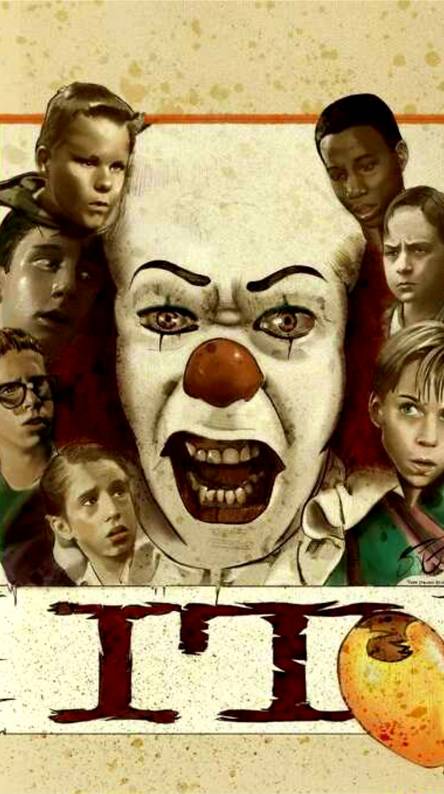
Speaking of those childhood memories, let’s talk about the story of the Losers Club, those seven kids who got locked into a summer nightmare back in 1989. Filled with disappearance after disappearance of young people throughout the small town of Derry, Maine these seven kids have a whole host of fears they have to tackle and face, along with that clown named Pennywise, now played by Bill Skarsgard who brings a whole new personification of scary to this story!
One of the best things the director did for part one of the remake of IT was building the foundation of the story with the Losers Club. Each one of the kids has a unique family life, traumatic experiences they’ve had to deal with, friendships and the young cast did an amazing job of building their characters! There was a fine line of exploring the problems each of the kids faced and how they had to overcome those situations and fears. Each one of the kid actors brought a memorable moment to each of their characters, and honestly built a well-rounded movie that didn’t have a monster clown in it.
IT spends a significant amount of its lengthy running time on each of The Losers’ Club’s personal experiences with Pennywise in sequences that are both gruesome and horror inducing. One downfall to the film is the repetition of how each kid begins to face their specific “Phobia” and how they resolve it. The typical horror movie, oh look something scary down that hallway moment, where someone wonders off alone to go check it out. Pennywise being a monster clown, of course, takes advantage of each of those perfectly timed moments where someone wonders off alone to invoke fear and torment each of the kids. But even if you notice the pattern, each set piece is different enough to be scary and brings each character a well deserved moment of terror in the film.
What makes IT, or at least this first half of IT (since the film adapts only the first half of Stephen King’s novel, which we will be writing the review on IT chapter two in just a few days as well. The director does a beautiful job of telling Stephen King’s story and bringing the words from his book to life on screen.
Personally, for me, IT captured the look of simpler times from when I was a kid with those constant visual references to 1980s nostalgia, like theater marquees showing double-features Batman and Lethal Weapon 2, or arcade machines of the Street Fighter 1. It’s no coincidence that this new version plays ‘80s nostalgia with the same feel that Stephen King had for the ‘50s in his original telling of IT. Emotions are more powerful when you’re a child because you’re experiencing them for the first time and IT pulls that scare tactic of beautifully and forces the audience to re-experience that childhood fear.
IT may not be the best Stephen King movie but it sure is one of my favorites! This movie was all about re-experiencing that childhood horror, with an in your face psychological hit to stir up emotions and connect us to the story. Nightmares are exactly what films like this envoke and we haven’t seen all of IT yet as we still have part two to review. Things like IT are an intense roller coaster filled with emotions, jump scares, and a connection to the characters, including the creepy killer clown Pennywise.
I’ve been feeling a little nostalgic lately, and for whatever reason, the Dragonlance novels have been standing out over the last few weeks. So, what better way to scratch that itch then dig out your old book collection from when you were a kid and re-read said novels. Yes, I still have books from when I was a kid tucked away in boxes in the attic…..mainly because we’ve run out of space in all our bookshelves in the house.
If you haven’t read the Dragonlance novels and want a great high fantasy novel to get lost in then I personally would recommend these.
Dragonlance Novels:
History Behind The Books
The Dragonlance novels were based on a series of Dungeons & Dragons game modules. The books came about because the designers wanted novels to tell the story of the worlds they were creating. After Tracy Hickman came to TSR it was announced that development was to happen on his series of dragons based role-playing adventures. Hickman’s storyline was chosen for the Dragonlance books due to the twelve-part storyline. Margaret Weis came into the picture as she was assigned to edit Hickmans “Project Overlord,” as it was initially called, a novel intended to be coordinated with a trilogy of Dungeon & Dragons modules. The newly formed team plotted the novel and hired an author who didn’t work out. By this time, Weis and Hickman were so into the project they felt they had to write it and the rest is history.
Breakdown of the Novels
The Dragonlance Chronicles were one of the first novel series I read that introduced my love for the world of fantasy. The first novel series that I fell in love with of course was JRR Tolkien’s The Hobbit, and The Lord of the Rings. The Dragonlance Chronicles holds a high place on my list though mainly because I was one of those role-playing geeks of the 80’s.
Let’s take a look at the first book, Dragons of Autumn Twilight which has a strong character base but the first book does feel over the top at times. What really stood out to me about the first book were the “Major” characters in the story, and there are a few that were very distinct. Unfortunately, the story has some downsides and one major part is the characters seem lost, as does the navigation of the overall plot. But, as an introductory novel, it sets events in motion without giving anything away which is impressive to do no matter the genre. The second and third novels develop completely different, which felt more organic and that the writers were given much more freedom with the plot.
Here’s what I like about the original Dragonlance Chronicles and what brought me back to read them once again:
The novels continue to throw extremely creative scenarios and locations at you. Which keep the interest up while reading, as you gotta know what is coming up next.
The authors did a fantastic job of balancing the character development, action, drama, and overall plot.
The world of Krynn itself as the authors did an amazing job adding a level of mystery to the world which kept you wondering what’s next.
The overall pace of the book is done quite well in story development, especially as you get into books 2 & 3.
Ultimately the book is called Dragonlance…..so what better than the Dragon War and the evil queen that returns.
To me, these books are such a good mix of the Sword & Sorcery and the High Fantasy genres of the ’80s which I fell in love with at a young age so it’s hard not to like them. How about you all, what are your thoughts on the Dragonlance Chronicles? Have you read them? Let me know in the comments below.
Hollywood isn’t known for adapting popular video game franchises to film or television that ever become fan favorites. For the most part over the years video games that have come to the big screen have flopped at best. Every once in a while though you have a little gem like Castlevania come along that brings life back to this genre.
If you are an 80’s baby you probably played Castlevania as it is one of the most iconic video games ever created! With the series based off the Castlevania games it draws very heavily from the 1990’s Castlevania III: Dracula’s Curse which follows Vlad Dracula Tepes (voiced by Preacher and Outlander’s Graham McTavish) has returned and unleashed a horde of demonic monsters against the peasants and clergymen of 15th Century Wallachia, and only a motley crew band of monster slayers which includes a discraced nobleman Trevor Belmont (The Hobbit’s Richard Armitage), magician/scholar Sypha Belnades (Alejandra Reynoso) and Dracula’s half-breed son Alucard (Battlestar Galactica’s James Callis) have the power to restore peace to the land.
Overall the Castlevania games are exploration in the world than story and plot, and this story isn’t one you’d think of when it comes to making an animated adaptation of. So why makes Castlevania different, and why did it have success? A lot of it had to do with who ran the show and who was in charge. Executive producer Adi Shankar has sort of built a second career out of crafting unauthorized, adult-oriented reboots of popular franchises, including 2012’s Punisher: Dirty Laundry and 2015’s Power/Rangers. If you want to craft an R-rated overhaul of a popular video game franchise while still retaining the core appeal of that franchise, Shankar is the man you call!
Good shows come down to not only directing, producing, and people in charge but an amazing team of writers as well! Writer Warren Ellis, a man known for blending high-concept science fiction and black, nihilistic humor in his stories, but he’s primarily known for his comic book work (Planetary, & Transmetropolitan).
Seeing the teaser for Castlevania immediately had me excited, but also cautious at the same time as adaptations like these are almost never done well! So I waited, and waited, and waited some more before finally parking in front of the screen to hit play and Castlevania starts off on the right foot by focusing not on the Belmont family, but Dracula himself. The series opens with a fateful encounter between the reclusive vampire king and an aspiring scientist named Lisa (The Mentalist’s Emily Swallow). That opening scene nicely sets the tone for the series, establishing Dracula’s tenuous connection to the human world and giving him real motivations for terrorizing the land of Wallachia. While Dracula has little overt presence in the series after the first episode, it’s satisfying to see Ellis treat his main villain with depth. Dracula has at least a shred of tragedy about him in any incarnation, but that angle is really played up here, and it’s done very well!
In addition to creating a sympathetic villain in Dracula, the early portions of the show help establish the general themes that dominate the episodes. This adaptation is as much about fear and the reasoning of people, as it is man and monster. Both Dracula and the monster hunters are forced to choose whether they believe humanity can rise above the dark age this show thrusts you into. I love how the show pulls you into the live of Trevor Belmont which is the last surviving son of the disgraced family, one who’s tempted to simply sit back and let those who wronged his family suffer their just fate.
Netflix pulled out the stops and spared no expense to get some amazing actors for the voice cast, forgoing the familiar names in the voice acting world in favor of some very big-name actors. For the most part, the actors do justice to their characters. McTavish and Callis in particular stand out as they channel the pathos and suffering of their undead characters. There are times when the actors (Armitage especially) speak too softly and become drowned out by the music and sound effects, but there is a passion to the performances that you don’t always find in projects like this.
Amid all the crazy character drama and clashing between science and superstition, Castlevania never loses sight of the classic appeal to the game series. There’s plenty of action to go around, even though we don’t get to see a lot of the monsters from the game. The series does an amazing job of pulling the world of Castlevania to the screen for our eyes to see. This series may draw mainly from Castlevania III in terms of plot, but it’s far more influenced by games like Symphony of the Night when it comes to the lovely art style.
When you think of fantasy novels, most people think, epic battles, magical worlds, filled with creatures and mysteries to solve. Those worlds have to have must be populated with engaging characters, and instances to grab the readers attention. Strong characters are important to fantasy fiction for many reasons:
Fantasy often tells the story of events on a grand scale, and having characters the readers can connect to and care about makes that story tangible, and more enjoyable.
Fantasy often has an element of wish fulfillment about it, so readers want characters they can identify with and understand.
Engaging characters can help readers feel as though they get pulled into the story, and feel comfortable in an otherwise unfamiliar invented world.
The most popular fantasy fiction tells us that enduring characters influence how much readers love a work of fiction. Bilbo and Frodo Baggins, Harry Potter and his friends Ron and Hermione, and a whole host of other amazing and enduring characters throughout fantasy history are all amazing examples of iconic fantasy characters.
Several of the characters listed above are protagonists, but the surrounding cast to the protagonist must be engaging as well. No reader will feel suspense if the antagonist is unbelievable and lacks the luster to engage the readers. If the love interest in the story is one-dimensional, readers aren’t likely to be interested. A mentor adds gravity to the protagonist’s quest, and sidekicks make the protagonist more likeable by bringing in the chance of humor and good laughs. This creates a broad contrast, and wholeness that a protagonist who is busy defeating evil throughout the book might otherwise not have the opportunity to show.
Characters are the heart of your fantasy novel, and without strong characters, the reader ultimately won’t care what happens between epic battles, how the hero of the story grew and challenged evil, or ultimately how the book ends.
One way to create memorable characters is to begin with set types and add depth to each of the specific characters. No matter what approach you take to creating and developing characters it has to work for you. This is definitively a formula based way to create characters, but fantasy character types are no different then how the framework of a plot outline works. If you think about some of the characters listed above, there are several types.
Hermoine Granger is the smart girl, Harry Potter is the orphan boy with secret magical powers, and Bilbo Baggins is the reluctant adventurer. All of these are stock characters from literature and the fantasy genre in particular. Yet if you are familiar with these particular versions of these characters from your own reading, you know that this stock description only scratches the surface of who these characters turn out to be: it doesn’t fully convey their strengths, weaknesses or story arcs.
Here is a list of five different fantasy character types you can develop and make into memorable characters for your readers!
The Protagonist – aka “The Hero”
Up to this point, we have mostly discussed the protagonist, but there is a reason for this. This is the most important character in your story. If the protagonist doesn’t work, it won’t matter how well-developed the other characters are as no one will care or even stay engaged enough to finish the story.
Here are a few points to consider as you develop your protagonist:
Is your protagonist an ordinary person or do they have some extraordinary powers that help them fulfill their destiny?
Is your protagonist more of a traditional hero or is he/she an antihero? In other words, does your protagonist display typical qualities such as courage, loyalty and goodness, or does the protagonist have a dark side?
What are some of the defining characteristics of a protagonist? This will definitely help you put together an initial frame for developing this character.
The Antagonist – aka “The Bad Guy”
One error some writers make is creating an antagonist who is purely evil. Their reasoning may be that a more evil character is more likely to create suspense for the reader.
The problem with this approach is that the character may become so over-the-top evil that the reader disengages. A story is often more interesting when the antagonist has motives that are clear and understandable, even if the characters logic or actions behind their motives are wrong.
Another approach to making your antagonist more attractive and enjoyable to read is giving the character a connection with the protagonist. If you have ever read any of the great fantasy novels of our time, then you get to see these connections come to life very clearly. Look at Voldemort in Harry Potter or Darth Vader and Luke Skywalker in the Star Wars universe. In The Lord of the Rings, Sauron is not relatably human, but Saruman was the mentor of the good wizard Gandalf, so when Saruman switches allegiance to Sauron, the betrayal increases a sense of threat and helps the reader understand the emotional roller coaster this has on it’s characters.
The Great Mentor
This is one of the greatest categories of characters in a fantasy novel ever in my opinion! Like so many stories before this write up we saw such greats as, Frodo Baggins has Bilbo and Gandalf, and Luke Skywalker has Obi-Wan Kenobi. Each of these great mentors are absolutely invaluable to the protagonist’s development. The main function of a mentor is to educate or train the protagonist, but the mentor can bring a very powerful and emotional component to the story as well. One of the most interesting things over the course of a fantasy novel, is it’s almost inevitable that at some point the mentor and protagonist must part. Whether this means the death of the mentor or simply the mentor’s departure, this is usually a very emotional and dramatic turning point for the growth of the story.
Here are some points to consider when developing the mentor:
Does the mentor have any unusual abilities such as magical powers, or is their primary purpose to impart wisdom and teach?
What is the relationship between the protagonist and the mentor? Is it positive from the beginning, or is it a rough and bumpy ride?
How do the mentor and protagonist part? Is it sudden and tragic, or is it planned? How does the way the relationship ends affect the protagonist and overall cast of characters for the story?
The Sidekick
Protagonists can sometimes seem incredibly heroic, and sidekicks can help humanize them as well. At times you will even see the sidekicks overshadow the protagonist. This is not a fail on the part of the writer, but instead just a natural progression of the roles in the story. In fantasy fiction, a protagonist often becomes so much larger than life that as the story progresses it becomes increasingly difficult for the reader to relate and engage. Meanwhile the sidekicks are often characters who are more ordinary and perhaps more likable or similar to the reader, which helps them enjoy and engage with this character. What is most important about the sidekick is that the writer remains in control and keeps things cohesive! It’s very easy to derail yourself when writing a character type like a sidekick, as you can pull the focus away from the main plot and protagonist so easily.
Sidekicks often offer wisdom, comic relief, or commentaries that match the reader’s perspective more closely than that of the protagonist. We’ve seen some very memorable and fond sidekicks but some of my favorites to date are still R2D2 and C3PO from Star Wars. Sidekicks are frequently invaluable, and often a protagonist cannot succeed without them.
The Famed Love Interest
Much like the sidekick, the love interest helps bring a level of humanity to the protagonist that is needed. The love interest also provides additional opportunities for conflict, suspense, and engagement with the readers. To create an effective love interest, writers should make this character multidimensional and not simply a perfect reflection of the protagonist’s — or the writer’s — wants, needs, and desires.
The love interest will usually be setup in such a way they challenge the protagonist by seeing or doing things in a different way. This character may also raise the bar for the protagonist which helps orchestrate their relationship. This type of character opens up so many different paths you could take with the protagonist, such as a cause they can be committed to, or even a vulnerability the readers relate with.
One of the most important things to keep in mind while developing this character and the relationship, is that creating any relationship in a fantasy based novel should be no different from any other type of fiction. Writers in the fantasy genre will find it most effective and best suited to portray the growth of the relationship in real and concrete ways, as it makes it easier for the readers to engage and relate.
Protagonists, antagonists, sidekicks, mentors and love interests may seem like basic characters of fantasy, but they are the foundations of a well developed, and very complex set of characters that readers have fallen in love with for ages throughout the fantasy genre. Have fun and enjoy the wild ride you get while creating the characters in your novel, as they will be the unique attraction points readers engage with!
Just a few days ago the Star Wars galaxy got great news as the next Star Wars movie, Episode VIII received it’s official title – The Last Jedi. This spawned a lot of excitement among the fans but the release of the poster that featured red font also spawned a bunch of questions. One being, who is “The Last Jedi” that the title refers to? Who knows really what plans the next story has but I wanted to dive into a few of these topics and let you know my thoughts.
Let’s start with the end of Return of the Jedi after Vader passed his son Luke Skywalker was the last living Jedi Knight, or was he? Just last year we saw the release of the Force Awakens – Episode VII in the series which takes place 30 years after the Return of the Jedi. This also took place after Luke Skywalker had tried to re-unite the Jedi order with a new generation of Jedi. During the Force Awakens we learn that those young Jedi trained up by Luke were killed by Kylo Ren. So with that said it raises massive questions about the new title for Episode VIII of The Last Jedi as Kylo Ren was a force sensitive and once fought for the side of good but was quickly taken by the Dark Side of the force.
During Episode VII we also got to meet Rey, which was a very mysterious young girl who we learn during the film was a force sensitive that saw her powers quickly develop. Her force powers came to light pretty quickly during her confrontation with Kylo Ren so it begs the question is she a Jedi? At the end of the Force Awakens, Rey finds Luke on his island hiding place of Ahch-To which brought to light that we now have a Jedi Master, and what could be the next Jedi apprentice! This was such an epic part of the film as Rey delivers the original lightsaber to Luke opening up so many questions, excitement for the next film, and wonder of whats going to happen next.
Now back to our first question of who is the Last Jedi from the new title of Episode VIII? Does this refer to Luke himself, or does the title refer to “Jedi” which can also be plural or singular. Are we looking at Luke and Rey being the last Jedi in the universe? This title may even refer to a next generation of Jedi from which we see Rey showing force traits in the Force Awakens. As we know the Force Awakens was a passing of the torch type film for the old generation to the new. What about Kylo Ren as we know he destroyed the generation of Jedi that Luke was training so maybe we will see a rejuvenated Luke when he learns of Rey’s force abilities? This is all speculation of course but these are the thoughts that have been running through my head since seeing the new title for Episode VIII.
I am very excited to see the new film, and I know you all are as well! Does the Last Jedi refer to Luke from the old generation and the new film is going to be another push on passing the torch to this new generation? In the Force Awakens the opening roll talked of the Rebel hero as “The Last Jedi” so who is this mysterious Rebel Hero, or Last Jedi?
It’s hard to start writing a niche genre like fantasy when you’ve got the passion for it, but no idea where to start! Maybe you have an idea, but you’re afraid to take the first step because you’re afraid of failing. While the writing process is frustrating and yes, your story may not work out, but if you do your research and work hard, you will find yourself creating an unbelievable story with a world you can mold to your liking. It’s going to take a lot of patience, will-power to push through tough areas, and learning a few tips along the way from fellow writers.
This is my “Where Do I Start List” on the most important parts of the writing process that I use all the time. None of these steps are chiseled in stone by any means but these are all tips / tricks I’ve learned over the years….and taken the good advice of better writers who helped me along my journey.
1. Write down EVERY SINGLE IDEA you have! When writing a novel it doesn’t matter how silly an idea may sound, you thought of it for a reason so write it down. These ideas can always stem into another and cause creativity and imagination to be boosted. Plus this is a great way to keep track of the “Idea Process” which is how you personally pop out ideas.
When writing ideas down it could be as simple as (random word here) or it could be a bit more complex and you take it a step further. Try something like this below and see if it helps with creating new ideas.
“Maybe (insert random name here) came across a clue (insert random stuff here) and discovered a great secret.”
“Should (name) be a knight or a king, or just some (random person in the story?)”
Keep track of how you use ideas and organize them. See my post on mind mapping a novel to get some ideas of what to use and how to use this method.
2. Look at the setting of a story first before anything. If you are a fantasy writer like me, then I’m sure you’ve spent a good bit of time doing this already. Remember this is your story and you can make it however you like, but it’s always a good thought to look at other writers and see what imaginative thing they’ve come up with. Does your world rely on magic, or maybe it’s inspired by a real place and you’ve put a twist on it. Depending on what you choose, your characters must reflect the cultures and upbringing in this world. My novel is set in a fictional world but still close to home with traces of European cultures with kings, queens, monsters, tall tales, and hero’s alike.
3. Character development is an absolute must!!!! Make sure you take your time and plot out each character…give them some love as I’ve seen to many times where a story could have been great but the characters were very underdeveloped and it ruined the story. Pay close attention to those minor characters in the book because they can become key to a great story. Take a look at a post I did on writing minor characters.
4. Character Names have to tie into the cultures you use in the story. Think about that for a second as this can go a lot of different ways. Do you have a made up language like Tolkien, or maybe you’ve pulled from Greek mythology, or just classic names from different cultures. Most of my book I’ve created comes from a European background with a lot of made up in between.
5. Make a timeline because this helps keep everything consistent throughout the story, especially if you use days/weeks/months in your story. This will also allow you to go into accurate detail about places, seasons, weather, people etc. My book i’m currently working on, Brothers Three, ranges over the course of a 10 year period for the main story. This story begins with the birth of three brothers who were separated at birth to disguise who they really were, but picks up when the boys are 10. The story begins on a spring morning, so I made sure to describe the temperature and what the “Spring” season was like which also affected the terrains and landscapes of course. Always make sure to keep in mind the time of year and how long time has passed in your story so that it’s consistent. A timeline also helps with events leading up to your main story. Every major event in the story, whether it actually occurs during the present or not, should be recorded on the timeline. If something major happened to a character in the past, it should be recorded. If something major happens before a main character is born, record their birth-date on the timeline. I don’t want to give any spoilers away for my book so I didn’t want to share my timeline but one day in future posts I hope to share that process.
6. Make an outline of your entire plot. Some people argue against this process as there are authors who just write great work as they go along, but in my opinion making an outline worked great for me. Your timeline you created can help a great deal with creating the outline as you should be keeping track of all major plot points and how they roll across chapters, major / minor characters, minor plots, climaxes, etc.
7. Editing, Editing, Editing! Once you’ve typed out your manuscript, edit it yourself into multiple drafts….Why? Because you don’t want to lose the thing for one, and you are going to butcher this thing when editing it. I would take a few chapters at a time, print them out, and use a colored pen (I prefer red or blue) but any color you choose will work to cross out, change words, or fix punctuation. It definitely helped me to have a thesaurus and grammar book for quick reference as well.
These are the main points I like to use when writing and getting things ready to edit. Everyone is different and each has their own methods they will develop and enjoy to use. These are mine and I hope they might work for you on the writing journey. Good luck to all of you with your own writing adventures!


 One of the most iconic horror characters in history has got to be Stephen King’s IT and the first ti
 Speaking of those childhood memories, let’s talk about the story of the Losers Club, those seven kids who got locked into a summer nightmare back in 1989. Filled with disappearance after disappearance of young people throughout the small town of Derry, Maine these seven kids have a whole host of fears they have to tackle and face, along with that clown named Pennywise, now played by Bill Skarsgard who brings a whole new personification of scary to this story!
 IT spends a significant amount of its lengthy running time on each of The Losers’ Club’s personal experiences with Pennywise in sequences that are both gruesome and horror inducing. One downfall to the film is the repetition of how each kid begins to face their specific “Phobia” and how they resolve it. The typical horror movie, oh look something scary down that hallway moment, where someone wonders off alone to go check it out. Pennywise being a monster clown, of course, takes advantage of each of those perfectly timed moments where someone wonders off alone to invoke fear and torment each of the kids. But even if you notice the pattern, each set piece is different enough to be scary and brings each character a well deserved moment of terror in the film.
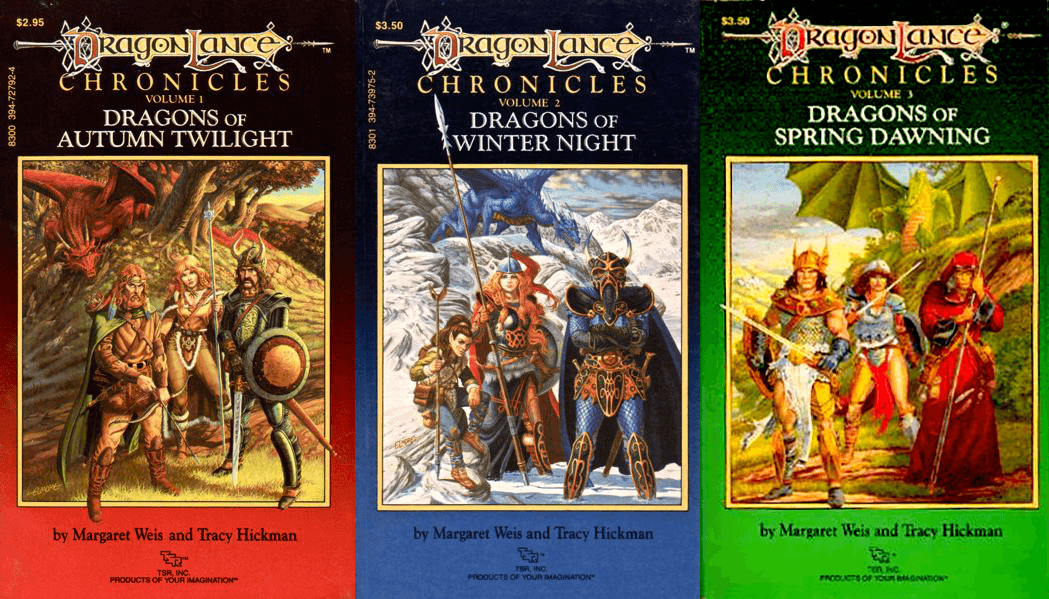
 The Dragonlance Chronicles were one of the first novel series I read that introduced my love for the world of fantasy. The first novel series that I fell in love with of course was JRR Tolkien’s The Hobbit, and The Lord of the Rings. The Dragonlance Chronicles holds a high place on my list though mainly because I was one of those role-playing geeks of the 80’s.
 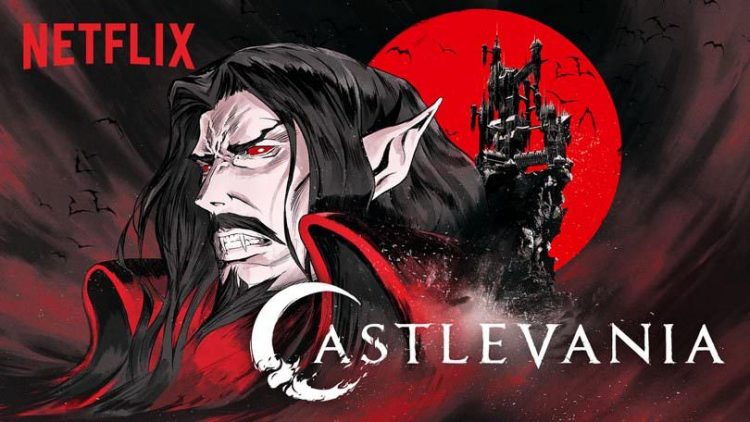 Hollywood isn’t known for adapting popular video game franchises to film or television that ever become fan favorites. For the most part over the years video games that have come to the big screen have flopped at best. Every once in a while though you have a little gem like Castlevania come along that brings life back to this genre.
 It’s hard to start writing a niche genre like fantasy when you’ve got the passion for it, but no idea where to start! Maybe you have an idea, but you’re afraid to take the first step because you’re afraid of failing. While the writing process is frustrating and yes, your story may not work out, but if you do your research and work hard, you will find yourself creating an unbelievable story with a world you can mold to your liking. It’s going to take a lot of patience, will-power to push through tough areas, and learning a few tips along the way from fellow writers.
 A Hobbits Journey