 Ok, so I know this week was supposed be about generating topics for your blog that you can sustain yourself for the rest of the event. So far I haven’t put out but one post outlining topics like this. My brain has been focused largely on writing fantasy over the last few months and it has been hard to break out of that. Here is what I’ve done for this post though is slap together eleven tips I’ve learned about writing fantasy and writing in general.
Have you ever asked yourself what it’s like to write a novel, or how one goes about it? So have I, and I’ve learned that each has to find there own way of bringing the inner creative writer to paper.
I’ve been working on a novel series for several years now, upwards of the last seven years but I haven’t spent all of those years just writing. I’ve currently finished two books in my Brothers Three series and I’m currently half way through the third book. This is a high fantasy novel series that honestly started almost twenty years ago with a note I wrote down. It was just an idea, and it’s morphed and changed over the years into an actual book. One day I do hope to be a published author and will continue to strive for that dream.
One thing out of this process I learned a long time ago was planning goes a long way in being successful when plotting a story, or any thing you write. For as long as I can remember, I’ve had a passion and love for writing, and seven almost eight years ago was when I really started pushing to one day have my material published. Honestly, I can’t even take credit for the idea of seeking a publisher, as my wife is the one who talked me into it.
Currently I am doing a lot of character development for book three and as I said before…..it has been a lot of planning, character plotting, long nights of staring at a blank screen with nothing other then a hot cup of coffee, or twelve that gets accomplished. One might ask, after so long do you ever feel like giving up or even quitting? The honest answer is YES and NO….yes it’s hard to find time to write when you work in another full time job, have three children, a wife, and other responsibilities that come before a hobby. At times it is frustrating when you hit a wall and have absolutely no words, direction, or even a faint hint of where you need to go next in the story you so passionately want to get finished.
The biggest thing that helps keep me grounded in the perspective of writing, is my wife and three children! My wife continually gives me feedback on my writing, both good and sometimes BAD, and these stories were originally birthed for my children as bedtime stories. This idea kept in mind has pulled me through frustration, and the itch to quit at times and has allowed me to plot out the first five books in the series. Having finished two of the books so far I have noticed the light at the end of the tunnel syndrome…..and getting to see this story come to life on the pages is quite overwhelming!
So, I write all this to say, if you are a writer of whatever genre then here are some writing tips I’ve learned along the way. These have come from my own mistakes, my successes, and even mentors I’ve had over the years of how to put things in perspective and keep yourself on track!
Evaluate the Writing Style
If you have a love for writing, then you may find yourself slave to the writing itself. Remember you are the one doing the writing, and it is possible to create a schedule that doesn’t engulf your entire life around writing. You do have a life, so go live it! If writing is a job you wish to pursue and have as your job in life, then dedicate time to it, learn new ways of writing, evaluate how you come about writing. Try writing in different areas away from the home. A change in scenery can be a world changer for a writer as it helps open the creative flow.
Getting Ideas on Paper
Do you have some good ideas or a potential story brewing in your head? Sit down and make sure you write those ideas out on paper. Typically you would have a character, or character in mind and a place in which these ideas would evolve over time. They would be centered around some major events, like a war or even someones death. Once you have the main ideas or plot of the story written out, start asking simple questions, like, “why?” “when did this happen?” “how?” and move onto more detailed questions like, “How did this affect the lands?” “Who is to take blame for this event?” etc…. Once you have these ideas sorted out, pass them onto a friend, fellow writer, etc to pick apart and ask them for a honest opinion. In the end, this process can help you determine the the major plot lines of the story, where will the main focus of characters and development be, and even sub-plot lines. All these things added together help you make the story become whole.
Making Your World and Places Come to Life
Where will your fantasy creations live? Is this a made up world that you’ve created, or is this some parallel universe with mystical creatures full of big tales to be told? There are absolutely no limits on what the imagination can create. Decide what places your story will be centered around and take into note the previous of letting another review your ideas. Go into detail when creating your world….the races, animals, plants, rivers, lakes, you name it and make sure you list it.
Keep a Notebook and Write it All Down
Never ever leave the house without your notebook. You never know when you will have this amazing idea pop into your head for the fantasy novel to come. Write it all down: Your main character, the major events, the kind of world it is, you name it, because all these ideas will come together and firm the story up. Trust me it’s awful to have this fantastic idea pop into your head and find that you have absolutely nothing to write it down on.
Don’t Be Afraid to Change Things
Always, Always, Always, take a look at the major underlying plot that everything centers around. Make sure that everything you’ve created centers around this plot because it’s easy to wonder off into a wild rabbit hole. Look at the major event or events and don’t be afraid to mold it, change it, as you have to make this event believable to the readers. This is what your entire novel hinges on and if the plot line doesn’t make sense, or doesn’t hold the readers attention… well… I think we know what happens next. Work on other characters who help build the plot line and your protagonist on his/her journey. Not every hero needs to be a loner and he/she could vary in anyway you want. They may have a family, they may be cold at heart and emotionless until someone comes along they care about. You name it! Don’t make your story revolve only around your character. Show the feelings of the people around your protagonist and how their decisions affect them. Don’t make a story of one person; make a story about the journey of one person. Learn how to join sub plots and other events to the major plot line. These could be a birth of a child, or as in my book the birth of multiple children based around a prophecy. These events will cause your story to have a sense of feeling, emotion, and building that brings the reader closer to the characters and story. Make sure your characters grow over time in the stories, as the experiences should help mold and make them into who they are to become. After pulling things together, don’t be afraid to make changes (subtle or drastic) to your characters, and story. Make obstacles in your character’s life. Not everything will be easy for him/her. Make sure you’re writing a fantasy novel, not a walk in the park that becomes boring to read.
Creating Your Visual Fantasy World
This is one of my favorite things to do in bringing a story to a visual understanding! Grab a piece of paper and a pencil. It’s time to start drawing out what you see in your head. Do a ton of research on land, rivers, map creation etc… If you’re planning to build a world from root, start drawing simple lines. You can make seas, oceans, lakes, mountains, and other strange factors in your world. Draw the lines of kingdom’s lands and empires. Put post-its and other notes on your map to locate some events. Remember: your map doesn’t have to be well made. Be free to use any materials you like, and have fun!
Deep Rooted History
Do you plan on having a deep history and timeline in your story? Plot out a chronology of your story as this could help aid the reader and bring them closer to the events going on. Plot out the events that appear in your book, or just stories of other events that will indirectly explain the ones in your plot. Don’t think it’s a waste of time to build a world which, for the most part, won’t appear in the book. It’s important for the reader to know that the writer knows what he’s talking about and isn’t putting random things on the pages of his/her book. Make your characters tell a legend or mention some event that you have carefully planned out. As the writer, you have to know something that the reader’s don’t….and always make sure you know what you’re talking about.
Character Development
Make sure you know the main character or characters, don’t just make a place holder in the story with a random name laying on the pages. Plan everything about your character. This is where you put some deep well thought out time and attention into the story. Does he/she have fears (death, darkness)? Where/when was he/she born? Under which circumstances? Do they have siblings? Do they have someone they love? Be free as this is your story!
Things About your World
Remember that chronology planning you read about earlier? Not it’s time to take it a step further…. Be as detailed as you possibly can with the imagination you have! What kind of homes do people live in? Jobs? Types of clothing? Government systems? Do they have schools, or some type of training grounds soldiers are sent to? Family bloodlines that rule the kingdoms, is there magic in the land, or some dark evil threatening the lands? Can women fight in war too, or is it only for men? Are there any fantasy creatures roaming the lands? Don’t leave anything out as this will probably be the biggest step in your story. The base will be here. Everything you’ll come up with needs to be here. Don’t worry if you’re taking too long writing everything out. A good story needs to have a solid foundation that covers every base you could think of.
Plotting and Planning
This is one of the most time consuming and sometimes frustrating step in the process. Making the chapters of your story, and tying everything into itself. Define what kind of writer you will be. What will be the length of your chapters and book or books? Will you write in third or first person or take on the challenge of both? Will you describe your characters and surroundings to make the story more personal to the reader, will you not care and just want to make an epic legend? This is one of those steps you can’t be afraid to change and touch multiple times, and sometimes with a very critical eye! Reverse the roles at times and look at it from a readers standpoint! I think I have spent more time plotting my books out then writing the stories and honestly that is what makes for a deep and rich story. I spent the first few moths plotting out a simple book chart that lists (Years, Major Plot, Minor Plot, Characters, Etc…) It is my go to before I ever even think of writing at times. Remember don’t be afraid to create, change, and plan!
Let Others Review
Don’t forget to reach out to others and let them read your work. Print out your finished product and hand out multiple copies to people who may enjoy reading your novel. It can be a few close friends at first, but once you start getting feedback and start building confidence, you might want to consider trying to publish. Accept any criticisms, good and bad as they will make you a better writer in the future. Fix anything that your editor tells you. Believe that you can be published if you put your mind to it, but try not to hope too strongly for your book to be published, since you could end up very depressed if all doesn’t go to plan. If your work is rejected by one editor, edit the story or send it to a different publisher. Remember what drives you to write, and don’t lose sight of why you love doing this. It’s easy to see the light at the end of the tunnel and get caught up in the moment of a job, instead of the passion for writing!


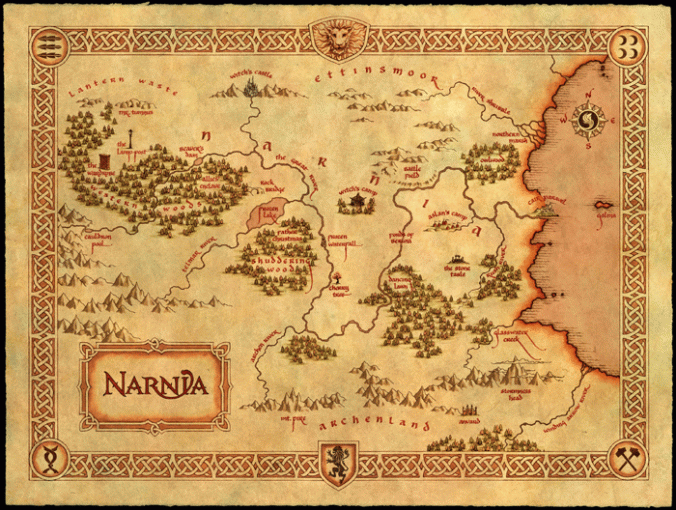

 As with most things in writing, there are a lot of ways to build a world well, and a lot more ways to do it poorly. First, let me start with the fact that I am still working on my first novel series, and the world building early on became overwhelming. This is no one’s fault except mine as I rushed into a very large project that at the time I wasn’t quite ready to tackle yet. Many years of writing short fantasy / sci-fi stories, and personal blogging gave me the feeling I was ready to take on a novel of epic proportions. Ultimately, I’ve loved every minute of this writing journey I’ve ventured into as it’s helped me grow as a writer, and building worlds was a huge step into the creative for me. These few paragraphs are just some of the tips and tricks I’ve learned a long the way to make world building easier, and more enjoyable.
 Fourth, You’ve decided how your world works, you’ve decided your characters’ places within this world, and now you have to write, write, write. I tend to give very broad outlines of my world and the inner workings; then as the characters move through the world, I bring out those specifics. My plot within the story moves very fast and at times the world building takes a back seat, but all in all the creation of the world takes place and ultimately becomes immersive.
 A Hobbits Journey