Durhaven: The Stone Bastion of Men

Every realm of Eldoria has its strength. Gallandor holds the crown, Stormhold rules the seas, and Silvermoon gazes at the stars. But Durhaven? Durhaven is the fortress of humanity itself — the kingdom that stands like a shield between the heartlands of Arathia and the encroaching dark.

Known as the Stone Bastion, Durhaven was born from resilience. Its people carved citadels into stone hills and valleys, its kings hammered law into discipline, and its armies have stood like iron walls against the storms of history.


The Capital of Durhold

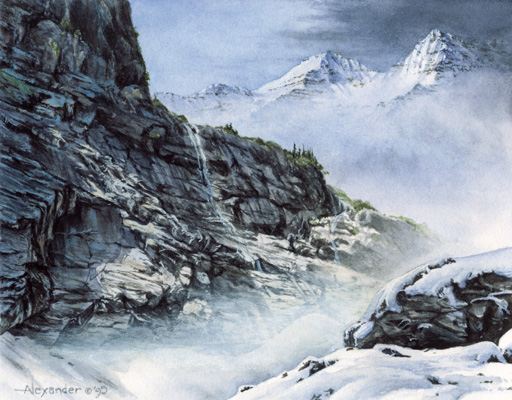
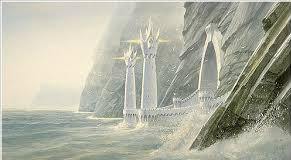
At the heart of Durhaven lies Durhold, a mighty fortress-city of gray stone. Rising above the River Dur, its towers and battlements seem less built than grown from the very bones of the earth.

Durhold is not only a citadel but a thriving hub:

  • The Great Hall – seat of House Durain and the political heart of the kingdom.
  • The Market Quarter – bustling with farmers, smiths, and merchants who keep Durhaven alive through trade.
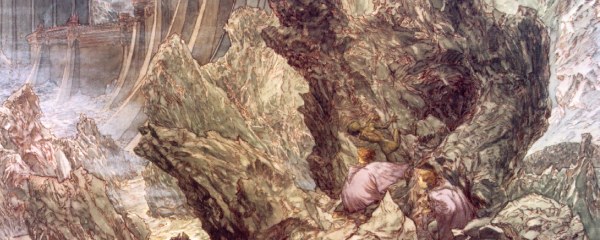
  • The Catacombs of Durhaven – vast, ancient tunnels beneath the city, once used to shelter the people during sieges. They now serve as ancestral tombs, reliquaries of relics, and chambers where whispers linger long after words are spoken.
  • The Chamber of Echoes – hidden deep in the catacombs, a sanctum where kings and queens meet in secret and oaths are bound by stone and silence.

Durhold is a city of strength and secrecy — open to the sun above, yet rooted in shadowed halls below.


House Durain – Guardians of Men

House Durain has ruled Durhaven since its founding, their line bound to stone as firmly as their fortresses.

  • King Alden Durain – A stern and pragmatic ruler, famed for his military genius and his mastery of fortifications. He is protector and strategist, forever wary of shadow and betrayal.
  • Queen Mara Durain – A woman of keen intellect and sharper diplomacy. Where Alden rules the battlefield, she rules the council, ensuring Durhaven’s stability through trade and reform.
  • Prince Darian Durain – Charismatic, courageous, and beloved by his people. But his love for Princess Elara of Silvermoon defied every boundary of blood and custom. Their forbidden union birthed Iogro and Searanore — half-human, half-elven twins, whose very existence ties Durhaven to prophecy itself.

House Durain embodies discipline and sacrifice. They see themselves as the shield of mankind, tasked with enduring what other kingdoms cannot.


Culture of Durhaven

The people of Durhaven are hardy and proud. They are farmers in fertile valleys, soldiers in stone keeps, and masons who build walls that endure for centuries.

  • Military Tradition – Durhaven commands one of the strongest human armies, with disciplined legions, armored cavalry, and master tacticians. Their engineers craft the finest siege engines in Eldoria.
  • Agriculture – The River Dur feeds sprawling farmlands, making Durhaven one of the breadbaskets of Arathia. Their food sustains allies and armies alike.
  • Architecture – Sturdy, austere, and enduring. Castles and villages alike are built with an eye toward survival, not ornament.
  • Values – Honor, loyalty, resilience, and discipline. They prize order above passion, duty above whim.

Yet this strength is also their weakness. Their suspicion of outsiders — especially of Elves and magic — has often set them at odds with Silvermoon and Greenwood.


Role in Prophecy

Durhaven’s place in the saga is as unshakable as its stone. It is the military bulwark of humanity, the kingdom that refuses to fall no matter the storm.

But through Prince Darian’s love for Elara of Silvermoon, Durhaven became bound to a destiny far larger than stone and steel. Their children, Iogro and Searanore, embody the unity of human and elf, north and south, discipline and dream.

The Chamber of Echoes and the catacombs beneath Durhold hold secrets yet to be revealed — relics, oaths, and truths that may decide whether prophecy is fulfilled or broken.


Durhaven’s Place in Eldoria

If Gallandor is the crown, and Stormhold the shield, Durhaven is the wall.

It is the stone that stands against shadow. The hammer that builds, the fortress that holds, and the oath that does not break.

But walls can crack. And when prophecy knocks at its gates — in the form of Iogro, Searanore, and the Brothers Three — Durhaven must decide whether to cling to its traditions or embrace the unity that may yet save the world.


Behind the Writing

Durhaven has always been my way of exploring the discipline and weight of humanity in fantasy storytelling. Where Gallandor is steeped in prophecy and Silvermoon in arcane wisdom, Durhaven is about endurance — the grit of men and women who hold the line, who may not always understand magic but who understand sacrifice.

When I first began shaping Durhaven, I wanted it to feel like a kingdom that could have existed in our own history — a place of legions, stone, and honor — but layered with fantasy depth. Its catacombs, its secret chambers, and its forbidden love story with Silvermoon gave it a personal connection to the saga that surprised even me as I wrote it.

Durhaven, for me, is not just about armies or walls. It’s about what humanity clings to when shadow presses in. It’s about oaths, family, and what happens when even stone must bend.


Until Next Time…

Durhaven is but one stone in the great wall of Eldoria’s kingdoms. Next, we will journey into Ironclad, the Stone Kingdom of the dwarves, where molten forges burn and runes are hammered into steel. After that, we will descend into the shadowed ruins of Barakthûn.

But here in Durhaven, the wall still holds. The legions still march. The oaths still bind.

If Durhaven falls, what wall will stand in its place?

The Kings of Gondor: Part Nine – A Bloodline Lost

Welcome back fellow hobbits and people of Middle Earth! It’s been a very long time since I last wrote about the Kings of Gondor, but after a long break and much time away with family I felt it time to return and continue writing.  So, looking forward to continuing this series and many others just like it.

83600606The Unwise King

Earnur was the son of Earnil II. He like his father was a great warrior and became a great leader of armies before he became King.  His greatest victory was against Angmar in the Battle of Fornost, in which he defeated the Witch-king, whom he intended to slay had his steed not panicked in terror of the Witch-king’s darkness.  Earnur became King in TA 2043, and was challenged by the Witch-king of Angmar.  The King of the Ringwraiths, who then resided in Minas Morgul wanted this King of Gondor dead and gone.  Earnur, being quick to anger and wrath, would have accepted his challenge had the wise Steward Mardil Voronwe not held him back, and so the first challenge went unanswered.  Just seven years later a second challenge came, mocking Earnur, and the steward Mardil was not able to stop the King this time.  Ernur accepted the challenge, and after entering the gates of Minas Morgul with a small escort, Earnur was never heard from again.  The unwise King was thought to be dead, so his crown now rests upon his father’s tomb in the Hallows of Minas Tirith.

Prophecy_GlorfindelThe Battle of Fornost

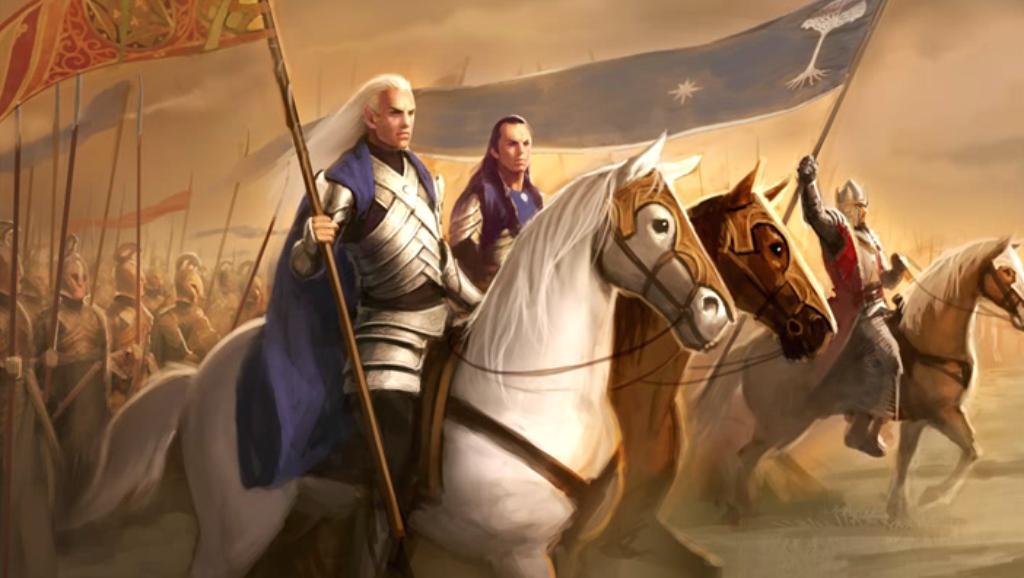
A year prior to the battle, the armies of Angmar conquered Arthedain, the last realm of Arnor. Angmar’s armies had taken Fornost, the capital of the Dunedain, and Arvedui, the last King of Arnor, had drowned in the Ice-Bay of Forochel. A year later, a fleet of ships under King Earnur arrived in the Grey Havens and set off toward what was left of the once-great northern kingdom. With the armies of Gondor came men from Rhovanion, elves from Lindon, and the remainder of the Dunedain (among them Aranarth, the Prince of Arthedain).

The battle itself did not take place in the city of Fornost, but on the plains to the west of the city, near Lake Evendim. The armies of Angmar hurried west to meet the assault, and seeing this, the cavalry of Gondor rode north into the Hills of Evendim to wait in ambush. As the main part of the army of Gondor met the enemy in battle, the Gondor cavalry set out from the hills to strike the rear of the army of Angmar. This served as the turning point in the battle, and allowed the combined armies of the west to gain the advantage. Realizing that his forces were all but completely destroyed, the Witch-king of Angmar fled eastward. As he fled, an army led by Glorfindel came up out of the south and blocked his escape, destroying what was left of his crumbling army; the Witch-king himself was able to escape during the night and fled southward. Though the battle itself had been lost and Angmar utterly destroyed, Sauron was extremely pleased with the Witch-King’s work, for the destruction of the northern kingdoms of the Dunedain was a victory for the Dark Powers which far exceeded the loss of the Witch-King’s realm.

Glorfindel,_Elrond_and_King_Earnur_unite_against_the_Witch-King_of_AngmarA Broken Bloodline

The Line of Anarion was broken with the disappearance of Earnur, and the rule of Gondor passed to the Stewards beginning with Mardil Voronwe, the Steward who had tried to restrain Earnur from going to Minas Morgul to face the Witch-king. The Stewards were to rule “until the King returns” for it wasn’t sure at first whether Earnur had been killed dueling with the Witch-king or not. In addition, Earnur left without naming an heir, and while many nobles in Gondor could lay some sort of claim to the kingship, those claims were generally held in doubt, and no one wanted to risk another civil war like the one that had devastated and weakened Gondor.

The Stewards of Gondor were firstly the chief high councilors to the Kings of Gondor and then the rulers of Gondor, until the return of the rightful king (Aragorn Elessar).

First created by the powerful King Romendacil I, Steward was the traditional title of a chief counselor to the Kings of Gondor.  The Quenya name for the title is Arandur , “Servant of the King”.  The steward was was usually an elderly man not from the Royal House chosen for his wisdom and integrity, and was never permitted to go to war nor to go abroad.  During the time of the Steward Pelendur, from the famous House of Hurin, the title became hereditary, passing the station of counselor from father to son, much like the Kingship.

The House of Hurin was founded by one Hurin of Emyn Arnen, Steward to King Minardil, the twenty-fifth King of Gondor. They were of high Numenorean blood, but not descendants of Elendil in the ruling line.

After the death of King Earnur, who left no heir to the throne of Gondor, the Steward Mardil Voronwe became the first of the Ruling Stewards. Mardil was the first of the Stewards to administer Gondor, and his descendants did so for 25 generations.

The Stewards watched over the throne until it could be reclaimed by a true King of Gondor, an heir of Elendil. When asked by his son Boromir how long a time must pass before a Steward could become a King, if the King did not return, Denethor II replied, “Few years, maybe, in other places of less royalty … In Gondor ten thousand years would not suffice” (The Two Towers).

The Stewards never sat on the throne of the King; instead, they sat on a simple chair of black stone placed below it.

I hope you all are enjoying this series as it has been an absolute blast to write and put together!  We are nearing the end of the series but still have a lot more writing to do, so stay tuned to the site and think about following so you never miss one of my series.

You all stay awesome and I bid you a fine farewell!

Cheers,

Iogro Merrybelly


The Battle of the Gladden Fields

AnduinThe One Ring Lost

The Disaster of the Gladden Fields was a battle at the beginning of the Third Age, in which Isildur and a group of acompanying Dunedain were attached by a large group of Orcs as they were marching home after defeating Sauron. The king and his three eldest sons Elendur, Aratan, and Ciryon were all slain and the Ring of Power was lost in the River Anduin. Only three men survived this battle, Ohtar being one of them, an esquire of the kings which was able to save the shards of Narsil.

With the death of Isildur, it impacted both Gondor and Arnor as it left both kingdoms seperated and isolated.  Arnor wouldn’t be able to completely recover from this loss of it’s nobles and knights until the kingship of Aragorn in the Fourth Age. Most importantly, Isildur’s death prevented him from passing on the One Ring to the Keepers of the Three, which he had passed on to his brother Elendur to be his chief reason for visiting Elrond in Rivendell.

After the War of the Alliance, Isildur remained in Gondor for one year, taking back lost lands.  He sent a large part of Arnor’s armies back to Eriador through the Fords of Isen to Fornost.  After getting the affairs of the southern realm in order, he handed the South Kingdom over to Meneldil and marched to Rivendell. He chose to leave his wife and son at Rivendell, but also came for counsel from lord Elrond.

ae12The Battle Ground

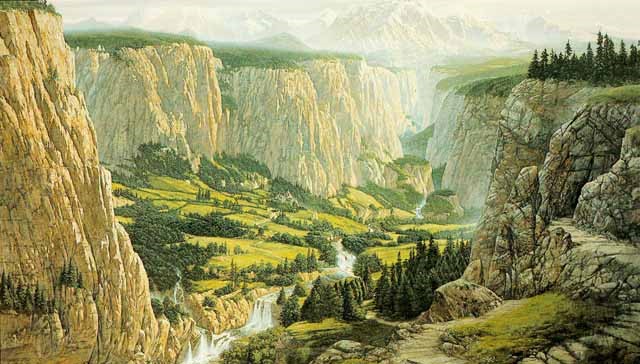
The Dunedain traveled northwards from Lorien, marching along a path that led to Greenwood the Great where Thranduil ruled. They had to change routes due to the flooding of the Anduin, which led Isildur to take the road on the eastern banks of the river. Isildur’s party was flanked as the enemy used the steep cliffs overlooking the river.

The Dunedain sang cheerful songs but as the evening drew close they began to hear the orcs in the nearby forest. The first onslaught struck quickly so Isildur called for his esquire Ohtar to take the shards of Narsil back to Rivendell for safe keeping.  The second attack from the orcs brought down the Numenorians great defenses, and Elendur convinced Isildur to flee and cross the Anduin if he could and find safety back at Rivendell.

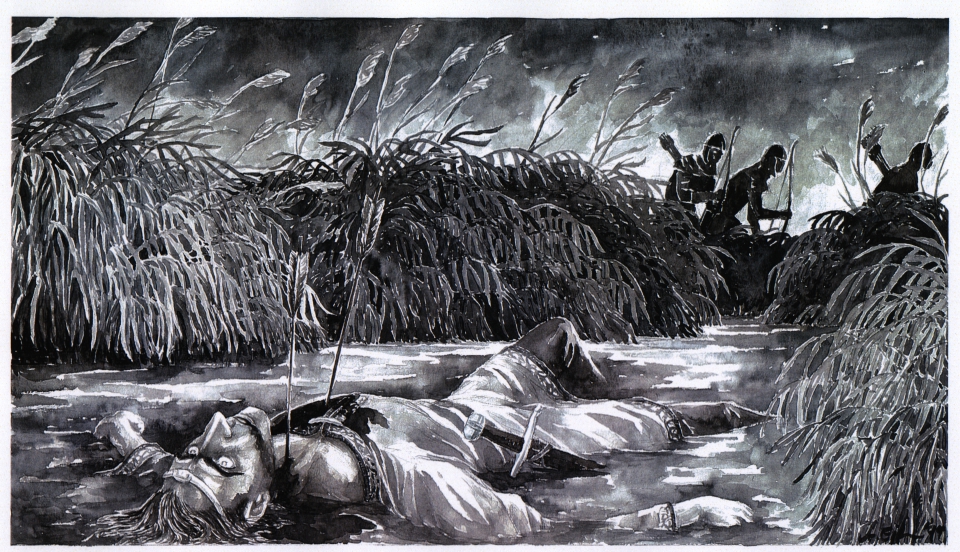
Isildur cloaked himself with the ring, and made a run for the valley parting ways with his armies and tried to cross the river. Unfortunately the rivers waters were flowing to hard and Isildur being exhausted got tangled in the reeds and in doing so the ring slipped from his finger. Nearby Orc’s caught sight of Isildur in the waters and out of fear quickly shot him and fled.

eiszmann42Wake of Destruction 

Only Ohtar, Elendur, Estelmo, and a handful of men survived the battle. Isildur’s body was never recovered, and was presumed captured and mutilated by Sauron’s forces  The orc army that ambushed the Dunedain were scattered among the lands by a relief force but they were to late.  Estelmo after being recovered spoke of how Isildur and Elendur related to each other about the One Ring. Isildur remarked: “I cannot use it. I dread the pain of touching it. And I have not yet found the strength to bend it to my will. It needs one greater than I know myself to be. My pride has fallen. It should go to the Keepers of the Three.”

Probably the biggest fall of the Gladden Fields was the union of Arnor and Gondor were broken by blood, and Isildur never managed to give the ring of power to the three.  Elrond, Galadriel, and Celeborn if given the chance probably would have destroyed the ring of power long before Sauron would have gathered his spirit and refortified Mordor.  But we all know how this story ends as Sauron does finally fall to the hands of many brave souls, and one very important little hobbit named Frodo.

The Kings of Gondor – Part Eight – Battle of the Plains

Greetings Middle Earth Wanderers,

It has literally been months since I wrote episode seven and that is mainly due to a needing a break from writing.  During this series I have also been in the middle of writing my own novel along with a couple of other projects.  Needless to say I was burning out and had to trim some of the projects.  Unfortunately this was one that I had to pause, but we are back on track once again.

In our last episode we left off with with Gondor retaking Umbar and king Telumehtar defeating the Corsairs and this this week we pick up with week we pick up with Telumehtar’s son, Narmacil who became the 29th king of Gondor.

Tower of EchelionThe Tower of Ecthelion

We don’t have a great deal of information on Narmacil, but what we do know is He had a very brief reign as king.  During his sixth year a group of Easterlings called the Wainriders overran the territories of Gondor’s eastern bank of the Anduin.  Narmacil prepared his armies and marched to Rhovanion to confront the invaders, but he was unsuccessful and was slain during the Battle of the Plains.  His son Calimethar took the throne in early in the third age after his fathers death becoming the 30th king of Gondor.

During his reign as king the Wainriders once again became a threat to Gondor and the lands to the west. In this time Calimehtar built the White Tower of Ecthelion which was the tall tower in the Citadel of Minas Tirith, and on top of this great tower waved the banner of Gondor that arose one thousand feet into the air.  The king was also tipped off to the impending invastion from the Wainriders by his good friends and ally’s the Eotheod.  They were a race of Northmen and were the ancestors of the Rohirrim.  It was The Eotheod leader Marhwini who warned the king about the invasion, which gave Gondor the time needed to assemble an army in Ithillien which was the eastern most province of Gondor.

Calimehtar took his army and marched north, sending his calvary to attack the unguarded enemy in the undeeps which were two great westward lands of the Anduin, located between the Brown Lands and the great Wold of Rohan.  The king and his Eothod allies finally met the Wainriders in Dagorlad and defeated them.  He had avenged his fathers death, and the great victory inspired the slaves in Rhovanion to rebel against the Easterling slavers.  Calimehtar ruled Gondor for eighty years, and died in the third age passing the crown to his only son Ondoher.

img-wainridersThe Wainriders Return

Ondoher succeeded his father Calimehtar and his daughter Fíriel married Prince Arvedui of Arthedain.  Not to long after Ondoher took the crown, the Wainriders invaded Gondor from the east while their allies, the Haradrim invaded Gondor from the south. Ondoher and his eldest son Artamir led the main army close to the Black Gate where they clashed with the Wainriders. The left wing of Ondoher’s army was commanded by Adrahil, the Prince of Dol Amroth. The right wing was commanded by Minothar, the captain of Gondor’s armies. The center was commanded by Ondoher himself.

In the ensuing battle Ondoher was slain together with his eldest son and heir Artamir, and Gondor defeated. The rearguard of the army defended Ithilien while Adrahil got help from General Earnil who defeated the Haradrim.  Though Earnil finally defeated the Wainriders it was learned that Ondoher’s second son Faramir (not to be confused with Faramir, brother of Boromir) was slain with his father, while law required that at least one heir to the throne be left behind.

No-one with a valid claim to the throne could be found, and Arvedui of Arthedain claimed the throne. Although Arvedui had a strong claim by his way of his wife Fíriel, who by ancient Numenorean law now should have become Ruling Queen.  Earnil II was selected to become king after his predecessor, King Ondoher and his heirs, were slain in battle. In the previous year an attack had been launched upon Gondor by the Haradrim and the Wainriders. In response, King Ondoher led the main army north to counter the Easterling invasion at Dagorlad and was defeated. Earnil was commander of Gondor’s southern army and guarded Pelargir. Earnil led his army to the Crossings of the Poros where he defeated the Haradrim. This enabled him to turn his attention to the invading Wainriders. The Wainriders, certain of victory, were celebrating their success before they would enter Minas Anor. They were unaware of Earnil’s victory in the south and were taken by surprise when Earnil attacked them and resulted in the victory of the Battle of the Camp

FornostGondor’s Long Wait For a King

After the threat was eliminated Gondor’s attention shifted towards Steward Pelendur and the Council of Gondor, for King Ondoher along with his two sons were slain at Dagorlad.  Both he and prince Arvedui had claim to the throne. Arvedui based his claim on that he was the direct descendant of Isildur (second High King of Arnor and Gondor and uncle to Meneldil first King of Gondor), and as the husband of Firiel, only surviving child of King Ondoher. The claim was rejected and Earnil of the House of Anarion was elected king for his deeds, heritage, and because the Steward, Pelendur, claimed that “The crown and royalty of Gondor belongs solely to the heirs of Meneldil, son of Anarion, to whom Isildur relinquished this realm. In Gondor, this heritage is reckoned through the sons only; and we have not heard that the law is otherwise in Arnor”.

Aside from being a gifted general Earnil was also a wise ruler. He sent messages to Arvedui announcing that he received the crown of Gondor, according to the laws and the needs of the South-Kingdom, “but I do not forget the royalty of Arnor, nor deny our kinship, or wish that the realms of Elendil be estranged. I will send to your aid when you have need, so far as I am able.” That time came finally came for Earnil as messages came to Gondor that Arthedain was in grave danger, and that the Witch-King of Angmar was preparing to strike against them. Earnil sent his son Earnur north with a fleet, as swiftly as he could, and with as great a strength as he could spare to aid Arvedui. Earnur arrived too late to save Arthedain and Arvedui who had fled north and drowned in the Ice-Bay of Forochel, but had managed to defeat the host of Angmar’s army in the Battle of Fornost with the help of Cirdan, the Lord of the Grey Havens and Glorfindl with an army from Rivendell. There, Earnur earned the hatred of the Witch-king.  Earnil died late in the Third Age after a rule of ninety-eight years and was succeeded by his son Earnur, who was as good a general as his father but lacked his wisdom.  This marked a very long void in Gondor’s throne before the heir of Isildur returned.

Until next time, I’m your host Iogro Merrybelly and I bid you a fine farewell!

scr.ee tags:

#Gondor #KingsofGondor

The Origins Of Evil – Part Four – The Death of Morgoth

Hail and Well Met Everyone!

You might have been wondering where in the world I had vanished…. well I won’t lie, it’s been a nice little three week break over the holidays and beginning of the new year.  I’m finally back on a regular schedule of writing, planning, and getting new topics lined out for the website.  This is a rather long article of lore….So let’s not dilly-dally any longer and get to it shall we.

When we left off last time we had just seen the Battle of Flames and a small band of men called the Edain who were able to withstand the corruption of Morgoth and began feeding the elves information about the dark lords every move.

AnghbandSiege of Angband

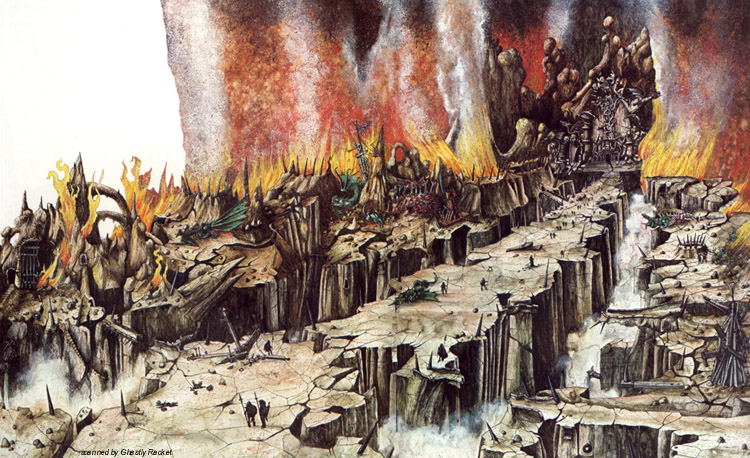
The siege of Angband was broken 455 years after Fingolfin came to Middle-earth, when Morgoth started the War of Sudden Flame or it’s Sindarin name “Dagor Ballogach”. One cold winter night, when the Elves were off guard, Morgoth brought terrible rivers of fire and lava from Thangorodrim and poisonous fumes from the Iron Mountains. The Elves were completely unprepared for such an assault, and many Noldor perished on the Ard-galen, as the fires consumed it and transformed it into a lifeless wasteland, forever after known as the Anfauglith.

With the exception of Maedhros and his fortress upon the Hill of Himring, the sons of Feanor and Finarfin were overthrown and defeated. Fingolfin and Fingon only just barely managed to defend Hithlum from Morgoth’s onslaught, as the mountains surrounding it provided an effective barrier against Morgoth’s fires. The Elves were completely driven from the forests of Dorthonion, and many of the Grey elves forsook the war altogether and went to Doriath. When news came to Fingolfin of the defeat of the Elven forces, a great despair came upon him. Believing the Noldor to have been defeated beyond any hope of recovery, he rode forth from Hithlum to the gates of Angband in a wrath so potent that he was said to have resembled Orome himself.  When he arrived at Morgoth’s fortress he challenged the Dark Lord to come forth and fight. Though Morgoth did not wish to, Fingolfin’s challenge was heard by all in Angband, and was given in such an insulting manner that to ignore it would have been to lose face before his captains.

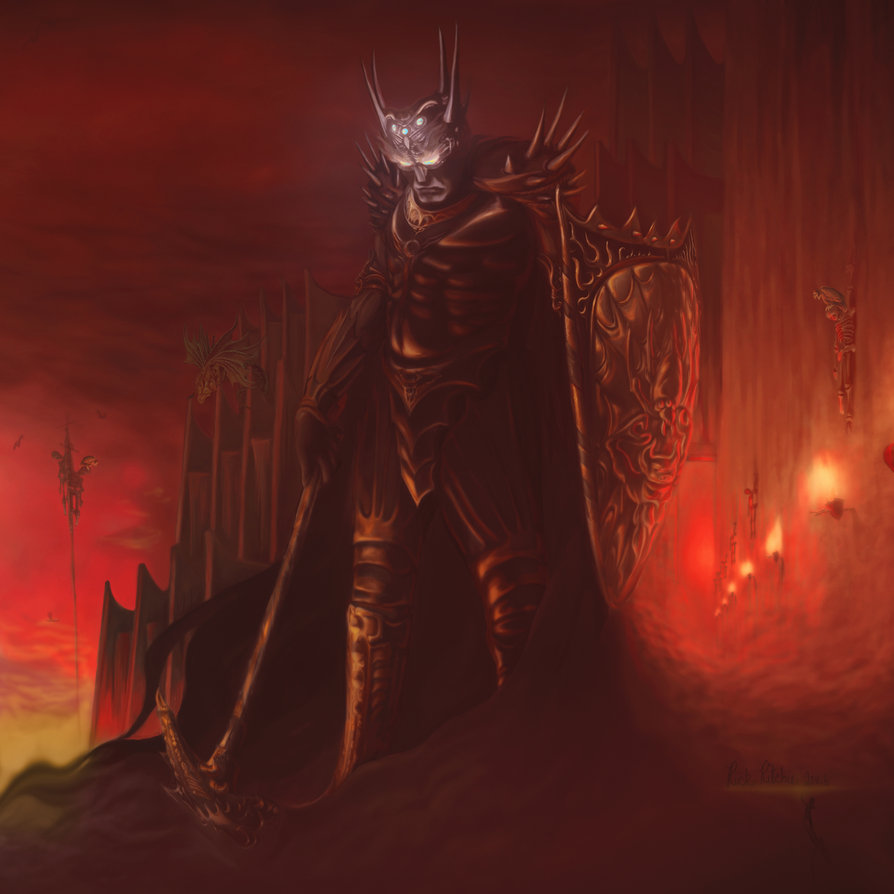
Morgoth came forth dressed in his black armour from Angband to confront Fingolfin. Wielding the terrible hammer Grond in which he attempted to kill the Elven-king repeatedly, but succeeded only in carving many fiery pits in the ground from his missed strikes. Fingolfin managed to avoid Morgoth’s blows, and wounded the Dark Lord seven times. But at last, Fingolfin grew weary, and Morgoth brought him to his knees. Fingolfin arose each time to continue the fight, but eventually he fell backwards into one of the many pits formed by Morgoth’s missed attacks. Morgoth took his foot upon Fingolfin’s neck and killed him, but not before Fingolfin, cut Morgoth’s foot with his sword.  Morgoth enraged broke the Elven-king’s body, but Thorondor, the King of the Eagles, swooped down on Morgoth, marring his face with his talons, and rescued the body of the Elf-king.

Fingolfin’s last stroke gave Morgoth a permanent limp, and the pain of his seven wounds could not be healed, nor were the scars ever erased.

After the battle, Morgoth sent out spies to watch over the Edain men, but when the Edain refused his false offers of peace he summoned the Easterlings over the Blue Mountains. However, he soon realized that he had underestimated the resolve and valor of his foes, for the Elves and Edain, recovering from the initial shock of Morgoth’s onslaught, had begun to make small gains against his outlying forces. He therefore checked his advances, and withdrew the main groups of Orcs to Angband.  Though Morgoth’s victory had been great, his own losses had been as numerous as the losses that had been accrued by the Elves. Seven years passed before Morgoth renewed his offensive abilities. He assailed Hithlum with great strength but just as he was on the verge of victory, Cirdan and a large army under his command came at the last moment and helped Fingon to turn the Orcs back.

Morgoths CourtThe Quest of the Silmaril

Some time later, the Elven-maiden Luthien and her human lover Beren, seeking to recover a Silmaril, came disguised to Morgoth’s court. Morgoth was able to see through her disguise, but she was undaunted by his eyes, and offered to sing for him. As she sang, Morgoth conceived a lust and an evil more abominable than any he had yet committed, and allowed her to continue singing. This was his downfall; suddenly shadow hid her, and she sang a terrible song of power that cast a spell of sleep.

All Morgoth’s court was cast down in a deep sleep by her song, but the Silmarils burned, and became so heavy that the head of Morgoth sagged upon his chest. He fell from his throne, the Iron Crown rolled away with a clang, and Beren cut a Silmaril from the neck of Morgoth.  However, rather than leaving immediately with his prize, he tried to take another of the Silmarils.  As he attempted to pry the second jewel loose, his knife snapped.  One shard struck Morgoth’s face, and he began to awaken. Beren and Luthien fled, but the dreaded werewolf Carcharoth bit off Beren’s hand. Then Morgoth awoke, and in a rage he and his court roared up in pursuit, only to see Thorondor carrying off the raiders. Morgoth’s rage at the loss of the Silmaril caused the Iron Mountains to begin erupting, but Morgoth wasn’t able to recover the Silmaril.

Soon after, Morgoth became aware that Maedhros was making a great army against him, and driving his orcs off the northern heights.  He took council against them and prepared his forces for a major confrontation. When the Elves made it to Angband, the Battle of Nirnaeth Arnoediad, began. Ultimately, the battle was a complete and decisive victory for Morgoth. The power of the Elves and the Edain were broken against Morgoth. The Noldor from the north of Beleriand, and all their great kingdoms besides Gondolin were destroyed. The Edain who did not flee were enslaved by Easterlings, and Hurin was taken captive.

tumblr_static_tumblr_static_bbp7i3c1334gos0wsc0o88k8w_1280The Cursing of Hurin

Morgoth was also well known for the imprisonment of Hurin of the House of Hador during the Nirnaeth Arnoediad. In the last hours of the battle Hurin and his kin defended Turgon, for he was the last heir to the throne of Gondolin and of Fingolfin after his brother, Fingon, died in battle. Turgon narrowly escaped the clutches of the orcs due to the valor of Hurin and Huor and their men.

Unfortunately, all but Hurin fell after the onslaught of Morgoth’s forces. After slaying untold numbers of Trolls and Orcs, Hurin was captured by Gothmog and sent to Angband. Morgoth knew that Hurin had been to Gondolin, and knew of its location. Morgoth sought to extract the information from him but, despite inflicting terrible torment upon his captive, was unsuccessful.

hqdefaultMorgoth sentences Hurin

From a distance Morgoth put the son and daughter of Hurin, Turin and Nienor, under a species of diabolic oppression: his thought followed them and gave them bad luck, though they were not possessed. By this means he drove them at last to madness and despair; though there is doubt as to whether in the extremity of his malice he cheated himself, as their madness saved them from damnation.

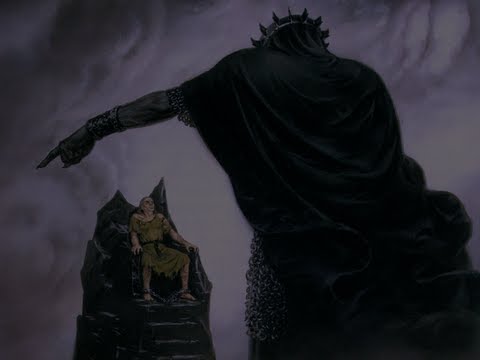
Morgoth brought a great curse upon the people – “Behold! The Shadow of my thought shall lie upon them wherever they go, and my hate shall pursue them to the ends of the world.” But all whom you love my thought shall weigh as a cloud of Doom, and it shall bring them down into darkness and despair. Wherever they go, evil shall arise. Wherever they speak, their words shall bring ill counsel. Whatsoever they do shall turn against them. They shall die without hope, cursing both life and death.

And so Hurin stayed and was chained atop Thangorodrim, forever watching his homelands fall under the shadow of Morgoth until he released him. Turin, who was valiant and powerful, nearly escaped the curse, as feared by Morgoth, but could not leave it. He and his sister perished and the curse of Morgoth on the Children of Hurin was fulfilled.

howe_gondolinNZThe Fall of Gondolin

Though he had been unable to force Hurin to reveal the location of the last great Elven kingdom, Morgoth eventually captured Maeglin, son of Turgon, the King of Gondolin. Threatened with unimaginable torment, Maeglin offered the secrets of Gondolin’s defenses in exchange for his own wellbeing. Additionally, he made a promise to kill Tuor personally, and was given permission by Morgoth to take Idril for himself.  With the promise of having Idril, Maeglin became Morgoth’s servant and sent him back to Gondolin to aid the invasion from within when the time came.

Soon after, Morgoth assaulted Gondolin, the last great realm of the Noldor, and with a superior force and Maeglin’s treacherous information, the city was destroyed without hope and quickly fell.


angliflin the blackFinal defeat and War of Wrath

However, Morgoth’s triumph was relatively short lived. Due to the plea actions of Earendil, the Valar were persuaded once again to take up arms against Morgoth’s tyranny. Morgoth himself did not expect that the Valar would ever help the Noldor after the terrible sins they had committed, and did not foresee the assault from Aman. But the Valar took pity on the Noldor, and a great battle began between Morgoth and the Host of Valinor. Morgoth emptied all of Angband, and his devices and engines and armies of slaves were so various and powerful the fighting spilled across all Beleriand.

In the end, Morgoth’s forces were completely defeated. The Balrogs were destroyed, except a few that fled and hid themselves in the caverns of the earth, and the Orcs were slaughtered. Morgoth hid in fear, and dared not come forth himself, but he had one last weapon at his command; the monstrous Winged Dragons. From out of the pits of Angband he called them to battle, with great power and fire, they drove back the Valar. But then Earendil came with Vingilot, accompanied by Thorondor and all the great birds, and killed Ancalagon The Black, whose great body fell upon the towers of Thangorodrim destroying them. Morgoth, utterly defeated stood and watched. He fled into the deepest of his mines, but his feet were cut from under him, and he was cast down upon his face. He was bound with the chain Angainor, his Iron Crown was beaten into a collar for his neck, and he was thrust through the Door of Night into the Timeless.

This concludes our lore series on the dark lord, but next week we kick off a brand new series (The Kings of Gondor) so until next weeks episode, I’m your host Iogro Merrybelly and I bid you a fine farewell!

scr.ee tags:

The Origins Of Evil – Part Two

Hail and Well Met Friends!

Last week if you remember we left off with Melkor being captured and held for three ages in the Halls of Mandos.  I hope you all are enjoying the series!

utumnoMelkor’s Revenge

During the War of the Powers when the Valar took to overthrow Melkor, they in the haste to do so left many of Utumno’s pits and vaults unexplored, and Sauron was still roaming the lands as well.  Also, the Valar didn’t capture or destroy the Balrogs, who gathered at the ruins of Angband who had gone into hibernation awaiting Melkor’s return.

After the passing of the Ages, Melkor was brought before Manwe, and played a good act of repentance.  Manwe was just unable to comprehend the evil of Melkor, so Manwe ordered him to be released.  At first, it seemed as though the evil of Melkor had been cured, for all who sought his counsel and aid in that time benefited greatly from it.  However, Tulkas and Ulmo were both very slow to forget Melkor’s evils, and watched him closely. In truth, Melkor was more filled with malice than ever, and began to put his extraordinary cunning to use in devising a way to ruin Aman.  Seeing the bliss of the Elves and remembering that it was for their sake that he was overthrown, Melkor desired above all things to corrupt them.  Of all the three primary groups of Elves, he found the Noldor to have a perfect balance of usefulness and open ears, and so worked began to work his malice almost exclusively among them.

Catherine_Karina_Chmiel_-_FeanorThe Greatest of the Noldor

Over a long period of time he spread lies concerning the intentions of the Valar in bringing the Elves to Aman, telling them, among other things, tales of the coming of Men, the existence of which the Valar had not revealed to the Elves. Due to his carefully crafted lies, many of the Noldor began to believe that the Valar had brought them to Aman so that Men might inherit Middle-earth, taking the lands and the glory that could have been theirs. Eventually, a shadow fell upon the Noldor, and they began to openly rebel against the Valar.  Chief amongst the disgruntled Noldor was Feanor, the firstborn son of the Noldor King Finwe.  Though he hated and feared Melkor, his overwhelming pride caused him to be the most vocal of the Noldor in expressing discontent. For their part, the Valar remained unaware of Melkor’s work, and saw Feanor as the source of the Noldor’s unrest. Though perturbed, they let the situation continue until Feanor threatened his brother Fingolfin at which point the Valar summoned him to the Ring of Doom in Valinor to explain his unlawful actions.

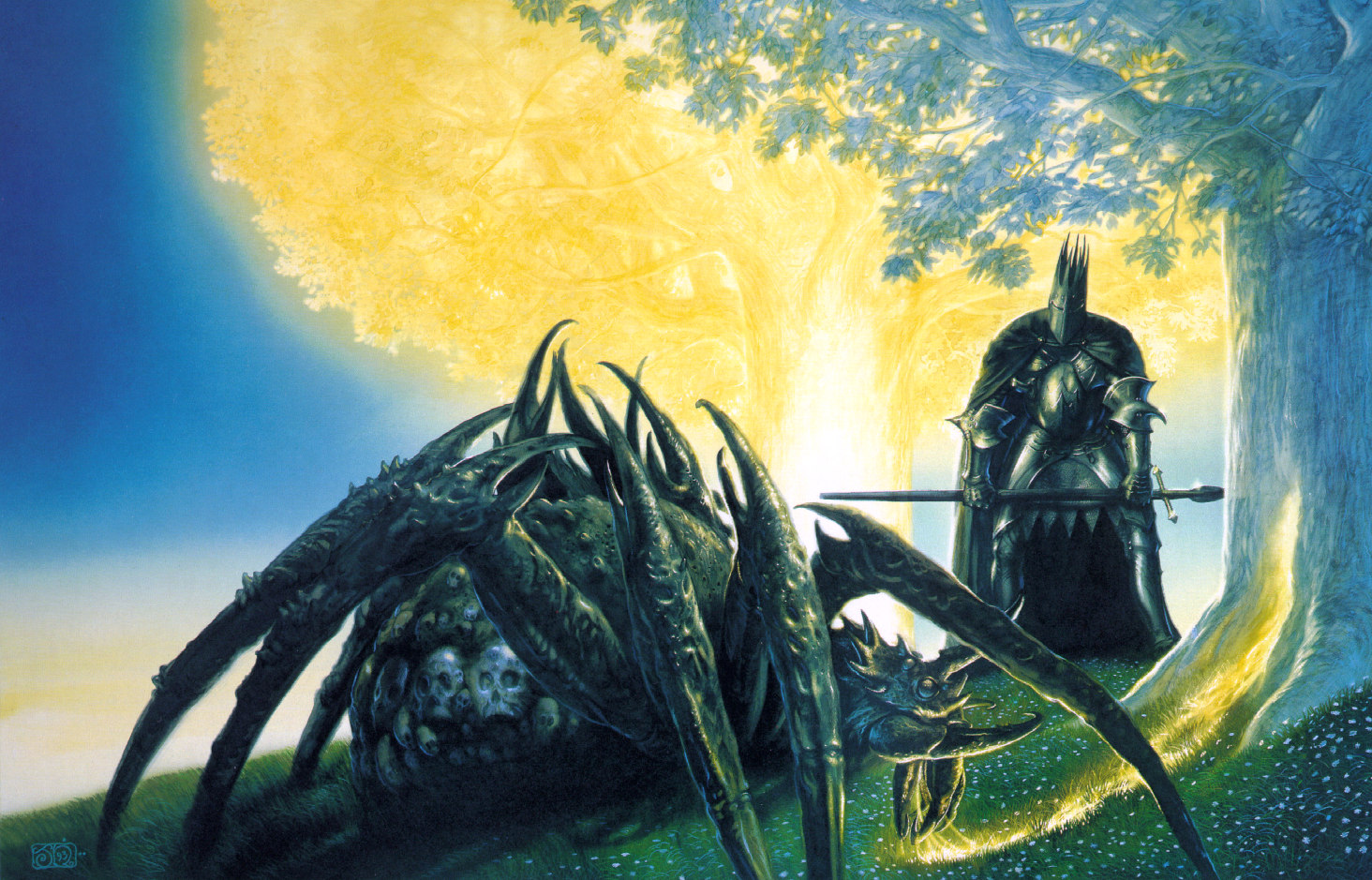
Feanor’s testimony revealed the lies of Melkor, and Tulkas immediately left the Ring of Doom to recapture him. But Melkor could not be found. After a time, he went to Formenos and struck a deceitful friendship to Feanor, as Melkor was only after the Silmarils.  Feanor, knew what he was up to and saw Melkor’s greed, refused him and shut the doors of Formenos in the face of Arda’s mightiest being.  Melkor passed unseen to the south, and came upon the great spider Ungoliant, which he promised to satisfy her unrelenting hunger, so she and Melkor together came back to Valinor, intending to destroy the Trees. During a time of festival, Melkor and Ungoliant suddenly attacked and Melkor thrust a great spear into the Trees and Ungoliant drank the sap that poured from the wounds, draining the Trees and poisoning them. The Trees quickly withered and died, plunging Aman into complete darkness for a time.

Melkor-and-UngoliantKilling of the Two Trees

In the fear and confusion that followed, Melkor sped to Formenos and broke into the fortress. There, he killed Finwe, father of Feanor, and stole the Silmarils along with all the other gems that lay there. The Silmarils burned Melkor’s hand, causing him great pain, but he did not release them. He and Ungoliant fled to the North, and the Valar pursued them, but the Unlight of Ungoliant brought great confusion to the Valar and the two escaped. The two thieves crossed the Grinding Ice of the Helcaraxe and entered Middle-earth, completing Melkor’s great revenge.

In Lammoth, Melkor and Ungoliant approached the ruins of Angband, with Melkor hoping to escape and leave his promise to feed Ungoliant unfulfilled. Ungoliant however, saw through his plan and stopped with him before they reached Angband. She demanded that he surrender the treasure of Formenos to satisfy her hunger as he had promised, so he gave her the lesser of treasures he had taken, but he would not give her the Silmarils which lay hidden within his right hand.  With his refusal to surrender the Silmarils, Ungoliant attacked Melkor, weaving her dark webbing around him. His resulting cry of pain and anguish woke the Balrogs from their depths of Angband. With a violent windstorm of fire they came to his aid, and drove away Ungoliant, but Melkor recalled them, and allowed Ungoliant to escape.  He then began to rebuild Angband, and gather his servants there.

When Feanor found his father was slain, he cursed Melkor and named him Morgoth, meaning “Dark Enemy”, and by that name was he known ever after. The name Melkor was never spoken again by his enemies.  As Morgoth finished rebuilding Angband, the slag and debris created by his vast tunnelings was plied into three huge volcanoes, collectively known as Thangorodrim.  Once he made these huge volcanoes, he began work on creating his forces, breeding vast numbers of Orcs and other fell beasts.

Until next weeks episode, I’m your host Iogro Merrybelly and I bid you a fine farewell!

scr.ee tags:

The Origins of Evil – Part One


Hail and well met everyone!

This week we continue in our lore with a brand new series.  We are taking a look at someone who truly is the creator of evil. I hope you enjoy the series!

dark_lord_by_rinthcog-d3ki4nhThe First Dark Lord

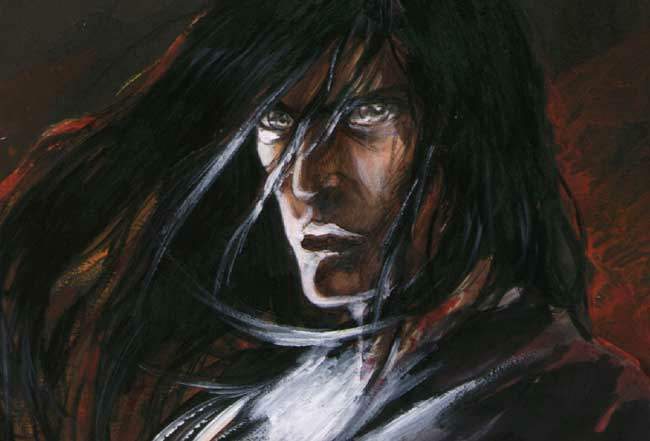
That’s right I said the First Dark Lord, as Sauron was not the first… Originally the most powerful of the Ainur created by Eru was Melkor and he rebelled against his creator because of pride and sought to corrupt Arda, becoming Morgoth.  After committing many evils in the First Age, such as the theft of the Silmarils and the destruction of the Two Lamps, Morgoth was defeated by the Host of Valinor in the War of Wrath. According to an unpublished portion of Tolkien’s conclusion to The Silmarillion, Morgoth will return at the end of the world to fight against good in Dagor Dagorath, the final battle.

Melkor was made in the beginning as an Ainu created by Eru Iluvatar in the Timeless Halls, at the beginning of creation. Manwë is said to be brother to him, yet Melkor was greater in power than any of the Ainur. Melkor was gifted also with the greatest knowledge of all the Ainur, and had share in all of the gifts given to his fellow Ainur by Eru. Desiring to create things of his own and knowing of but not understanding the Flame Imperishable, Melkor often went forth into the Great Void outside of the Timeless Halls in search of this flame. His quest was in vain; he found not the Flame Imperishable for it lies with Eru alone. Melkor grew ever more impatient of the unclear designs of Eru and the emptiness of the Void, and was often alone and apart from his fellow Ainur. It was during these lonesome periods that Melkor began to have ideas and thoughts of his own that were not in accordance with his fellow Ainur.

When the Ainur sang the Great Music before Eru, some of these stray thoughts he wove into his music, and straightaway discontent arose around him. Some of those nearby attuned their music to his, until two musical themes were warring before the Throne. Then Eru introduced a Second, and then a Third Theme into the music. Melkor succeeded in holding back the Second theme, of which Manwe was the chief instrument. The Third was the theme of Elves and Men, and while it was not overwhelmed by the Discord, it too failed to correct it. When Eru brought the Music to an end, he rebuked Melkor, praising his strength but telling him that all he did redounded only to the glory of Eru’s work. Melkor was ashamed, and resented it; for he thought his Discord an improvement. When the Music was made incarnate as Arda, it was already flawed through the Discord, and immoderate heat and great cold stalked it. He then took in the interest of the World and put his evil wherever he could put it.

67aadf5b93e2ca801a31c3a4f04cf77fBefore the Two Trees

When the Valar entered into Arda and began to shape the unwrought matter, Melkor saw the Field of Arda and claimed it for his own, striving against the Valar. He took various shapes. Whenever the Valar did something, Melkor disrupted them. For a long while, Melkor fought alone against the might of all the other Valar and Maiar of Arda, and he long held the upper hand. Then Tulkas came, his strength tipping the balance in favor of the Valar, and Melkor fled before him.

afe6a06255b84d74a3fabff74539c5bcThe Dark Lord Chained

The Valar had built for themselves the isle of Almaren in the midst of Middle-earth, between the Great Lamps. Then, Melkor delved a mighty fortress at the very north-most part of the World and named it Utumno. To defend it he raised the Mountains of the East in the northeast of Middle Earth, east of the Sea of Helcar. Decay arose in the North, and the Valar knew that he was there.

When the Valar had built Valinor, Melkor built his second, lesser fortress of Angband in the west, as a defense from the West should they attack. Angband was delved into the Iron Mountains, and was given to Sauron to command. While the Valar were unsure where the Children of Iluvatar would awake, they were reluctant to wage war against Melkor, fearing the clash of powers might result in massive collateral damage. Due to this, Melkor discovered the Elves before the other Valar, captured many of them, and transformed them by torture and other foul craft into orcs.

When it was discovered by the Vala Orome where the elves were, the Valar took immediate action against Melkor. This action was called the War of the Powers. When he saw the Valar winning, he retreated into Utumno and shut the great doors. The Valar smote the doors open and Melkor was cast down by Tulkas. Melkor was bound in Angainor and brought back to the Halls of Mandos for three Ages.

You will have to wait until next week to find out what happens after Melkor was bound in the halls for three ages.

Until next week, I’m your host Iogro Merrybelly and I bid you a fine farewell!

scr.ee tags:


I Once Was A Hobbit – Part Two

misty_printIn a Desperate Search for Precious

Gollum eventually left the Misty Mountains and pursued Bilbo a few years later, but the trail was cold. He made his way south into Mordor where all evil was being drawn at the time, discovering the secret stair located near Minas Morgul and surviving an encounter with Shelob.  He was captured on his return and taken to the enemy’s stronghold and forced to reveal under intense torture what he knew about the Ring.  Gollum was then strangely freed, as he shows no particular loyalty towards Sauron, but caught by Aragorn, and interrogated by Gandalf, who placed him in the care of the Silvan Elves living in Thranduil’s kingdom in Mirkwood.  Assisted by Orcs he escaped the elves, and slipped out to search for for the Shire. He passed through Moria, but could not make it out of the East gate. He was stuck and waiting, but got lucky when the Fellowship passed through.

poort1Finding the Fellowship

Gollum met and started following the Fellowship in Moria, and was spotted and heard by Frodo several times during that journey.  The Fellowship was divided when Gandalf disappeared while fighting a Balrog. Gollum continued following the remaining members of the Fellowship. It is unknown how he crossed the Bridge of Khazad-dum, but he came with them to Lorien without their knowing.  Gollum followed their boats down Anduin to Rauros and pursued Frodo and Sam across the Emyn Muil when they decided to make the journey to Mordor on their own. Gollum followed them, but after a confrontation with Sam in which Frodo finally stopped him and threatened to kill him with Sting, which Gollum recognized from his encounters with Bilbo.

03_KALUTA_01Frodo decided it best to tie a rope around Gollum’s neck for a leash, but the mere touch of the rope pained him. Taking pity on the wretched creature, Frodo made Gollum swear to help them. Agreeing to the oath, Gollum swore by the “Precious” itself and Frodo released him. The three of them then made their way to the Black Gate of Mordor.  Upon arriving the Black Gate they found it well guarded, Gollum convinced them if they went this way they would surely be caught and Sauron would regain the Ring. Gollum knew of another way farther to the South, another way into Mordor that was safer.

We shall pick up in the next episode and find out what happens with the journey to the South and supposed safer entrance into Mordor.

Until Next Week, I’m your host Iogro Merrybelly and I bid you a fine farewell

scr.ee tags:


A Wizard For Himself – Part Three

Hail and Well Met Everyone!!

Last week when we left off Gandalf had just escaped Sarumans keep by the help of Gwaihir the Windlord. This week we pick up with more of the treacheries Saruman has been planning.

Gandalf EscapesDevious Plans Indeed

Two days after Gandalf’s escape the Nazgul came but Saruman persuaded the Lord of the Nazgul that he did not know the Ring’s location but Gandalf did and should seek him out. In search for Gandalf the Nazgul found Grima Wormtongue instead…Grima being the one who went to Saruman and told him Gandalf had been to Edoras, and where Gandalf learned Saruman had been hiding his knowledge of the Shire from them.  The Nazgul later learned that Saruman knew far more than he had revealed. On their way to the Shire, the Nazgul met one of Saruman’s Shire spies, from whom they got detailed maps of the Shire made by Saruman. They sent the spy back to the Shire after warning him that he was now in the service of Mordor.

Believing that he would find no pity from either quarter (a false assumption, since he was later offered pardon by Gandalf); Saruman now put all efforts into obtaining the One Ring for himself. Not all of these efforts ever became known, but they included sending spies to detain Frodo Baggins on his journey from the Shire, attacking Rohan with Uruk-hai, and dispatching raiding parties of Uruk-hai accompanied by Moria Orcs on likely routes the Fellowship might take through Rohan to go towards Gondor. One of those parties captured Peregrin Took and Meriadoc Brandybuck and shot Boromir “with many black-feathered arrows” when he tried to defend the Hobbits. This led Aragorn, Legolas, and Gimli on a search which eventually led to the Battle of Helms Deep as well as the Destruction of Isengard by the Ents, leading to the end of Saruman’s reign of power in the north.

lotr-board_ISENGARDHis Power Destroyed

“ You have become a fool, Saruman, and yet pitiable. You might still have turned away from folly and evil, and have been of service. But you choose to stay and gnaw the ends of your old plots. Stay then! But I warn you, you will not easily come out again. Not unless the dark hands of the east stretch out to take you! ”
–Gandalf the White

Saruman’s plans have failed, and he suffered a series of massive setbacks.  His network of spies in the Shire didn’t capture Frodo Baggins, and Eomer destroyed his only partially successful raiding party. His invasion of Rohan ended in disaster with the utter defeat of his army at the Battle of the Hornburg.  Leaving Isengard undefended resulted in its destruction at the hands of the Ents.

250px-John_Howe_-_SarumanConfined to Orthanc and with his servants scattered or killed, Saruman made one final unsuccessful attempt to turn Theoden and Gandalf over to evil.  Gandal then offered Saruman a chance for redemption, which involved surrendering his staff and the Keys of Orthanc as a pledge. Saruman had a moment of doubt but in the end pride, anger, and hate won over and he refused the chance of redemption.

Gandalf, who had returned from death to replace Saruman, as the White and the head of the Istari, expelled Saruman from the order and broke his staff. Saruman also lost the Palantír of Orthanc when Grima Wormtongue threw it off a balcony of Orthanc, undecided about which he hated more, Saruman or Gandalf, and hitting neither.


?????????????????????????????????????

A Wizards Great Fall

Left out of the final stages of the War of the Ring, Saruman eventually managed to persuade the Ents who kept him captive into letting him leave Isengard after he met the conditions of handing over the Keys of Orthanc. He then went to the Shire, which his agent Lotho Sackville-Baggins had brought under control. He spent his final days as a small-time criminal master in Hobbiton known as Sharkey, until he was beaten in the Battle of Bywater. In the aftermath of that battle, Frodo confronted Saruman and exiled him from the Shire, but before he could leave Gríma Wormtongue slit Saruman’s throat on the very doorstep of Bag End.

Though his physical body was dead, Saruman was a Maia and did not truly die.  His spirit separated from his body much like Sauron’s after the Downfall of Numenor. As an incorporeal spirit, he should have been called to the Halls of Mandos, but the story implies that he was barred from returning. Tolkien indicated that his spirit was left naked, powerless and wandering, never to return to Middle-earth.

Well friends, this wraps up our series on Saruman but we still have more dark villains of Middle-Earth to cover….so stay tuned.

Until next week I’m your host Iogro Merrybelly and I bid you a fine farewell.


Tribute to Dol-Amroth

Hail and well met friends!

Since the release of Western Gondor on Lord of the Rings Online, I thought it fitting to give a tribute to Dol-Amroth since it’s one of the great cities we are now able to gaze upon in our journey within the game.

images (2)City of Dol-Amroth

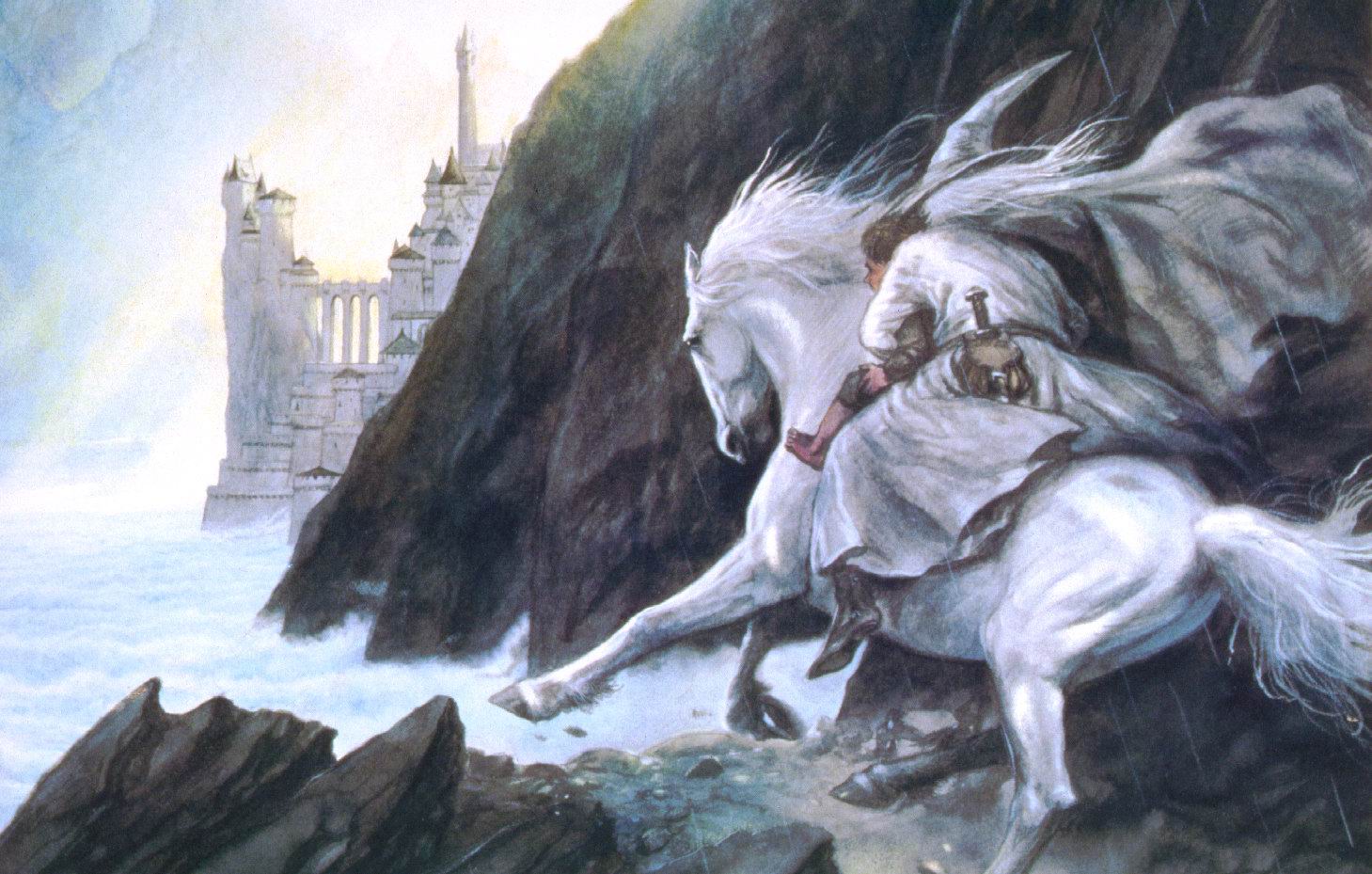
Let’s take a quick look at some history of this great city and where it formed.  We’ll start with Imrazor the Numenorean who moved to Edhellond According to tradition,  he married Mithrellas, a Silvan Elf of Lorien who bore a son which they named Galador.  After Imrazor’s death, his son Galador went on to found the city and later the princedom of Dol-Amroth.  Galador is counted the first lord of Dol-Amroth though the specific date of its foundation is nowhere recounted

373e5f204898613396a34130d2806d21The city of Dol-Amroth was built south of Edhellond at the inlet of Cobas Haven which was in the Bay of Belfalas. In the north of the city was built the Seaward Tower of Tirith Aear. The banner of the city was a silver swan, which were also seen on the battle banners carried by the knights during the Battle of Pelennor Fields.

The lands of Dol-Amroth were also known as Dor-en Ernil, which Galador’s father Imrazor lived and ruled.  It was also named the ‘Lands of the Prince’ which Galador inherited when he founded princedom over Dol-Amroth.

The first settlers of the area were Sindar from Beleriand and the people of Dol-Amroth were tall, grey-eyed, and dark-haired. They were famous for their abilities as the most skilled harp players in all of Gondor, who also played at the coronation of Aragorn. The inhabitants of Dol Amroth and in the lands nearby were some of the few people of Gondor who spoke Sindarin as a main language.