The Kings of Gondor – Part Eight – Battle of the Plains

Greetings Middle Earth Wanderers,

It has literally been months since I wrote episode seven and that is mainly due to a needing a break from writing.  During this series I have also been in the middle of writing my own novel along with a couple of other projects.  Needless to say I was burning out and had to trim some of the projects.  Unfortunately this was one that I had to pause, but we are back on track once again.

In our last episode we left off with with Gondor retaking Umbar and king Telumehtar defeating the Corsairs and this this week we pick up with week we pick up with Telumehtar’s son, Narmacil who became the 29th king of Gondor.

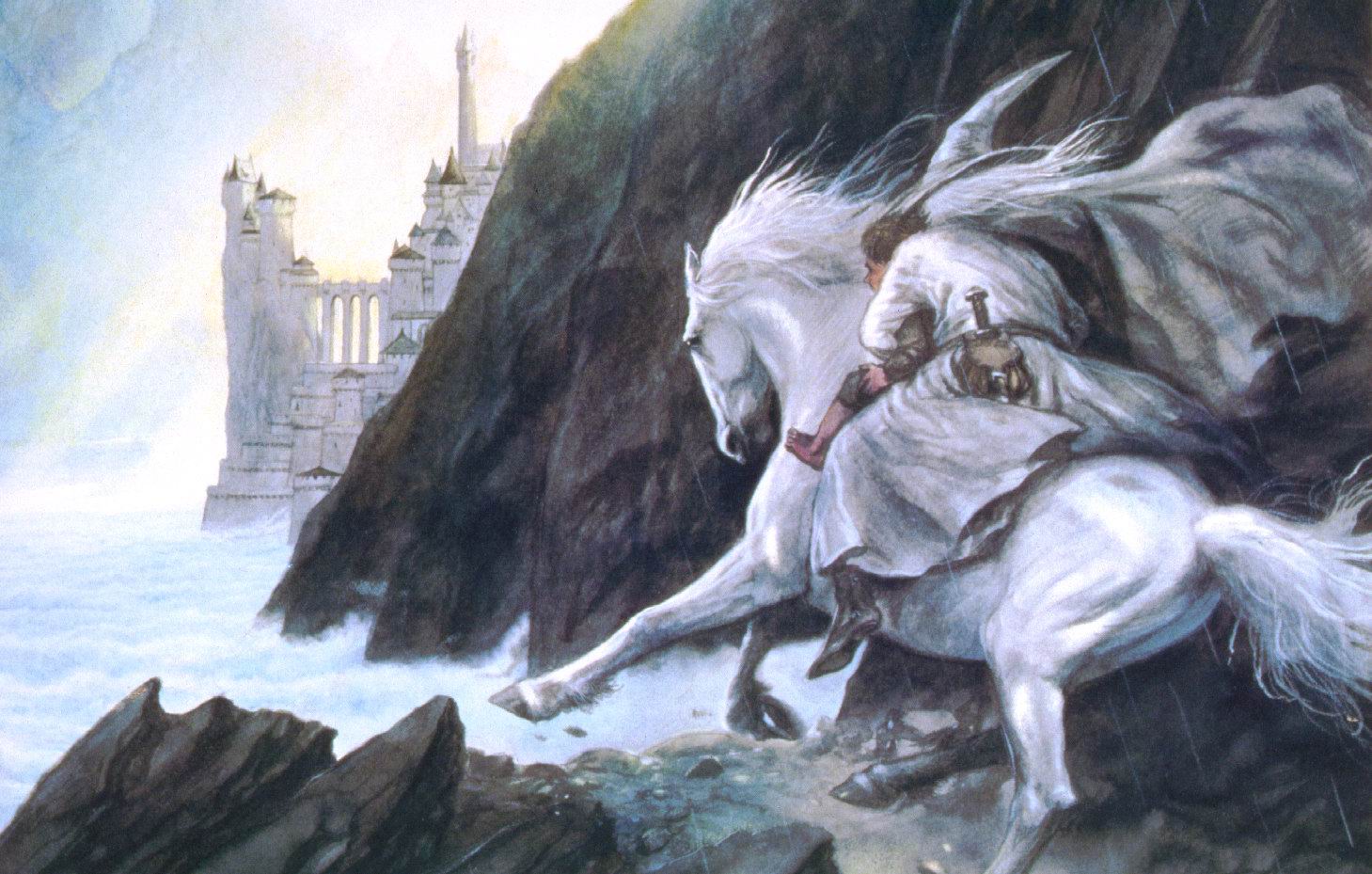
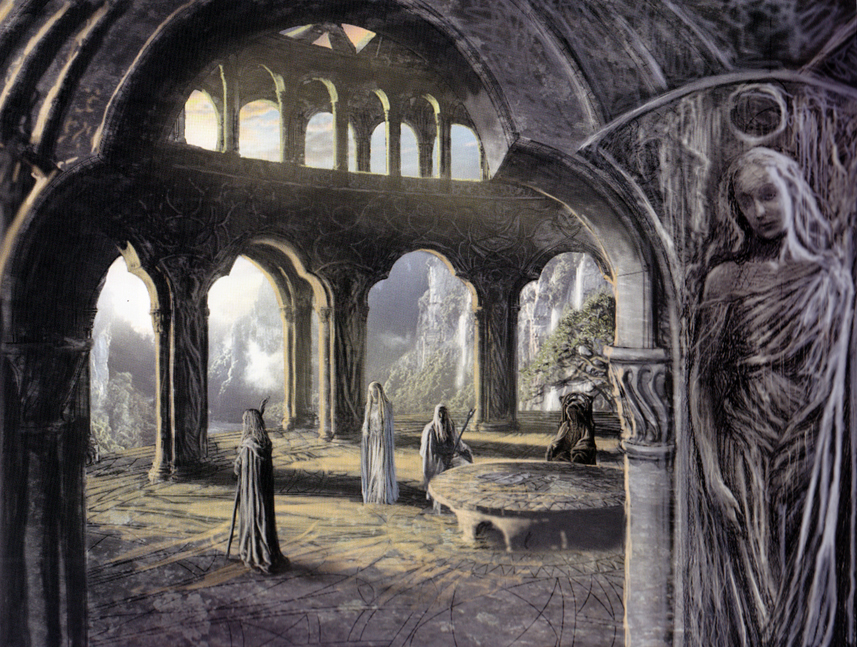
Tower of EchelionThe Tower of Ecthelion

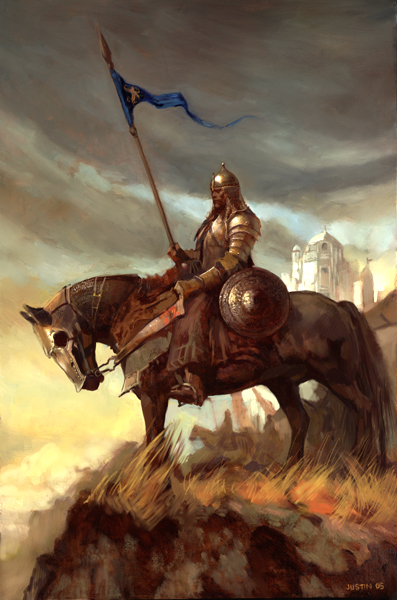
We don’t have a great deal of information on Narmacil, but what we do know is He had a very brief reign as king.  During his sixth year a group of Easterlings called the Wainriders overran the territories of Gondor’s eastern bank of the Anduin.  Narmacil prepared his armies and marched to Rhovanion to confront the invaders, but he was unsuccessful and was slain during the Battle of the Plains.  His son Calimethar took the throne in early in the third age after his fathers death becoming the 30th king of Gondor.

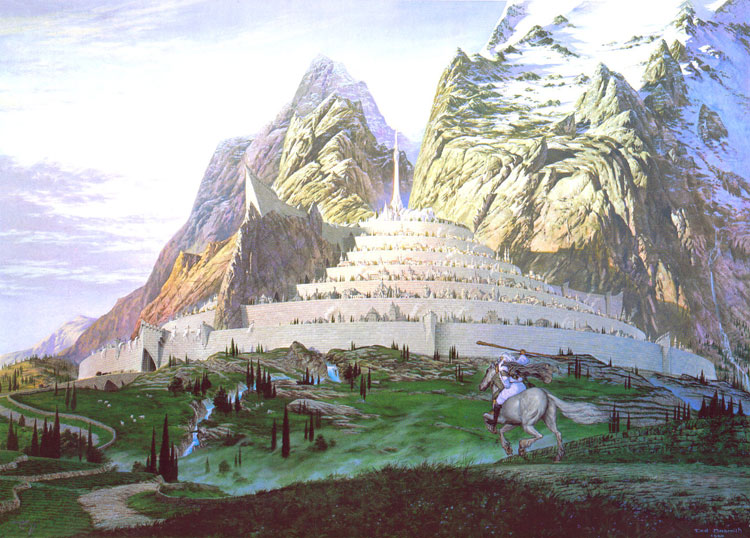
During his reign as king the Wainriders once again became a threat to Gondor and the lands to the west. In this time Calimehtar built the White Tower of Ecthelion which was the tall tower in the Citadel of Minas Tirith, and on top of this great tower waved the banner of Gondor that arose one thousand feet into the air.  The king was also tipped off to the impending invastion from the Wainriders by his good friends and ally’s the Eotheod.  They were a race of Northmen and were the ancestors of the Rohirrim.  It was The Eotheod leader Marhwini who warned the king about the invasion, which gave Gondor the time needed to assemble an army in Ithillien which was the eastern most province of Gondor.

Calimehtar took his army and marched north, sending his calvary to attack the unguarded enemy in the undeeps which were two great westward lands of the Anduin, located between the Brown Lands and the great Wold of Rohan.  The king and his Eothod allies finally met the Wainriders in Dagorlad and defeated them.  He had avenged his fathers death, and the great victory inspired the slaves in Rhovanion to rebel against the Easterling slavers.  Calimehtar ruled Gondor for eighty years, and died in the third age passing the crown to his only son Ondoher.
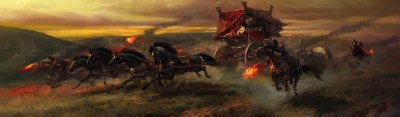
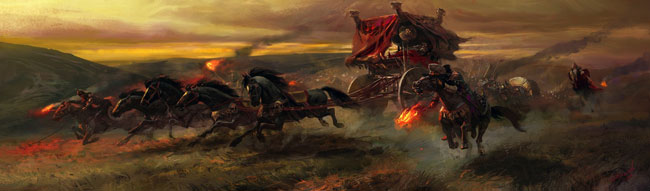
img-wainridersThe Wainriders Return

Ondoher succeeded his father Calimehtar and his daughter Fíriel married Prince Arvedui of Arthedain.  Not to long after Ondoher took the crown, the Wainriders invaded Gondor from the east while their allies, the Haradrim invaded Gondor from the south. Ondoher and his eldest son Artamir led the main army close to the Black Gate where they clashed with the Wainriders. The left wing of Ondoher’s army was commanded by Adrahil, the Prince of Dol Amroth. The right wing was commanded by Minothar, the captain of Gondor’s armies. The center was commanded by Ondoher himself.

In the ensuing battle Ondoher was slain together with his eldest son and heir Artamir, and Gondor defeated. The rearguard of the army defended Ithilien while Adrahil got help from General Earnil who defeated the Haradrim.  Though Earnil finally defeated the Wainriders it was learned that Ondoher’s second son Faramir (not to be confused with Faramir, brother of Boromir) was slain with his father, while law required that at least one heir to the throne be left behind.

No-one with a valid claim to the throne could be found, and Arvedui of Arthedain claimed the throne. Although Arvedui had a strong claim by his way of his wife Fíriel, who by ancient Numenorean law now should have become Ruling Queen.  Earnil II was selected to become king after his predecessor, King Ondoher and his heirs, were slain in battle. In the previous year an attack had been launched upon Gondor by the Haradrim and the Wainriders. In response, King Ondoher led the main army north to counter the Easterling invasion at Dagorlad and was defeated. Earnil was commander of Gondor’s southern army and guarded Pelargir. Earnil led his army to the Crossings of the Poros where he defeated the Haradrim. This enabled him to turn his attention to the invading Wainriders. The Wainriders, certain of victory, were celebrating their success before they would enter Minas Anor. They were unaware of Earnil’s victory in the south and were taken by surprise when Earnil attacked them and resulted in the victory of the Battle of the Camp
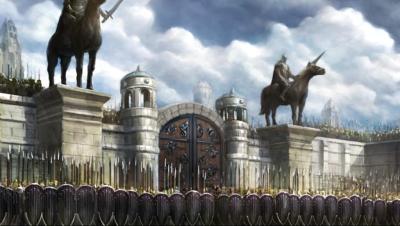
FornostGondor’s Long Wait For a King

After the threat was eliminated Gondor’s attention shifted towards Steward Pelendur and the Council of Gondor, for King Ondoher along with his two sons were slain at Dagorlad.  Both he and prince Arvedui had claim to the throne. Arvedui based his claim on that he was the direct descendant of Isildur (second High King of Arnor and Gondor and uncle to Meneldil first King of Gondor), and as the husband of Firiel, only surviving child of King Ondoher. The claim was rejected and Earnil of the House of Anarion was elected king for his deeds, heritage, and because the Steward, Pelendur, claimed that “The crown and royalty of Gondor belongs solely to the heirs of Meneldil, son of Anarion, to whom Isildur relinquished this realm. In Gondor, this heritage is reckoned through the sons only; and we have not heard that the law is otherwise in Arnor”.

Aside from being a gifted general Earnil was also a wise ruler. He sent messages to Arvedui announcing that he received the crown of Gondor, according to the laws and the needs of the South-Kingdom, “but I do not forget the royalty of Arnor, nor deny our kinship, or wish that the realms of Elendil be estranged. I will send to your aid when you have need, so far as I am able.” That time came finally came for Earnil as messages came to Gondor that Arthedain was in grave danger, and that the Witch-King of Angmar was preparing to strike against them. Earnil sent his son Earnur north with a fleet, as swiftly as he could, and with as great a strength as he could spare to aid Arvedui. Earnur arrived too late to save Arthedain and Arvedui who had fled north and drowned in the Ice-Bay of Forochel, but had managed to defeat the host of Angmar’s army in the Battle of Fornost with the help of Cirdan, the Lord of the Grey Havens and Glorfindl with an army from Rivendell. There, Earnur earned the hatred of the Witch-king.  Earnil died late in the Third Age after a rule of ninety-eight years and was succeeded by his son Earnur, who was as good a general as his father but lacked his wisdom.  This marked a very long void in Gondor’s throne before the heir of Isildur returned.

Until next time, I’m your host Iogro Merrybelly and I bid you a fine farewell!

scr.ee tags:

#Gondor #KingsofGondor

The Kings of Gondor – Part Seven – Death to the Corsairs

Hail and Well Met Friends!

When we left off on our last episode, we had just seen the Kin Strife come to a boiling point and watched civil war break out amongst the people of Gondor.  We also saw the crowning of Aldamir and the beginning of the Corsairs of Umbar.

HaradThe New Kings Constant Battle

Aldamir was the second son of King Eldacar and succeeded his father in TA 1490 because his elder brother Ornendil was murdered by Castamir. Aldamir’s fifty year reign was marked with constant warfare with the Corsairs of Umbar and the Haradrim, which called in Westron the Southrons and once the “Swertings” by Hobbits, were a race of Men from Harad in the region of Middle-earth directly south of Gondor. Aldamir was slain in battle against the Men of Harad in 1540 and had one son who later took the throne.

Aldamir’s son, born as Vinyarion took the throne in TA 1540 and reigned until 1621. Vinyarion wished to avenge his fathers death, which he accomplished in 1551 by invading the Harad and defeated them. It was then when he proclaimed himself Hymarmedacil II, which menat “South-Victor” in Sindarin.  This was a name one of his great ancestors took in the twelfth century.  He died in TA 1621 after a rule of eighty-one years and two hundred thirty years of life and was succeeded by his son Minardil.

The House of Hurin

Minardil was born in TA 1454 during the reign of his great grandfather Eldacar. Minardil’s reign was brief and tormented with conflict. His steward, Hurin of Emyn Arnen, would found the line of the House of Hurin, who became ruling stewards centuries later.  In TA 1634 he was slain at Pelargir when it was attacked by the Corsairs of Umbar. Minardil ruled for thirteen years and was succeeded by his eldest son Telemnar.

Telemnar became king in TA 1634, and due to the growing threat from the Corsairs, he immediately began building up Gondor’s fleets to defeat them but his plans came to an end when the Great Plague struck Gondor.  The Great Plague ravaged Gondor and it’s outlying hold of Osgiliath, and in result the king and his family died. The White Tree also withered and died during this time. He was succeeded by his nephew Tarondor, who was the son of Telemnar’s younger brother Minastan.

gondor treeThe White Tree

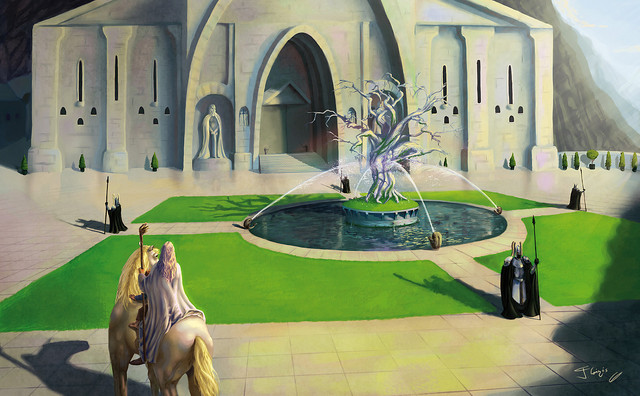
Tarondor took the throne at a young age in TA 1636 after his uncle passed.  He was the longest reigning King of Gondor, but war and plague had tortured his country and strove to rebuild the land and it’s great power. The most significant event in his reign was the removal of the capital from the now depopulated Osgiliath to Minas Anor and the replanting of the White Tree. However, Gondor at this time was drained of its resources and man-power and could no longer afford to tend to the forts guarding the ancient entrances to Mordor, thus they fell into decay paving the way for evil things to return.  He died in TA 1798 after one-hundred and Sixty-two years of rule was succeeded by his son.

Telumehtar became king in TA 1798 after his father passed.  His reign was largely uneventful except for problems the Corsairs continued to bring to the land. The long descendents of the defeated king Castamir the Usurper; the Corsairs raided the coasts of Gondor and terrorized shipping in the area. Telumehtar wanted to rid the seas of the Corsairs, so he assembled a large army in 1810 and recaptured their base in Umbar. After this event he took the title Umbardacil, meaning “Victor over Umbar”. In this war, the Corsairs suffered total defeat and the descendants of Castamir all died and Umbar was yet again held by Gondor.  Telumehtar ruled for fifty-two years and was succeeded by his son Narmacil II.

Until next weeks episode, I’m your host Iogro Merrybelly and I bid you a fine farewell!

scr.ee tags:

#KingsofGondor #LOTRlore

The Kings of Gondor – Part Six – The Kin Strife

Hail and Well Met Friends!

I know it’s been a while since our lest episode in the Kings of Gondor series and I do apologize for the long wait.  My schedule has been insanely busy lately, but I’m back on schedule with everything and you can expect regular episodes again.

When we left off last episode, we had just concluded the reign of Valacar and with his age came the rebellion of the coastal lands.  When he passed it brought a blood bath of a civil war called the Kin Strife among the people.

OverthrownThe Kin Strife

This week we pick up with his son Eldacar which was born as Vinitharya in the Kingdom of Rhovanion.  In 1260 of the Third Age he was brought to Gondor by his father. His reign saw the breaking of his people and the start of a civil war.  He was the son of princess Vidumavi, a daughter of the Northmen, King Vidugavia. After ascending the throne in 1432, he reigned for five years when he was deposed and driven from Osgiliath into exile to Rhovanion by a distant vile relative.  While Eldacar was exiled he slowly gathered support from the Northmen and the Dunedain from the northern parts of Gondor.  This army that Eldacar had gathered had a mass hate for the one who overturned the throne, and exiled Eldacar.  They hated this man because he executed Eldacar’s firstborn son, and they wanted revenge.

The great-grandson of King Calmacil, Castamir was not in line for the throne, but his royal background had made him the Lord of Ships under the previous king, Valacar. His lineage and influence left him in a position to challenge the current king, Eldacar, who was only half Numenorean.  As King Valacar’s only son, Eldacar was the legitimate heir to the throne, but his half Rhovanion lineage angered citizens who believed that pure Numenorean blood must be maintained. Capitalizing on the protest of the people against the the current king, Castamir was able to incite rebellion and surrounded Eldacar within the city Osgiliath 1437 of the Third Age. The city was set on fire by Castamir’s troops, destroying the famed Dome of Stars. Shortly thereafter, Eldacar fled the city and into exile in Rhovanion, to the north.

osgiliathThe Taking of a Kingship

With the defeat of the king, Castamir seized the throne.  For ten years Castamir ruled Gondor with an iron fist, while Eldacar quietly regained power. Castamir ruled cruelly, and committed many foul deeds, including executing Eldacar’s own son, Ornendil. At first the people of Gondor tolerated Castamir because of his pure Numenorean blood. Then, in 1447, Castamir, now called “The Usurper” by his people was overthrown after a decade of wicked rule with the people now rallying around the true king, Eldacar. He was slain by Eldacar’s forces at the Battle of Erui, the battle of the Kin-strife as which it came to be known for the rest of time.

Castamir’s influence did not end there though. Some of his forces, and surviving sons, retreated from the Battle of Erui to the port of Pelargir and escaped by ship to Umbar, far to the south. These descendants of Castamir became the so-called “Corsairs of Umbar”, the great pirates who terrorized the ports of Gondor. They were perhaps the greatest threat to Gondor for nearly 400 years, commanding massive fleets of ships. Their most infamous exploit was the Raid of Pelargir in 1634, in which a Corsair fleet led by Castamir’s great grandsons Angamaite and Sangahyando‎ sailed up the river Anduin to the port of Pelargir. This raid coincided with King Minardil’s visit in which he was slain by the attacking Corsairs.

The Corsairs remained a significant threat until 1810, when King Telumehtar retook Umbar for Gondor. After the victory Telumehtar was known as Umbardacil, which literally means “victor over Umbar”. In this battle the last descendants of Castamir were finally killed.

Until next weeks episode, I’m your host Iogro Merrybelly and I bid you a fine farewell!

scr.ee tags:

#KinStrife #KingsofGondor #LOTRlore

The Kings of Gondor – Part Four – The Great Ship Kings

Hey everyone!

Last week we left off with the history and bloodline of the House of Anarion, and ended with the line of the Ship Kings which is where we pick up today.

numenor shipThe Line of Ship Kings

Tarannon, and his younger brother Tarciryan succeeded their father Siriondil after his death in 830 of the Third Age.  Tarciryan took his place as the High King of Gondor in which brought a peacful time for the lands.  His brother Tarannon became the first “Ship King” of Gondor in which started the construction of Gondor’s naval fleets, and under his expansion of the military forces Gondor was able to extend it’s borders both West and South of the Mouths of Anduin.  Tarannon was one of the two Kings of Gondor who had no children, which was a breaking point in the bloodline.  Even though he had no children, his rule was marked as so great due to the naval fleet expansions that he was named the “Lord of the Coasts”.

Tarannon had his own personal struggles outside of keeping the coasts of Gondor safe and building the great naval fleet.  His wife Beruthiel was manipulative and chose to spy on the people of the kingdom, eventually Tarannon had enough and exiled his wife into the South which is why he never had children.  Tarciryan had a son Earnil who took the throne after his uncle Tarannon died in 913 of the Third Age.

Earnil I took his place as the King of Gondor and the rightful place of the second Ship King. He continued his uncles great military expansion and during his time as King captured Umbar, but was lost at sea in 936 of the Third Age.

Harad port of UmbarThe Port of Umbar and Glory of Gondor

His son Ciryandil took the throne and became the fourteenth King of Gondor and the third Ship King.  Ciryandil continued his fathers naval expansions and spent his life defending the recently captured port of Umbar against the Black Numenoreans, and the Haradrim who tried to capture the port.  He reigned as king for 79 years and was slain during a siege on Umbar.  His son Ciryaher took the throne in 1015 and began reorganizing Gondor’s armies and declared war on the Haradrim in which he finally defeated them in 1050. The Haradrim were forced to recognize him as their lord and king and paid tribute to Gondor, and their sons where forced to live as hostages in the court of the king. After this victory, he called himself Hyarmendacil, meaning South-victor.

After the defeat of Harad, Gondor became very rich and under his reign the realm reached its greatest extent and power. The passes of Mordor were well guarded by well-kept fortresses, so evil had no place to turn during Hyarmendacil’s reign. No one ever dared to contest his power and Gondor was at peace for the rest of his long reign.  He died in 1149 after 138 years of keeping the lands of Gondor safe, and evil at bay.  He had one son Atanatar II who became the sixteenth king of Gondor.   It is said that Atanatar’s reign as king was the most prosperous of Gondor, and that his wealth was so great that historians remarked that “precious stones are pebbles in Gondor for children to play with”.

He was also known as “The Glorious King” but his actions as king were neglected and he made no attempts to watch the borders of Mordor or grow the armies of Gondor.  Atanatar by no means maintained the power that his father commanded and this time was seen as the start of Gondor’s great decline.

We pick up next week with the line of kings beginning to fail and a land who will once again face it’s greatest enemy.

Until then, I’m your host Iogro Merrybelly and I bid you a fine farewell!

The Kings of Gondor – Part Three – The House of Anarion

Hail and Well Met Everyone!

Last week we left off with Isildur, the high king of both the kingdom of Arnor and Gondor. Since the death of Isildur we see a direct split in the lines and the title of High King did not fall to the House of Anarion.

tyler-realms-in-exile-01A Kings Line Divided

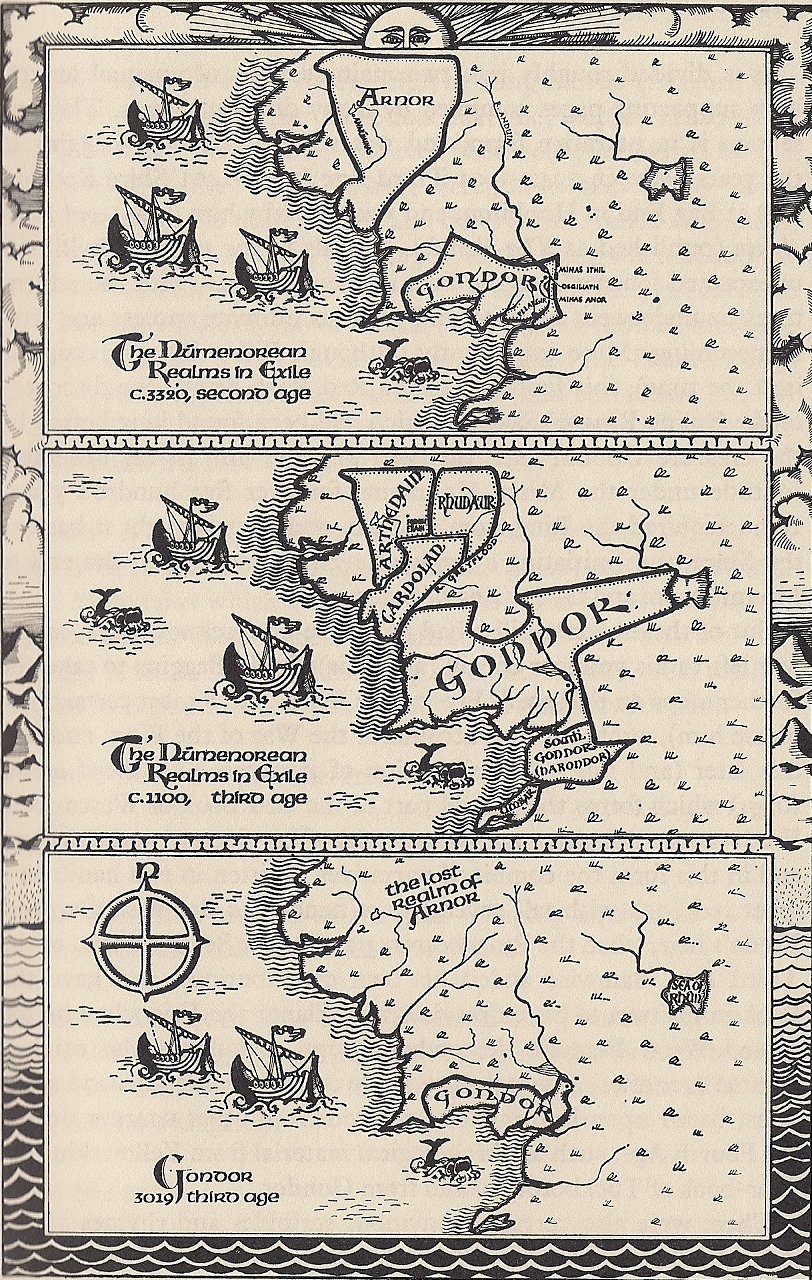
Meneldil was born in Numenor a year before its fall.  He was the fourth child of Anarion, and was the last recorded child born of Numenor before it’s destruction.  He had three older sisters and became the King of Gondor in the second year of the Third Age, after the death of his uncle Isildur.  Meneldil was the first “King of Gondor” to rule independently from the High Kingdom of Arnor.

It is uncertain whether Meneldil was King by right, because his father Anarion was only co-ruler of Gondor under his brother Isildur, who was the High King.  Meneldil did have a cousin that could have made the rightful claim to the throne of both kingdoms, but he never stepped forward to make such claim.  The people of Gondor accepted Meneldil’s claim over Gondor, but King Valandil of Arnor never made any real attempt to take rule over both kingdoms until Anarion’s line had failed.  Meneldil did serve Gondor from Arnor for 156 years before his death in year 158, but the title of High King still remained with the northern kingship line.

A Rule of Peace in the Lands

Cemendur took the throne after the death of his father Meneldil, but little is known about his reign.  It was a peacful time, and he ruled Gondor for 80 years and died in 238 of the Third Age.  He had one son Earendil who continued the reign of peace in the lands. There were no major events recorded during his time as king, but ruled Gondor for 86 years and died in 324 of the Third Age.  Earendil’s son Anardil took the throne after his fathers death.  The only major event recorded during his reign is he was the last king to dwell in Osgiliath, and his son Ostoher helped rebuild and expand Minas Anor.  Anardil died in 411 of the Third Age and ruled Gondor for 87 years.

Minas-Tirith3Ostoher took reign of Gondor and during his time as king he turned Minas Anor into a great dwelling place for his people, and continued to expand Minas Anor until it bacame a city as well as his fortress.  This city is one of the most renown of all Middle Earth as most people know it as the captial city of Gondor, or better known as Minas Tirith.  The white city became the captial some 1200 years after the great plague that hit the city in 1636.

Ostoher faced some challenges during his reign as in the last two years of his rule the Easterlings planned attacks on Gondor.  Because of the advanced technology and fortified keeps the king sent his son Tarostar who commanded his armies and was able to ward off and the Easterling threat. Ostoher ruled Gondor for 81 years and died in 492 of the Third Age in which his son Tarostar took reign of Gondor.  Tarostar, fought the Easterlings for almost a hundred years before defeating them, and after the victory renamed himself Romendacil, which means East-Victor.

The Line of Stewards Created

It was Romendacil, that created the line of Stewards for Gondor, as they were to be the men of wisdom and learning that would serve as high councilors to the king.  This bloodline of men were known as the House of Hurin, and they would later become the rulers of Gondor when the line of kings failed in 2050 of the Third Age.

Jan_Pospisil_-_Dale_units_vs._RhunAlmost 500 years of peace is what the land of Gondor saw but that was about to come to an end as the Easterlings invaded the land once again in 541 and killed Romendacil.  His son Turambar took the throne at a very young age, probably as a young teenager and avenged his fathers death.  Turambar expanded the lands of Gondor as he took his armies and conquered large parts of Rhun from the Easterlings.  This land became known as the East Land province of Gondor.  Turambar ruled Gondor for 126 years, which was the longest reign since king Meneldil.  He died in 667 of the Third Age at which his son Atanatar took reign over Gondor.

Not much is recorded of Atanatar’s reign other than it was a peacful time of Gondor.  He passed in the year 748 of the Third Age and had one son.

Siriondil took the throne after his fathers death in 748 and had two sons, Tarannon, and Tarciyan.  There were no major events recorded during his reign and was probably a continued time of peace for the land.  He ruled for 82 years and died in 830 of the Third Age.  Tarciryan took his place as the King of Gondor after his fathers death, but his brother Tarannon became the first Ship King of Gondor as he built the kingdoms great naval fleet!

Next week we will continue taking a historical look at the kings line of Gondor, and the great Ship Kings.

Until then, I’m your host Iogro Merrybelly and I bid you a fine farewell!

I Once Was A Hobbit – Part Two

misty_printIn a Desperate Search for Precious

Gollum eventually left the Misty Mountains and pursued Bilbo a few years later, but the trail was cold. He made his way south into Mordor where all evil was being drawn at the time, discovering the secret stair located near Minas Morgul and surviving an encounter with Shelob.  He was captured on his return and taken to the enemy’s stronghold and forced to reveal under intense torture what he knew about the Ring.  Gollum was then strangely freed, as he shows no particular loyalty towards Sauron, but caught by Aragorn, and interrogated by Gandalf, who placed him in the care of the Silvan Elves living in Thranduil’s kingdom in Mirkwood.  Assisted by Orcs he escaped the elves, and slipped out to search for for the Shire. He passed through Moria, but could not make it out of the East gate. He was stuck and waiting, but got lucky when the Fellowship passed through.

poort1Finding the Fellowship

Gollum met and started following the Fellowship in Moria, and was spotted and heard by Frodo several times during that journey.  The Fellowship was divided when Gandalf disappeared while fighting a Balrog. Gollum continued following the remaining members of the Fellowship. It is unknown how he crossed the Bridge of Khazad-dum, but he came with them to Lorien without their knowing.  Gollum followed their boats down Anduin to Rauros and pursued Frodo and Sam across the Emyn Muil when they decided to make the journey to Mordor on their own. Gollum followed them, but after a confrontation with Sam in which Frodo finally stopped him and threatened to kill him with Sting, which Gollum recognized from his encounters with Bilbo.

03_KALUTA_01Frodo decided it best to tie a rope around Gollum’s neck for a leash, but the mere touch of the rope pained him. Taking pity on the wretched creature, Frodo made Gollum swear to help them. Agreeing to the oath, Gollum swore by the “Precious” itself and Frodo released him. The three of them then made their way to the Black Gate of Mordor.  Upon arriving the Black Gate they found it well guarded, Gollum convinced them if they went this way they would surely be caught and Sauron would regain the Ring. Gollum knew of another way farther to the South, another way into Mordor that was safer.

We shall pick up in the next episode and find out what happens with the journey to the South and supposed safer entrance into Mordor.

Until Next Week, I’m your host Iogro Merrybelly and I bid you a fine farewell

scr.ee tags:


I Once Was a Hobbit

Hail friends!

This week we continue in our lore series of villains in Middle Earth.  We are taking a look at a very mysterious creature.  I hope you enjoy the story!

a-08The Corruption Takes Place

Once a predecessor of the Stoorish Hobbits, Smeagol spent the early years of his life living with his family under the Matriarch, which was his grandmother.  Around the year 2463 in the third age, Smagol became the fourth Bearer of the One Ring, after Sauron, Isildur, and Deagol, who was his cousin.  On Smeagol’s birthday, his cousin and him went fishing in the Gladden Fields north of the mountains.  It was there that Deagol found a gold ring, after being pulled into the water by a large fish.  Almost immediately, Smeagol fell to the power of the ring and demanded it as a birthday present.  When Deagol refused, Smeagol promptly went into a panicked rage and began fighting with Deagol over the ring.  Smeagol was so engulfed with rage he strangled his cousin to death and finally took the One Ring.  For seven years Smeagol was corrupted by the ring and finally banished by his people…he was forced to find a home in the nearby Misty Mountains.  The Ring’s malignant influence twisted his body, as well as his mind, and prolonged his life far beyond its natural limits. He called the ring his “Precious” or his “Birthday Present,” the latter as a justification for killing his cousin.

121217_r22934_p465A Home in a Cave

He lived in the Misty Mountains for over four hundred years, living on raw blind fish (which he caught from his small row boat), bats and Goblins when he could get them as Goblin City was very close to his home.  In later years, he found Hobbit and Elven food completely repulsive.

During his centuries under the Ring’s influence, he developed a sort of dissociative identity disorder: Smeagol, being his former hobbit personality, still vaguely remembered things like friendship and love, while Gollum, his now corrupted personality, was a slave to the Ring and would kill anyone who tried to take it. Years later, Samwise Gamgee gave him the nicknames, “Slinker” (for his eager-to-please demeanor), and “Stinker” for his corrupted personality.  His two personalities often argued when he talked to himself and he had a love/hate relationship, which mirrored Gollum’s love and hatred for the Ring and for himself.

In the year 2941, during the Quest of Erebor, Bilbo Baggins stumbled upon the lake on which Gollum lived and found the One Ring.  Gollum had lost the Ring while squabbling with an imp goblin in the caves leading to the lake, though in some fact it is thought that the ring abandoned Gollum, as it was known to have a will of its own. As Gandalf says later, it looks after itself, trying to get back to Sauron.  After the infamous Riddle Game that Bilbo played with Gollum and in beating him, Gollum refused to show Bilbo the promised way out and had plotted to murder him. When he went to get his “Precious,” he found that it was gone. He suddenly realized the true answer to Bilbo’s last riddle—”What have I got in my pocket?” – breaking into a rage he began to chase Bilbo into the tunnels. Bilbo stumbled across the Ring’s power of invisibility as he ran, allowing him to follow Gollum to the back entrance of the cave and make his way out safely.

We shall pick up next week and continue our episode to find out what happens with Gollum and the Ring!

Until then, I’m your host Iogro Merrybelly and I bid you a fine farewell!


scr.ee tags:

A Wizard For Himself – Part Three

Hail and Well Met Everyone!!

Last week when we left off Gandalf had just escaped Sarumans keep by the help of Gwaihir the Windlord. This week we pick up with more of the treacheries Saruman has been planning.

Gandalf EscapesDevious Plans Indeed

Two days after Gandalf’s escape the Nazgul came but Saruman persuaded the Lord of the Nazgul that he did not know the Ring’s location but Gandalf did and should seek him out. In search for Gandalf the Nazgul found Grima Wormtongue instead…Grima being the one who went to Saruman and told him Gandalf had been to Edoras, and where Gandalf learned Saruman had been hiding his knowledge of the Shire from them.  The Nazgul later learned that Saruman knew far more than he had revealed. On their way to the Shire, the Nazgul met one of Saruman’s Shire spies, from whom they got detailed maps of the Shire made by Saruman. They sent the spy back to the Shire after warning him that he was now in the service of Mordor.

Believing that he would find no pity from either quarter (a false assumption, since he was later offered pardon by Gandalf); Saruman now put all efforts into obtaining the One Ring for himself. Not all of these efforts ever became known, but they included sending spies to detain Frodo Baggins on his journey from the Shire, attacking Rohan with Uruk-hai, and dispatching raiding parties of Uruk-hai accompanied by Moria Orcs on likely routes the Fellowship might take through Rohan to go towards Gondor. One of those parties captured Peregrin Took and Meriadoc Brandybuck and shot Boromir “with many black-feathered arrows” when he tried to defend the Hobbits. This led Aragorn, Legolas, and Gimli on a search which eventually led to the Battle of Helms Deep as well as the Destruction of Isengard by the Ents, leading to the end of Saruman’s reign of power in the north.

lotr-board_ISENGARDHis Power Destroyed

“ You have become a fool, Saruman, and yet pitiable. You might still have turned away from folly and evil, and have been of service. But you choose to stay and gnaw the ends of your old plots. Stay then! But I warn you, you will not easily come out again. Not unless the dark hands of the east stretch out to take you! ”
–Gandalf the White

Saruman’s plans have failed, and he suffered a series of massive setbacks.  His network of spies in the Shire didn’t capture Frodo Baggins, and Eomer destroyed his only partially successful raiding party. His invasion of Rohan ended in disaster with the utter defeat of his army at the Battle of the Hornburg.  Leaving Isengard undefended resulted in its destruction at the hands of the Ents.

250px-John_Howe_-_SarumanConfined to Orthanc and with his servants scattered or killed, Saruman made one final unsuccessful attempt to turn Theoden and Gandalf over to evil.  Gandal then offered Saruman a chance for redemption, which involved surrendering his staff and the Keys of Orthanc as a pledge. Saruman had a moment of doubt but in the end pride, anger, and hate won over and he refused the chance of redemption.

Gandalf, who had returned from death to replace Saruman, as the White and the head of the Istari, expelled Saruman from the order and broke his staff. Saruman also lost the Palantír of Orthanc when Grima Wormtongue threw it off a balcony of Orthanc, undecided about which he hated more, Saruman or Gandalf, and hitting neither.


?????????????????????????????????????

A Wizards Great Fall

Left out of the final stages of the War of the Ring, Saruman eventually managed to persuade the Ents who kept him captive into letting him leave Isengard after he met the conditions of handing over the Keys of Orthanc. He then went to the Shire, which his agent Lotho Sackville-Baggins had brought under control. He spent his final days as a small-time criminal master in Hobbiton known as Sharkey, until he was beaten in the Battle of Bywater. In the aftermath of that battle, Frodo confronted Saruman and exiled him from the Shire, but before he could leave Gríma Wormtongue slit Saruman’s throat on the very doorstep of Bag End.

Though his physical body was dead, Saruman was a Maia and did not truly die.  His spirit separated from his body much like Sauron’s after the Downfall of Numenor. As an incorporeal spirit, he should have been called to the Halls of Mandos, but the story implies that he was barred from returning. Tolkien indicated that his spirit was left naked, powerless and wandering, never to return to Middle-earth.

Well friends, this wraps up our series on Saruman but we still have more dark villains of Middle-Earth to cover….so stay tuned.

Until next week I’m your host Iogro Merrybelly and I bid you a fine farewell.


A Wizard for Himself – Part Two

Hail and Well Met Friends!

This week we continue our series of the great White Wizard and one of the greatest Villains of Middle-earth.  Everyone enjoy…

Blue WizardsA Grey Arrival

The five wizards arrived at the Grey Havens around the year 1000. Only the keeper of the havens, Círdan the Shipwright, knew Saruman’s identity and origin. Saruman would later discover that Círdan had given Narya, the Red Ring, to Gandalf upon their first landing in Middle-earth. Even though Saruman was immediately considered the head of the order while Gandalf was not, Círdan had divined Gandalf as the wisest and greatest of the wizards. Saruman’s jealousy of Gandalf grew from these events, perhaps because he feared that he would eventually supplant him as chief of wizards.

Saruman and the two Blue Wizards went into the east of Middle-earth. After one and a half millennia, he returned to the west, just as Sauron’s power was growing again in Dol Guldur.

white-councilThe White Council

When the White Council was formed in the Third Age it was to counter Sauron and Saruman was appointed its leader, though Galadriel wanted Gandalf in this position. Saruman refused to step down due to his pride, while Gandalf had declined.  At this point Saruman had begun to sense the resurgence of Sauron and to envy and desire his power, and especially the One Ring. This was also the same year that the One Ring was taken by Smeagol who later became Gollum, and disappeared with the ring into the Misty Mountains for hundreds of years. It was during the meetings of the Council that Saruman first noted Gandalf’s interest in Hobbits and The Shire, and believing that all his deeds related to some as yet undisclosed plan of his for self-enhancement, Saruman himself began keeping a greater watch on Gandalf and sent spies to The Shire.  At first, he himself visited it secretly but stopped when he realized that its inhabitants had noticed him. Amongst the purposes of his visits was to procure some of the halflings’ Pipe-weed, since in secret imitation of Gandalf he had begun to smoke.

Z_orthanc_04The Isengard Keep

In the year 2759 of the Third Age, Saruman settled in Isengard with the permission of the Steward of Gondor, Beren, although he settled only as Warden of the Tower and representative of the Steward (the stronghold had by then been abandoned by Gondor). There he became important in the informal alliance defending the west of Middle-earth. In the tower of Isengard, Orthanc, he also found one of the remaining Palantiri.

By 2850, Gandalf had entered Dol Guldur and confirmed that the evil presence lurking was indeed Sauron.  By Saruman’s advice, the White Council decided against attacking Dol Guldur.  Gandalf would later remark that it was at this council meeting that he first began to suspect that Saruman desired to possess the One Ring.  Saruman’s real intention was to permit Sauron to build up his strength, so that the One Ring would reveal itself. He later found that Sauron had more knowledge of the possible location of the One Ring than he expected, and by 2941, he finally agreed to attack Dol Guldur.

Ten years after Sauron abandoned Dol Guldur he returned to Mordor and declared himself openly. He established contact with Saruman through the Palantir captured from Minas Ithil, which by this time was now known as Minas Morgul. In this year, Saruman also took Isengard for his own and began to fortify it.

When Gandalf presented Saruman with the discovery and the location of the One Ring, Saruman revealed his desire for it and his secret alliance with Sauron. He had also shed the title of Saruman the White, Saruman no longer had any loyalty to the White Council, or the Ring-bearer. He tried unsuccessfully to gain Gandalf’s allegiance.  When Gandalf refused to join with him, Saruman held him captive in Isengard but Gandalf later escaped with help from Gwaihir the Windlord, and made Saruman’s treachery known to the rest of the White Council.

Stay tuned for next weeks episode of our wizard lore.

Until next time, I’m your host Iogro Merrybelly and I bid you a fine farewell!

A Wizard For Himself

Hail and Well Met Friends!

This week we continue in our series of the Villains of Middle-earth and take a look into the history of a great evil. Everyone enjoy…

f4d1c498e482e7af57cedf42515247e0The Great White Wizard

His name in Quenya was Curumo or as the Elves called him Curunir in the Sindarin language was an Istari, or wizard, who lived in Middle-earth during the Third Age. Saruman was the first of the five Wizards to arrive in Middle-earth. He was said to be the eldest of the order, and Gandalf acknowledged him as the chief of the Istari. Many feared the White Wizard; even Sauron himself.  Saurman made his dwelling in the great fortress of Orthanc in Isengard.

He passionately studied the arts of Sauron, but he soon became enamored of Sauron’s devices, especially the One Ring.  Saruman betrayed himself, and his mission, and sought the power of the Ring for himself. He initially advocated an alliance with Sauron, but he soon betrayed Sauron as well, as his ultimate goal was to defeat Sauron and rule Middle-earth for himself. But his plans came to an abrupt end, and his power was broken in the Battle of the Hornburg and of Isengard.

downloadChief of the Wizards

Saruman, before his fall, was the chief of both the wizards and of the White Council which opposed Sauron and his doings. Sarumans knowledge and skill, especially of Sauron’s devices, was said to be great (the name “Saruman” means “man of skill”). However, his deep study of the One Ring and Sauron’s other magic corrupted him, and his lust for power led to his downfall. He is one of the few characters in Middle-earth who is morally “grey” – serving neither good nor evil. He betrays both sides and ultimately works for his own ends.

Saruman was a Maia known as a servant of the powerful and high-ranked Vala Aule – just as Sauron had once been. In Valinor, the land of the Valar, a council was called by Manwe, leader of the Valar, shortly after Sauron’s defeat by the Last Alliance of Elves and Men. Though Sauron was overthrown, it would later turn out that he had not been effectively vanquished and his shadow began to fall upon Middle-earth a second time. It was decided to send five emissaries to Middle-earth. These should be the mighty peers of Sauron, yet they were to forgo might, and clothe themselves in flesh, as they were intended to help Men and Elves unite against Sauron, but the wizards were forbidden from matching the Dark Lord in power and fear.

5-WizardsThe other four who were chosen were Aiwendil or best known as (Radagast), Alatar and Pallando (the Blue Wizards), and Olorin or as most fans know him as (Gandalf).  Curumo or (Saruman) was appointed overall leader of the group.

Though this week was a short story, keep on the watch as we will continue our look into the history of Saruman these next few weeks.

Until next time, I’m your host Iogro Merrybelly and I bid you a fine farewell!