Sauron’s Deadly Servant – Part Three

Hail and well met everyone!

Last week we left off with the Nazgul fleeing to Mordor and Sauron preparing for his final battle against the Free Peoples of Middle Earth.
Gondor_Civil_War2The Siege at Gondor

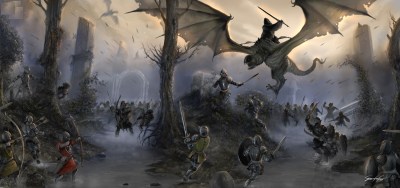
The final Battle of Osgiliath came swiftly on 3019 in the Spring of the Third Age against Faramir and his rangers. Faramir’s forces could not hold the Orc hordes under the control of Gothmog. Faramir pulled his forces back to Minas Tirith with the Nazgul chasing them, they lost many of their forces in the retreat.  Faramir went out with his rangers for a second time, and from that assault only Faramir returned to Minas Tirith gravely wounded. With Gondor’s defeat at Osgiliath, nothing stood in the way of Sauron’s ambitions of destroying Minas Tirith and the Free People’s hopes.

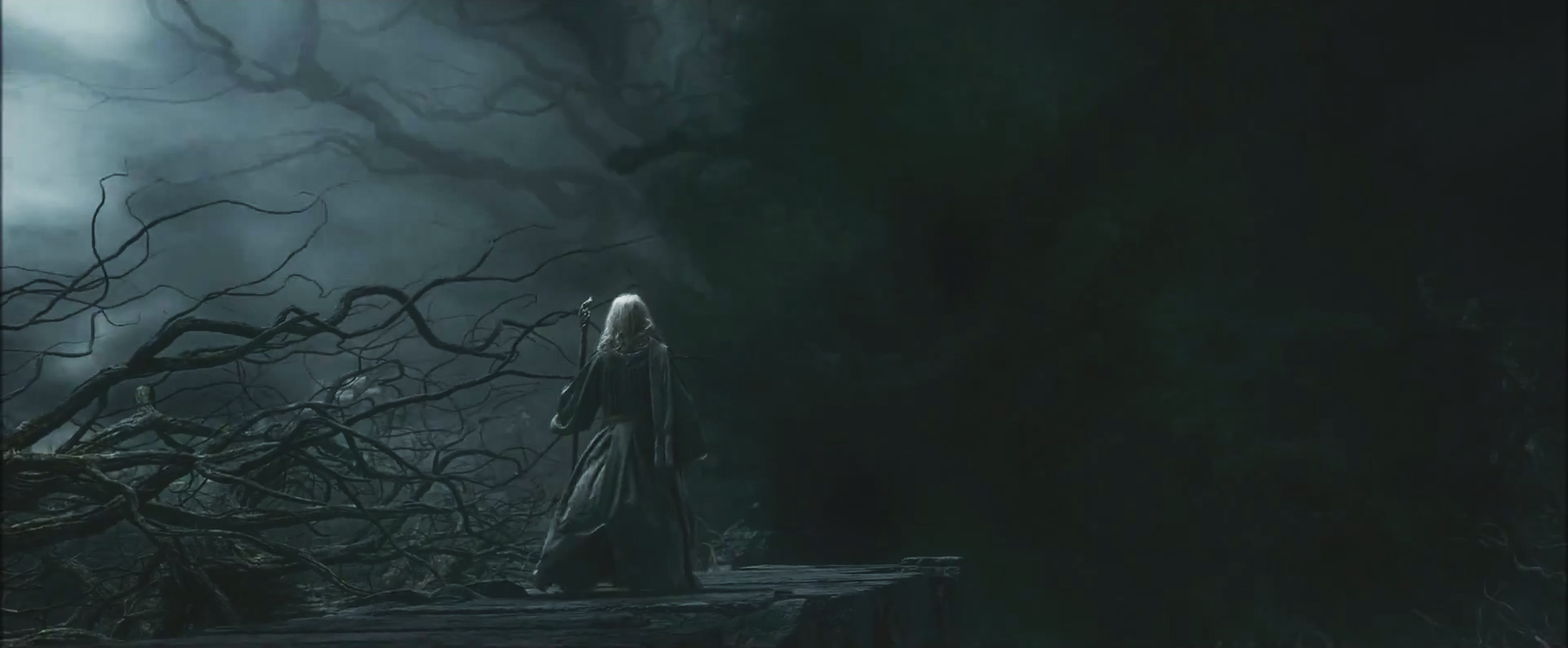
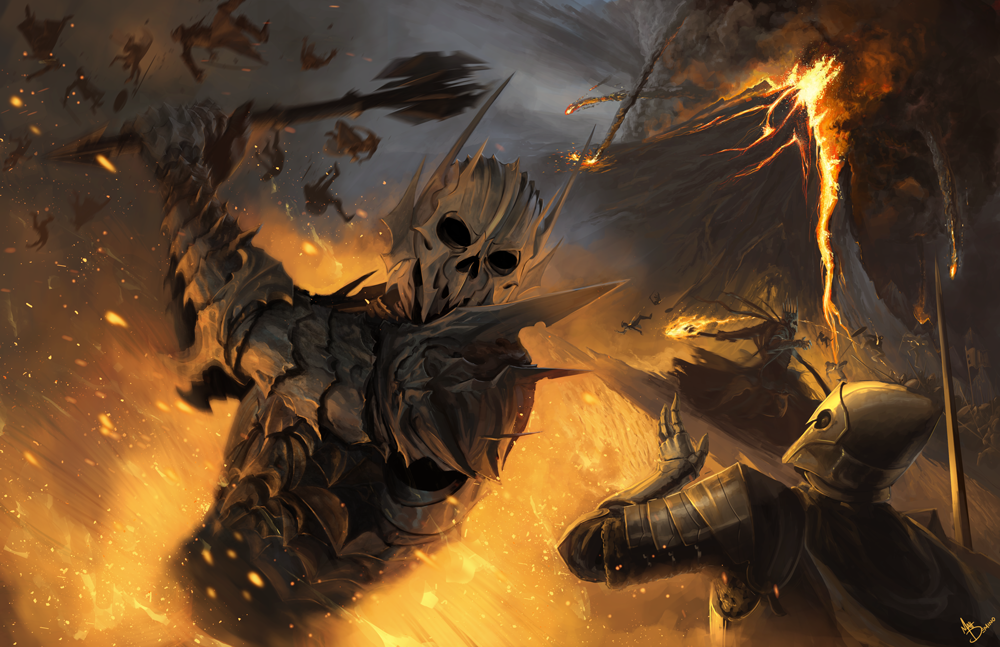
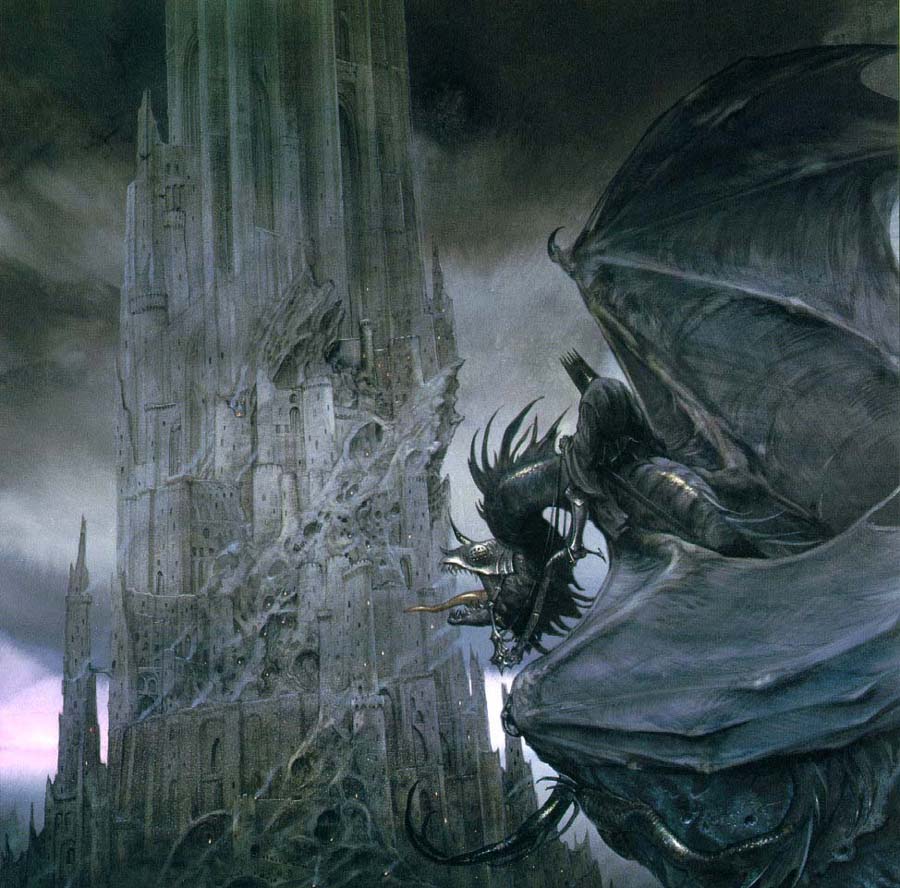
inspiration-of-medieval-language-and-literature-good-vs-evil-in-tolkiens-rotk-22the-witch-king-of-angmar-minas-tirith22-john-howeJust two days later, Orcs, Haradrim, and Easterling forces numbering over 200,000 marched on the gates of Minas Tirith.  Sauron had now bestowed the Witch-king with new found strength, making his appearance on a black horse, and presence casting a shadow of utter fear upon anyone he met.  Speaking in some forgotten tongue, he enhances the power of Grond, and weakens the already damaged gate of Minas Tirith. The ram breaks open the gate, and the defenders inside flee from pure terror of his presence. However, his march is hindered by Gandalf, the only one able to withstand his power. There is a duel of words between them, and the Witch-king tilts his hood revealing a crown on empty air, mocking Gandalf and bidding him to die, the Witch-king draws his black blade but Gandalf holds firm, ready to do battle.  Before the two clash with one another, the horns of Rohan sound, signaling the arrival of aid. The Witch-king then withdraws to order the defence against this new threat.
EowynDeath of The Servant

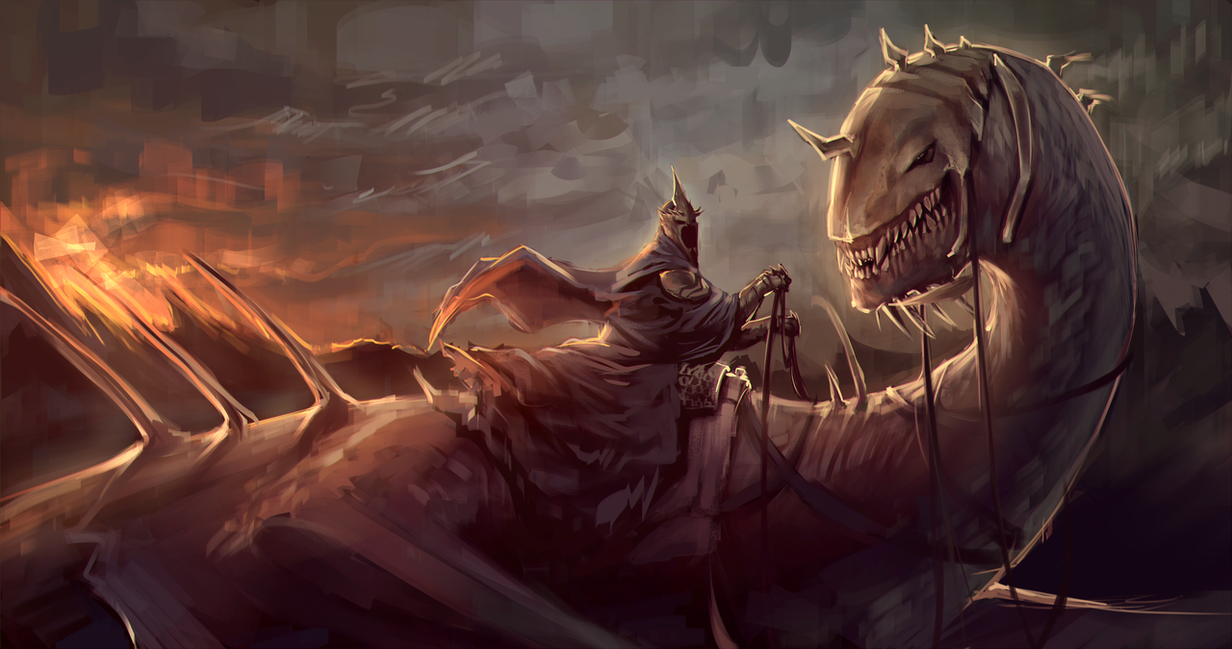
The Witch-king mounted his Fell beast and rallied his troops against the furious charge of the Rohirrim. The army of Rohan slowed the initial charge blunted by their encounter with the Mumakil, allowing the hosts of Mordor to re-organize.  In that time, The Witch-king took this opportunity to strike down King Theoden while his troops were in confusion. Flying on the back of his fell beast, he advanced upon Theoden. The Rohirrim horses panicked as his beast attacked. Theoden’s horse, Snowmane, became frightened, was struck by a black dart and fell upon Theoden pinning him.

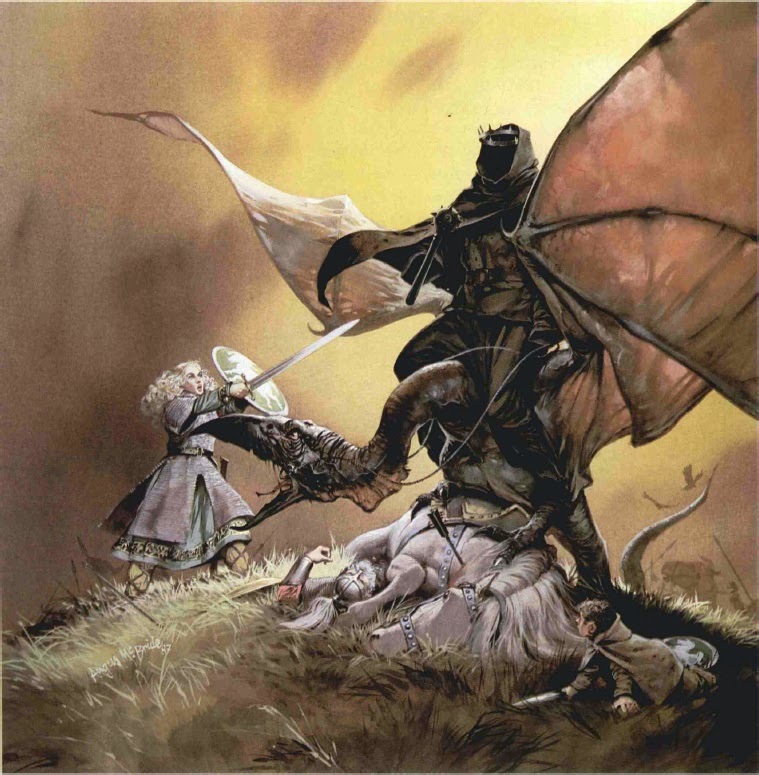
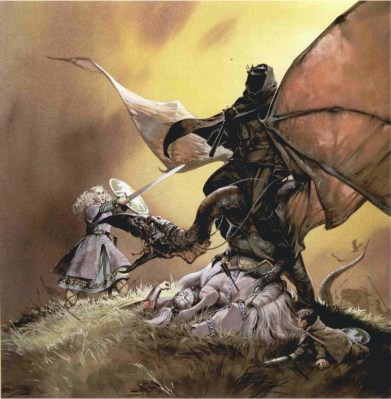
As the Witch-king hovered over Theoden, Eowyn and the hobbit Merry stood in his way ready to protect the king with all they had.

Eowyn demanded the foul creature be gone and to leave the dead in peace! The Witch-king spoke that no one comes between a Nazgul and his prey and that no living man may defeat me.  Eowyn said you do not look upon a man but upon a woman.  I am Eowyn the daughter of Eomund and in a single strike with her sword she severed the neck of the Fell Beast.  The Witch-king arose, and with a cry of hatred he shattered her shield and broke her left arm with his mace.  As he towered over her ready to delivery his death blow, Merry stabbed the Witch-king with his black blade.  While distracted, Eowyn drove her sword into the head of the wraith destroying him.

The prophesy of Glorfindel so many centuries before had come to pass. For not by the hand of man had he failed, but by those of a hobbit and a woman. Now, with his death, the tide of the battle had changed, and ultimately the outcome of the War. No more than ten days later, Sauron himself was finally defeated when the One Ring was cast back into the fires of Mount Doom and all his power unmade.

Though we are finished with the series on the Witch-king stay tuned as we continue our journey through the great villians of Middle Earth.

Until next time I’m your host Iogro Merrybelly and I bid you a fine farewell.
Sauron’s Deadly Servant – Part Two

Hail and well met friends!

Last week we left off with the short lived seat of power the Witchking had over over Fornost, and the attack from Earnur that left Angmar leaderless after the Witchking fled.

John_Howe_-_The_Dark_TowerThe Return to Mordor

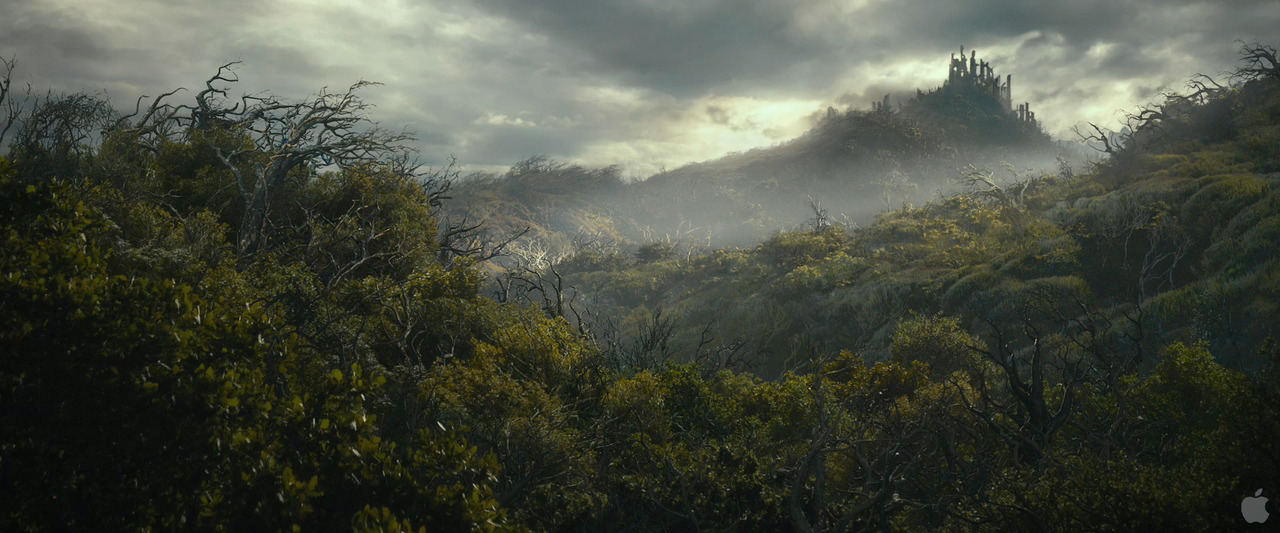
Having ruined the Dunedain kingdoms in Eriador, the Witchking returned to Mordor. Although Sauron was still hiding in Dol Guldur, the other eight Nazgul rallied around the Witchking. Together, the nine of them rebuilt their master’s power in Mordor, gathering huge Orc hordes.  In the year 2000 they rose out of Mordor and began attacking Gondor, which was recovered from the Great Plague but devastated by the Wainriders.  Two years later they captured Minas Ithil, and took the place for their own. It became known as Minas Morgul and its citadel the Tower of Witchcraft and remained a place of great evil for centuries thereafter.

In the year 2043, King Earnil the II of Gondor passed away and his son Earnur, the Witchking’s old enemy, inherited the throne. Upon his coronation, the Witchking challenged him to combat, but Earnur refused. However, seven years later the Witchking challenged him again—and Earnur accepted. The Gondorian King rode out of Minas Tirith to fight the Witchking at Minas Morgul.  He entered the city’s gates and was never seen again, thus ending the reign of the Gondorian Kings and beginning the rule of the Stewards of Gondor. In the year 2063 the Watchful Peace began when Sauron fled Dol Guldur and hid in the East, and the Nazgul remained quiet in Minas Morgul.

Almost 400 years had passed when The Watchful Peace ended as Sauron returned to Dol Guldur and in 2475 the Witchking led hordes of Orcs and Haradrim against Osgiliath and seized its eastern half. The city was ruined, and the great stone bridge linking the east and west banks of the Anduin river was destroyed, dealing a devastating blow to the morale of Gondor.

The Necromancer was finally expelled from Dol Guldur when Gandalf confirmed that he truly was Sauron in disguise.  Sauron returned to Mordor and began preparations to find his One Ring.  He began the reconstruction of Barad-dur and sent three Ringwraiths to re-capture Dol Guldur.  In 3018, with the capture of Gollum, Sauron learned where the land of the Hobbits lay. Unfortunately, Gollum had lied, and the Ringwraiths went to Saruman, who refused to tell them the location of the land of the Halflings. The Witchking chanced upon Grima Wormtongue in Rohan, who, for fear of his life, told the Nazgul where the Shire was. Sauron opened the gates of Minas Morgul and sent forth the Witchking and the other Nazgul disguised as Black Riders to fetch the One Ring.

nazgul1 (1)The War of the Ring

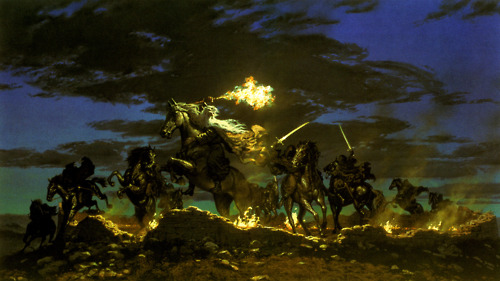
The Witchking and the other eight Nazgl rode swiftly from Mordor to the lands of the Shire. They continued to search for “Baggins” until they tracked him to Buckland. The Nine Riders raided Buckland but could not find the Ring.

The Witchking led four of the Nazgl to Weathertop where they discovered Frodo, Aragorn, and the other hobbits. They attacked the party and the Witchking wounded Frodo with a Morgul blade. Though successfully driven off by Aragorn, Frodo’s wound threatened to turn him into a wraith like the Nazgul.  Elrond of Rivendell sent Glorfindel to guide Frodo to Rivendell where Elrond could heal his wound.  Glorfindel’s swift pace to Rivendell lured the Ringwraiths into the Bruinen.  Here, Elrond released a Great Flood, with Gandalf giving the waves of the torrent the form of horses. This flood destroyed the physical forms of the Ringwraiths, killed their horses, and sent the Wraiths back to Mordor.

With their return to Mordor, Sauron bestowed upon the Nazgul fell beasts as their new mounts. Sauron used the lesser eight Nazgul for his reconnaissance work and dirty deeds that needed power. The Witch-king, however, returned to Minas Morgul and resumed the role of commander of Sauron’s forces. He then began battles to capture Osgiliath, finally issuing the war command from Morgul with a great army. However, at the bridge over Morgulduin he paused, feeling the Ring nearby.

Stay tuned for next week’s series to find out what happens with the Witchkings command of war, and what happens with the Ring?

Until next time I’m your host Iogro Merrybelly


Sauron’s Deadly Servant – Part One


Hail and Well Met Friends!

Earlier this month we did a poll for the website and asked you which topic of lore you wanted to hear about next.  Well, the results came in with the Witchking tying places for first and second, so a coin was flipped and guess who won?  So, for the next few weeks we will be taking a look into the history of the Witchking.

the_witch_king_by_moni158-d6dv6k1The first sighting of the Nazgul in Middle-Earth was reported in the second age around year 2251. For the next 1200 years, the Lord of the Nazgul would serve Sauron as his second in command. He fought in the war against the Last Alliance of Elves and Men. It was in the second age when Sauron was finally defeated and the nine Nazgul disappeared from Middle-Earth.

One thousand years into the Third Age, Sauron took a new form as the Necromancer, and founded the fortress of Dol Guldur in southern Mirkwood. This signaled the return of the Nine Nazgul to Middle-Earth.

minas_morgul_by_lucfonzy-d5g67f5The Lord of the Nazgul reappeared in the early part of the third age n the north near the lost realm of Arnor. There he founded the kingdom of Angmar. It was after the formation of Angmar and several conflicts with the Dunedain of the North that the Lord of the Nazgul received the title of Witch-king, Lord of Angmar.

He then began his open war campaign with the three divided kingdoms of Arnor (Arthedain, Rhudaur, and Cardolan). The Witch-king invaded the kingdom of Rhudaur and replaced the Dunedain king with a hill chief allied to Angmar.  King Argeleb of Arthedain was killed trying to defend Rhudaur against Angmar. In the year 1409 the troops of the Witch-King assaulted the fortress of Amon Sul and burned the tower, during which conflict king Arveleg of Arthedain was killed. The Witch-King then invaded and destroyed the kingdom of Cardolan. Then the Witch-King invaded Arthedain and came close to destroying it but King Araphor with the help of the elves of Lindon and Rivendell managed to defeat the invading forces.

Soon, the only resistance against the Witch-king’s forces was the western kingdom of Arthedain. The Witch-king continued his war for hundreds of years. In year 1636, the Witch-king sent wights to the Barrow-downs in Cardolan in order to prevent the rebirth of the kingdom. The Witch-king claimed ultimate victory in the north many years later, when his forces captured Fornost, the capital of Arthedain. With its capture, the final kingdom collapsed, and with it, the last remnants of the lost realm of Arnor were destroyed.

post-16935-1167230561The Witch-king gladly took his seat of power in the newly captured Fornost. But his glory did not last long, as general Earnur of Gondor landed at the harbours of the Grey Havens, leading an army of Gondor. His army was joined by the Elves of Lindon and the remnant of the northern Dunedain and marched on the Witch-king.

They did not meet the Witch-king at Fornost, but on the plains west of it toward Lake Evendim, home of the ancient kings of Arnor, Annuminas. The battle would forever be known as the Battle of Fornost. Earnur’s Dunedain army was later joined in the mists of battle by Glorfindel and his Elven army from Rivendell.

The Witch-king revealed himself and challenged Earnur. As Earnur attempted to attack, his horse was overwhelmed with fear of the Nazgul lord and bucked him off. The Witch-king, taunting Earnur, fled the battlefield. When Earnur attempted to follow, Glorfindel stopped him with a warning that would become prophetic in the future: “Do not pursue him! He will not return to these lands. Far off yet is his doom, and not by the hand of man shall he fall.” The Witch-king, having destroyed the North-kingdom, fled the North. Angmar was left leaderless and soon collapsed.

Until next weeks series, I’m your host Iogro Merrybelly and I bid you a fine farewell!


The Nazgul – Part Two

Back in action this week and when we left off last time we had just seen the return of the nine in the Third Age.  This week we pick up with the Nazgul in search for the One Ring.


NazgulFinalBLOGThe Hunt for the One Ring

Near the beginning of the War of the Ring in 3018, Gollum, who once had the Ring in his posession, was captured and tortured in Mordor.  This lead Gandalf to think the Enemy had now heard and learned of hobbits, the Shire, and even the name Baggins.  He was absolutely correct and knew the Ring Wraiths would soon be on the doorsteps of The Shire looking for the Ring.  Gandalf knew the only thing to do was advise Frodo to leave the Shire and make for Rivendell, taking the Ring with him.

When the Nine entered the Shire, they learned the Ring was in the possession of Bilbo Baggins’ nephew, Frodo Baggins.  While searching for Frodo, one of the Nine, Khamûl the Easterling, had his first encounter with him.  As Frodo and his friends, Sam, Merry and Pippin, took Bucklebury ferry to reach Crickhollow, The Wraith Khamûl, who had missed them at the ferry, was forced to go around to the Brandywine Bridge. Shortly after this, the Nine arrived at Frodo’s new home in Crickhollow.

Though Frodo had already left for Bree by the time the Nine arrived, they were soon given information regarding Frodo’s whereabouts by Bill Ferny, a spy of Saruman.  This being the cause of the Nazgûl attacking Bree, where Frodo was awaiting Gandalf.  However, during the time it took the Nazgûl to reach Bree, Frodo and his friends were hidden away by Aragorn for protection against the Nazgul.

tumblr_lk49n0SoPE1qj19qpo1_500The Journey and Battle at Weathertop

Unable to find the Hobbits, the Nine left Bree, and several days later they encountered Gandalf at Weathertop who was searching the area while on his way to Rivendell to meet up with Frodo.  This lead to a massive battle between Gandalf and The Nine which Gandalf escaped but four of the Wraiths pursued him.  The other five Wraiths remained near Weathertop.  Several days later,  Frodo and his group made camp at the base of the ruins of Amon Sul.

Discovering them, the five Nazgûl attacked and as they confronted the four Hobbits, Frodo put on the Ring and attempted to resist the Nazgûl. The Nazgûl leader The Witch King of Angmar stabbed Frodo with a Morgul-blade.  Aragorn arrived and was able to drive off the Nazgûl with fire.  Aragorn realizing Frodo didn’t have long to live he knew they needed help and that the Nazgul would be back.

flighttothefordCrossing The Ford of Bruinen

The Nazgûl, now regrouped continued the pursuit of Frodo and his company. They caught up with Frodo who was riding the horse of Glorfindel and making his way to Rivendell.  The Nine chasing Frodo to the Ford of Bruinen demanded Frodo hand over the Ring.  Frodo refused and defied them, the Nazgûl began crossing the river to take the Ring.  However, the water, enchanted by Elrond and Gandalf, formed a great wave and swept the Nine away, killing their horses.

Lacking the means to successfully attack Rivendell, where Frodo and his companions took refuge, the Nazgûl were forced to retreat to Mordor on foot and stop their hunt for the Ring.

We are getting close to wrapping this series up as next week we will take a final look into the demise and fall of the Nazgul.

Until next time.

A Necromancer Above All – Part Three

The Third Age

Despite his defeat, Sauron was not vanquished permanently. Though greatly weakened, and in non-corporeal form, he still existed, due to pouring most of his native power, strength, and will into the One Ring. Thus, as long as it existed, he could never be truly defeated, and during the first thousand years of the Third Age, he lay in hiding, slowly recovering his strength until he was once again able to create a body for himself.

2-hobbit_dol-guldur


The Necromancer of Dol Guldur

In the year TA 1000, Sauron at last began to rise again, taking the stronghold of Dol Guldur, the Hill of Sorcery, in southern Mirkwood in TA 1050. There, he was disguised as a dark sorcerer known as the Necromancer, and the Elves did not realize at first that he was actually Sauron returned.

Around this time, the Valar sent the five Wizards, or Istari, to oppose Sauron and rally the free peoples of Middle-Earth against him.

While Sauron continued to gather his strength, the Ringwraiths reappeared in the year TA 1300, and began steadily assaulting the Numenorian kingdoms in exile until, one by one, they fell. Whether the Witch King was acting on his own, or was being guided by Sauron, is not known.

Suspecting that Sauron had returned and was guiding the Nazgul, the wizard Gandalf infiltrated the fortress in TA 2063 to confirm his theory, but Sauron fled into the East to conceal his identity. This marked the beginning of the Watchful Peace, which ended with Sauron’s return to Dol Guldur in TA 2460. During the same year, the One Ring was finally discovered by the stoor Smeagol and his friend Deagol.


Shadow of Sauron to GandalfSauron reveals himself to Gandalf at Dol Guldur

Gandalf the Grey made a second intrusion into Dol Guldur in TA 2850, and finally discovered that the Necromancer was indeed Sauron. Eventually, the White Council put forth their might and drove Sauron from Dol Guldur permanently in TA 2941. Without the Ring in his possession, Sauron could draw on only the smallest fraction of its strength, so that his enemies were able to drive him from Dol Guldur with relative ease. However, the Dark Lord, having had ample time to prepare, was willing to abandon Dol Guldur, and returned to Mordor, where he openly declared himself in TA 2951, and began preparations for his final war against the free peoples of Middle-earth.

MordorMordor

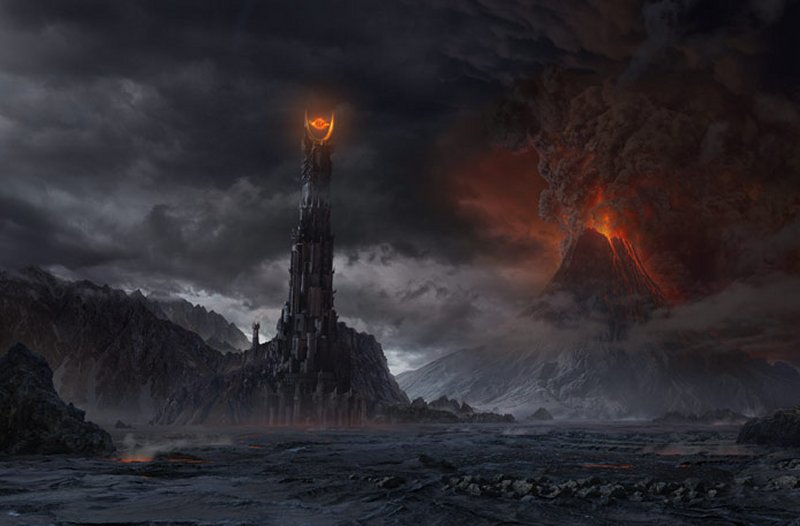
The Tower of Barad-dûr, Sauron’s Mordor fortress. The Eye of Sauron looks out from the topmost pinnacle.

Sauron bred immense armies of Orcs and allied with and enslaved Men from the east and south. He gathered his most terrifying servants, the Nazgûl (airi in Quenyan), or Ringwraiths, each wearing one of the nine rings designed for mortal men. He adopted the symbol of a lidless eye, and was able to exert his will over Middle-earth, so that the Eye of Sauron became a symbol of power and fear. But while Sauron had much of his former strength, he was still much weakened without the One Ring and remained hidden in the shadows, directing his armies from afar.

War of the Ring

After the creature Gollum, who had previously possessed the ring, was captured, Sauron had him tortured and learned that he once had a magic ring, and from him he heard the words Shire and Baggins. He deduced that Gollum’s ring was the One Ring, and sent his servants the Nine to find Shire and search for Baggins, so that the One Ring might be found and brought back to him.

Sauron discovers Aragorn through the Palantír

Meanwhile, Sauron had allied with the wizard Saruman, whom he had ensnared into his service, expecting the wizard to move against Rohan and thus remove one of the major threats Sauron faced in his planned conquest of Gondor and the remaining Elves. Saruman failed however, and Sauron lost his most potent ally as well as Saruman’s massive army of Uruk-Hai.

Shortly after Saruman’s defeat, Peregrin Took looked into the Palantír that Saruman had possessed, and accidentally communicated with Sauron, who believed that Saruman had captured the Halflings bearing the Ring, but when Aragorn took the palantir and revealed himself, Sauron realized that Saruman had failed. Concluding that the Heir of Isildur carried the ring, and could possibly use it against him, Sauron sped up his plans and attacked the city of Minas Tirith much sooner than he had planned, seeking to crush it, and with it the last true resistance to his rule.

But due to the combined efforts of Gondor, Rohan, and the Army of the Dead, Sauron’s army was defeated. He still had many armies in reserve, however, and enough military strength to easily conquer Middle-earth once Gondor fell. Yet, instead of striking out and covering Middle-Earth in a second darkness akin to Morgoth’s near-victory, Sauron feared that Aragorn was attempting to master the ring’s powers for himself, and waited for a period of strife between Aragorn and other potential Ringlords in which he would move out and take the Ring for himself.


Aragons ArmyThe Eye of Sauron glaring at Aragorn’s army at the Morannon

In order to buy time for Frodo to reach Mt. Doom, and to distract Sauron from the peril in his own land, Gandalf and Aragorn led the remaining host from Minas Tirith to the Black Gate, making Sauron believe that Aragorn did indeed intend to challenge him directly.

All the rest of the Orc armies from Barad-dur had gotten to Udun, once Sauron foresaw their coming, to utterly crush the Men of the West, and regain his prize. Gandalf and Aragorn’s ploy worked: Frodo was able to reach Mount Doom, and upon putting on the Ring, Sauron suddenly became aware of him. Though enraged, he was suddenly gripped with terror, realizing his own folly, and frantically sent the Ringwraiths towards the mountain to retrieve the Ring. He was too late however, and Gollum, after taking the Ring from Frodo, slipped into the Cracks of Doom, and the Ring was unmade. The earth shook, Barad-dûr fell, and Orodruin (Mount Doom) belched fire, consuming the eight remaining Nazgul, who had left their combat with the Great Eagles to race to Mount Doom, in its fiery ruin.

With his physical form utterly destroyed, Sauron’s spirit hovered above Mordor like a “huge shape of shadow, impenetrable, lightning-crowned, … terrible but impotent,” only to be blown away by a great wind.

With his source of power destroyed, Sauron was utterly defeated and his armies were destroyed or scattered, bereft of the driving will behind their conquest.

mini-SauronDefeated_RogerGarlandDeath and Barad Dur’s Downfall

All of Sauron’s old strength that was “native to him in his beginning”, in the words of Gandalf, was forever lost. Since his new body was based solely on the powers of the Ring, it was destroyed when the Ring was unmade. Without the strength of the Ring to aid him, he would never regain enough power to form the weakest body in Arda, and thus was restricted to existing as a hateful spirit, weak, and forever unable to take part in the events of Middle-earth. While evil would continue to exist, Sauron could never emerge as a Dark Lord again and never would have the power to create an army or draw evil creatures to his rule as he once did.

“”If [the Ring] is destroyed, then he will fall, and his fall will be so low that none can foresee his arising ever again. For he will lose the best part of the strength that was native to him in his beginning, and all that was made or begun with that power will crumble, and he will be maimed for ever, becoming a mere spirit of malice that gnaws itself in the shadows, but cannot again grow or take shape. And so a great evil of this world will be removed.””


A Necromancer Above All Part Two

Sauron during the Second Age

mattrhodes_sauronForging of the One Ring

“This is the Master-ring, the One Ring to rule them all. This is the One Ring that he lost many ages ago, to the great weakening of his power. He greatly desires it – but he must not get it.”

—Gandalf, The Lord of the Rings, “The Shadow of the Past”


sauron_by_spartank42-d502g9oSauron The Dark Lord’s hand of Power.

After lying hidden and dormant for 500 years, he began revealing himself once more, and by SA 1000 he gathered his power and established himself in the land of Mordor in eastern Middle-earth and began building the dreaded Dark Tower of Barad-dûr near Mount Doom. Sauron, like Morgoth, soon began raising massive armies of Orcs, Trolls, and possibly other creatures, as well as corrupting the hearts of Men with delusions of power and wealth, chiefly Easterlings and Southrons (the Haradrim).

Although Sauron knew that men were easier to sway, he sought to bring the Elves into his service, as they were far more powerful. By about SA 1500, Sauron put on a fair visage in the Second Age, and calling himself Annatar, the “Lord of Gifts”, he befriended the Elvish smiths of Eregion, and counseled them in arts and magic. Not all the Elves trusted him, particularly Lady Galadriel, Elrond, and Gil-galad, High King of the Ñoldor.


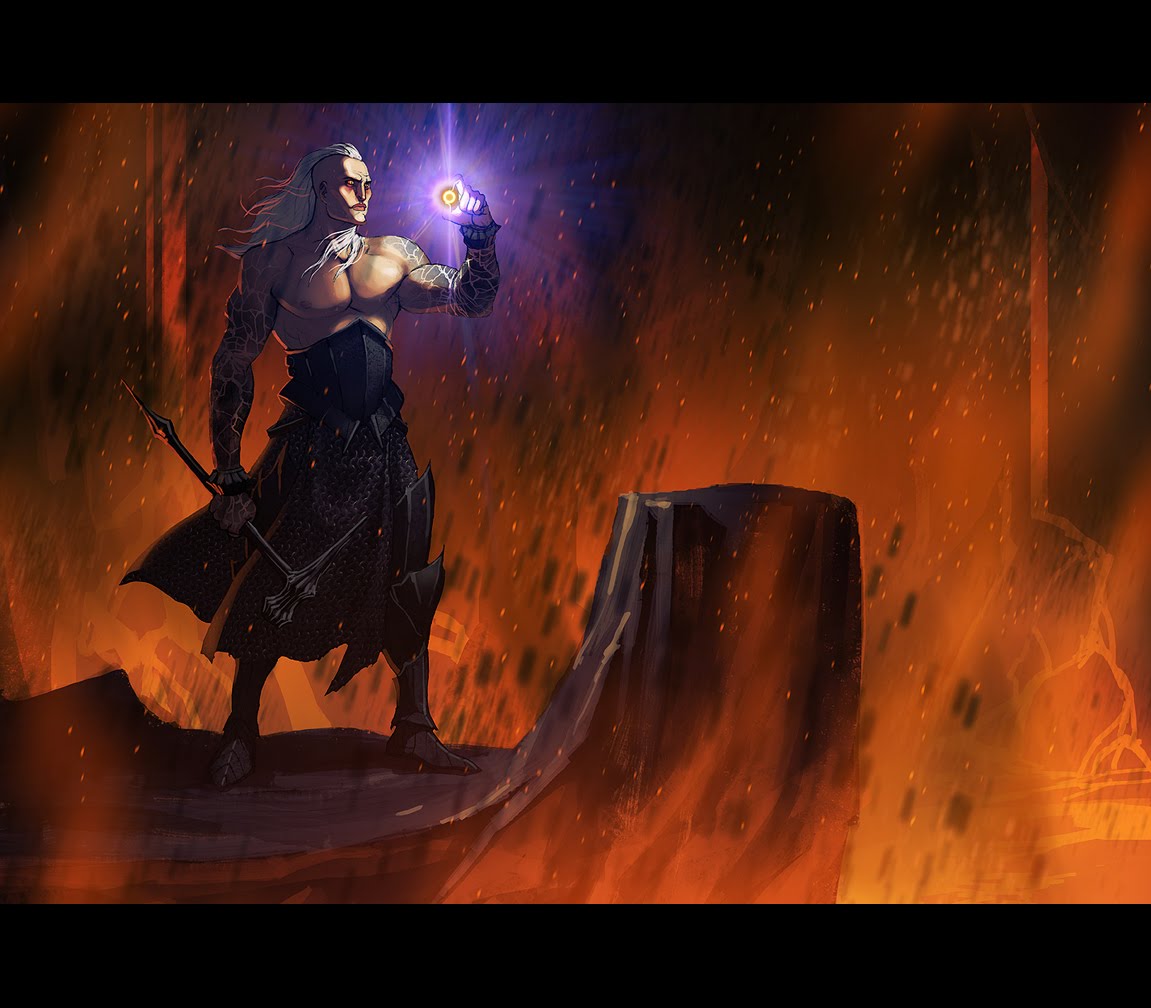
sauron__the_lord_of_the_rings_by_callthistragedy1-d5ru2gqSauron, wearing the One Ring.

To the elves who listened, Sauron gave knowledge and encouragement in forging the Rings of Power, though in secret Sauron forged his own, the One Ring, to rule the Elvish rings. Upon that ring Sauron left the inscription, Ash nazg durbatulûk, ash nazg gimbatul, ash nazg thrakatulûk, agh burzum-ishi krimpatul. In Westron the inscription translated into:One Ring to Rule Them All, One Ring to Find Them, One Ring to Bring Them All, and in the Darkness Bind Them.

However, as soon as Sauron put the Ring on his finger the Elves sensed his treachery, and removed their rings and hid them. Enraged, Sauron came against them in open war and demanded that all the Rings of Power be given to him. The Elves managed to hide the three greatest of the Rings from him, but the other sixteen Rings of Power were either captured by Sauron, destroyed, or lost. To the Dwarves he had given seven, but to Men he had given Nine, knowing that they would be the easiest to enslave. The Dwarf Lords who received the Rings proved to be very resistant to their power, and neither “faded” nor became enslaved to Sauron’s will. The Rings instead created in them an insatiable lust for gold, which ultimately caused a great deal of grief for the Dwarves.


horses_nazgul_artwork_jrr_tolkien_ring_wraiths_m58164The Corrupted Nine

As Sauron predicted however, the nine Men were all corrupted by their Rings and became the Nazgûl, Sauron’s deadliest servants. Had the Elves not recognized Sauron’s treachery and forsaken the power of their rings, the results would have been catastrophic for the Free Peoples of Middle-Earth. It seems that most if not all of the native Men of Middle-Earth succumbed to the power of the Ring once the Nazgûl were created; the Númenóreans were spared because of their distance. The Elves, had they been captured in this fashion, would have become the slaves of Sauron, and thus Celebrimbor’s resistance was of immense importance in the history of Middle-earth.

In this era, during which he marshalled and commanded great armies, Sauron became known as the Dark Lord of Mordor and his fortress of Barad-dûr was completed. He was very powerful even without control of the Elves, and he conquered nearly all of Middle-earth during the War of the Elves and Sauron. However, the armies of Númenór’s King Tar-Minastir were finally able to defeat him at a last battle near Gwathló or the Greyflood in SA 1700. Defeated but not vanquished, Sauron retreated back to Mordor and began recouping his strength over the many centuries.


NumenoreansThe Númenóreans

These Men lived on the island of Númenor in the sea between Middle-earth and Valinor. The Númenóreans, who were then proud, came to Middle-earth with astounding force of arms. King Ar-Pharazôn marched his troops all the way to Mordor without a single battle, and demanded that Sauron abase himself before the King. Sauron could see clearly that even the most powerful of his servants could not stand against the Númenóreans, and so came from Barad-dûr without any offer of battle. He assumed a fair form and flattered Ar-Pharazôn, but the King demanded that Sauron come back to Númenor as a hostage. Sauron feigned unhappiness at this development but secretly was delighted, for this presented him with an opportunity to destroy the Númenóreans from within. After only a few short years in Númenor he grew from captive to the King’s most trusted adviser, and nearly all the King’s court fawned upon him. Drawing on their fear of death, he converted many Númenóreans to the worship of Morgoth, lying that Morgoth had the power to save them from mortality. As his power and influence reached its peak, he raised a great Temple in which he performed human sacrifices to Morgoth. Finally, he convinced Ar-Pharazôn to rebel against the Valar and attack Valinor itself and claim it for himself.

But here, Sauron’s cunning overreached itself, for Eru then directly intervened – Númenor was drowned under the sea, and the great navy of Númenor was destroyed and the army that reached Aman was buried under mountains of falling rock and imprisoned in the Caves of the Forgotten. The world was bent, so that thereafter, only Elven-Ships could sail into the Utter West. Sauron’s body was destroyed, but his spirit was not diminished, and he fled back to Mordor bearing the Ring, where he slowly rebuilt a new body and his strength during the time known as the Dark Years. From this point on, he lost the ability to assume a fair shape, and ruled now through terror and force. A few faithful Númenóreans led by Elendil were saved from the flood, and they founded Gondor and Arnor in Middle-earth.


sauron__war_of_the_last_alliance_by_mattdemino-d5i799eSauron’s destruction in battle by Isildur

After losing his body in the destruction of Númenor and a brief period of renewed war, Elendil and his people allied with the Elven-king, Gil-Galad to create the Last Alliance, and together fought Sauron. They finally defeated his armies at the Battle of Dagorlad, and laid siege to Barad-dûr for seven years. Finally, Sauron himself came forth and dueled both Elendil and Gil-galad, slaying them both singlehandedly. Then Isildur, son of Elendil, took up his father’s broken sword, Narsil and cut the One Ring from Sauron’s finger. Sauron’s physical body was destroyed. With nearly all of his power stored in the ring, the dark lord was vanquished when it was cut from his finger. Without their leader’s dark will driving them on, Sauron’s armies were routed and fled, and thus, his campaign to defeat the free peoples was seemingly ended, and his greatest weapon taken from him.

But while Isildur had taken the ring, he could not bring himself to destroy it in the fires of Mount Doom where it was forged, instead he became corrupted by the One Ring and kept it for himself. He was eventually betrayed by it a few years later, and slain by orcs at Gladden Fields. The Ring fell into the river Anduin, and was lost for centuries before being found by Smeagol’s friend Deagol.

Until next week I’m Iogro Merrybelly signing off for the night.

A Necromancer Above All

This weeks Bugle article takes a look into the background of Sauron.  This will be a four part series so keep your eyes pealed for the weeks to come.

Before the creation of Ea, Sauron was one of the countless Ainur spirits created by Eru Iluvatar, though at this time he was known as Mairon the Admirable, and partook in the Ainulindale, or Music of the Ainur. However, unlike many other spirits, Mairon did not align himself with Melkor upon the introduction of his discord themes, and thus, did not initially fall under his sway.  When the Music was completed, Mairon was one of the spirits who descended into Arda.

sauron_gorthaur the first ageSauron during the First Age

Upon his arrival in Arda, Mairon was one of the Maiar who aligned himself with Aulë the Smith, and learned much from him in the ways of forging and crafting, becoming a great craftsman, and mighty in the lore of Aule’s people. Although he was a Maia spirit, and not as mighty as the Valar, Mairon was one of the most powerful Maiar, being far stronger than others such as Olorin and Curunír (who was also a servant of Aule).
During this time, Mairon was as Eru had created him: good and uncorrupt. His greatest virtue was his love of order and perfection, disliking anything wasteful. However, this would also prove to be the source of his fall, for in the Dark Lord Morgoth, Mairon saw the will and power that would help him achieve his own goals and desires faster than if he had pursed them on his own. So great was his allegiance that even in later days, after Morgoth was defeated and locked outside the confines of the world, Sauron encouraged and coerced some Men to worship Morgoth as the one and true god. However, while Morgoth wanted to either control or destroy the very matter of Arda itself, Mairon’s desire was to dominate the minds and wills of its creatures.

After allying himself with Morgoth, Mairon maintained his appearance of being faithful to the Valar, but secretly fed Morgoth information about their dealings. It was only when Morgoth established his strongholds in Middle-Earth that Sauron left the Blessed Realms and openly declared his allegiance, and ever after remained a foe of the Valar and the Free Peoples of Middle Earth. TheSindar in Beleriand called him “Gorthaur” (“Dread Abomination”), and the Noldor, “Sauron” (“The Abhorred” or ‘The Abominable”–a mockery of his original name) At first, he was a spy for Morgoth, telling him of the Valar’s doings.

Saurons BannerSauron bears a coat of arms that is black charged with a red eye. An interesting dichotomy is set up between his deceptive nature and his symbol. While rarely appearing personally and deceiving all but the most wary, he represented himself as an all seeing eye that could pierce all disguises.

During the First Age, the Noldorin Elves left the Blessed Realm of Valinor in the Utter West (against the counsel of the Valar) in order to wage war on Morgoth, who had stolen the Silmarils of Fëanor, enchanted gems that glowed with light from the now-destroyed Trees of Valinor. In that war, Sauron was counted as the “greatest of [Morgoth’s] servants that have names” (Valaquenta). He was soon feared as a lord of terrible phantoms and dreadful beasts–a shape shifter, sorcerer, and a cunning servant of his dark master.

Draughlin First Warewolf

After his defeat by Lúthien, Sauron played little part in the events of the First Age (possibly hiding from Morgoth’s wrath), and after his master was defeated and taken to Valinor in chains, Sauron seemed to repent and pled to Eönwë and the victorious Host of the West for mercy. Although his plea was probably genuine, Sauron was unwilling to return to the Utter West for judgment, and so he fled and hid somewhere in Middle-earth.

Next week we will take a look into Sauron during the Second Age.  Until then, I’m Iogro Merrybelly signing off for the evening.