The Kings of Gondor: Part Nine – A Bloodline Lost

Welcome back fellow hobbits and people of Middle Earth! It’s been a very long time since I last wrote about the Kings of Gondor, but after a long break and much time away with family I felt it time to return and continue writing.  So, looking forward to continuing this series and many others just like it.
83600606The Unwise King

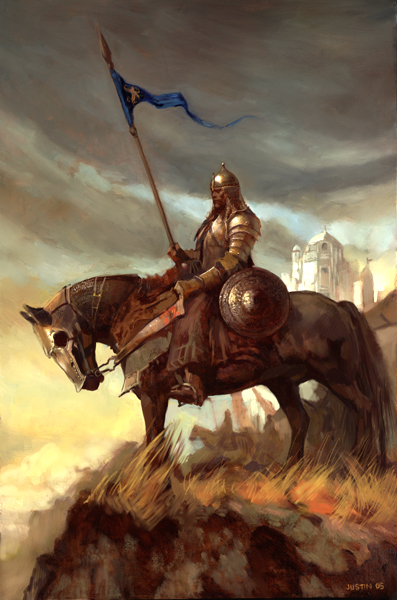
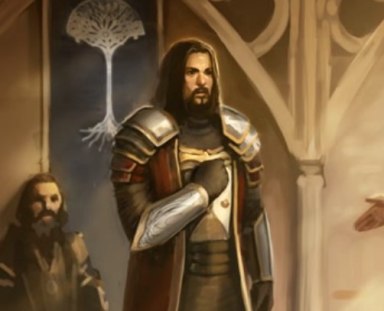
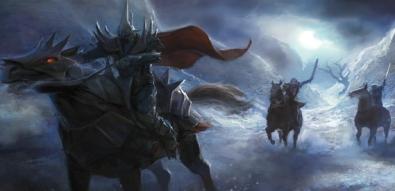
Earnur was the son of Earnil II. He like his father was a great warrior and became a great leader of armies before he became King.  His greatest victory was against Angmar in the Battle of Fornost, in which he defeated the Witch-king, whom he intended to slay had his steed not panicked in terror of the Witch-king’s darkness.  Earnur became King in TA 2043, and was challenged by the Witch-king of Angmar.  The King of the Ringwraiths, who then resided in Minas Morgul wanted this King of Gondor dead and gone.  Earnur, being quick to anger and wrath, would have accepted his challenge had the wise Steward Mardil Voronwe not held him back, and so the first challenge went unanswered.  Just seven years later a second challenge came, mocking Earnur, and the steward Mardil was not able to stop the King this time.  Ernur accepted the challenge, and after entering the gates of Minas Morgul with a small escort, Earnur was never heard from again.  The unwise King was thought to be dead, so his crown now rests upon his father’s tomb in the Hallows of Minas Tirith.
Prophecy_GlorfindelThe Battle of Fornost

A year prior to the battle, the armies of Angmar conquered Arthedain, the last realm of Arnor. Angmar’s armies had taken Fornost, the capital of the Dunedain, and Arvedui, the last King of Arnor, had drowned in the Ice-Bay of Forochel. A year later, a fleet of ships under King Earnur arrived in the Grey Havens and set off toward what was left of the once-great northern kingdom. With the armies of Gondor came men from Rhovanion, elves from Lindon, and the remainder of the Dunedain (among them Aranarth, the Prince of Arthedain).

The battle itself did not take place in the city of Fornost, but on the plains to the west of the city, near Lake Evendim. The armies of Angmar hurried west to meet the assault, and seeing this, the cavalry of Gondor rode north into the Hills of Evendim to wait in ambush. As the main part of the army of Gondor met the enemy in battle, the Gondor cavalry set out from the hills to strike the rear of the army of Angmar. This served as the turning point in the battle, and allowed the combined armies of the west to gain the advantage. Realizing that his forces were all but completely destroyed, the Witch-king of Angmar fled eastward. As he fled, an army led by Glorfindel came up out of the south and blocked his escape, destroying what was left of his crumbling army; the Witch-king himself was able to escape during the night and fled southward. Though the battle itself had been lost and Angmar utterly destroyed, Sauron was extremely pleased with the Witch-King’s work, for the destruction of the northern kingdoms of the Dunedain was a victory for the Dark Powers which far exceeded the loss of the Witch-King’s realm.

Glorfindel,_Elrond_and_King_Earnur_unite_against_the_Witch-King_of_AngmarA Broken Bloodline

The Line of Anarion was broken with the disappearance of Earnur, and the rule of Gondor passed to the Stewards beginning with Mardil Voronwe, the Steward who had tried to restrain Earnur from going to Minas Morgul to face the Witch-king. The Stewards were to rule “until the King returns” for it wasn’t sure at first whether Earnur had been killed dueling with the Witch-king or not. In addition, Earnur left without naming an heir, and while many nobles in Gondor could lay some sort of claim to the kingship, those claims were generally held in doubt, and no one wanted to risk another civil war like the one that had devastated and weakened Gondor.

The Stewards of Gondor were firstly the chief high councilors to the Kings of Gondor and then the rulers of Gondor, until the return of the rightful king (Aragorn Elessar).

First created by the powerful King Romendacil I, Steward was the traditional title of a chief counselor to the Kings of Gondor.  The Quenya name for the title is Arandur , “Servant of the King”.  The steward was was usually an elderly man not from the Royal House chosen for his wisdom and integrity, and was never permitted to go to war nor to go abroad.  During the time of the Steward Pelendur, from the famous House of Hurin, the title became hereditary, passing the station of counselor from father to son, much like the Kingship.

The House of Hurin was founded by one Hurin of Emyn Arnen, Steward to King Minardil, the twenty-fifth King of Gondor. They were of high Numenorean blood, but not descendants of Elendil in the ruling line.

After the death of King Earnur, who left no heir to the throne of Gondor, the Steward Mardil Voronwe became the first of the Ruling Stewards. Mardil was the first of the Stewards to administer Gondor, and his descendants did so for 25 generations.

The Stewards watched over the throne until it could be reclaimed by a true King of Gondor, an heir of Elendil. When asked by his son Boromir how long a time must pass before a Steward could become a King, if the King did not return, Denethor II replied, “Few years, maybe, in other places of less royalty … In Gondor ten thousand years would not suffice” (The Two Towers).

The Stewards never sat on the throne of the King; instead, they sat on a simple chair of black stone placed below it.

I hope you all are enjoying this series as it has been an absolute blast to write and put together!  We are nearing the end of the series but still have a lot more writing to do, so stay tuned to the site and think about following so you never miss one of my series.

You all stay awesome and I bid you a fine farewell!

Cheers,

Iogro Merrybelly


The Battle of the Gladden Fields

AnduinThe One Ring Lost

The Disaster of the Gladden Fields was a battle at the beginning of the Third Age, in which Isildur and a group of acompanying Dunedain were attached by a large group of Orcs as they were marching home after defeating Sauron. The king and his three eldest sons Elendur, Aratan, and Ciryon were all slain and the Ring of Power was lost in the River Anduin. Only three men survived this battle, Ohtar being one of them, an esquire of the kings which was able to save the shards of Narsil.

With the death of Isildur, it impacted both Gondor and Arnor as it left both kingdoms seperated and isolated.  Arnor wouldn’t be able to completely recover from this loss of it’s nobles and knights until the kingship of Aragorn in the Fourth Age. Most importantly, Isildur’s death prevented him from passing on the One Ring to the Keepers of the Three, which he had passed on to his brother Elendur to be his chief reason for visiting Elrond in Rivendell.

After the War of the Alliance, Isildur remained in Gondor for one year, taking back lost lands.  He sent a large part of Arnor’s armies back to Eriador through the Fords of Isen to Fornost.  After getting the affairs of the southern realm in order, he handed the South Kingdom over to Meneldil and marched to Rivendell. He chose to leave his wife and son at Rivendell, but also came for counsel from lord Elrond.

ae12The Battle Ground

The Dunedain traveled northwards from Lorien, marching along a path that led to Greenwood the Great where Thranduil ruled. They had to change routes due to the flooding of the Anduin, which led Isildur to take the road on the eastern banks of the river. Isildur’s party was flanked as the enemy used the steep cliffs overlooking the river.

The Dunedain sang cheerful songs but as the evening drew close they began to hear the orcs in the nearby forest. The first onslaught struck quickly so Isildur called for his esquire Ohtar to take the shards of Narsil back to Rivendell for safe keeping.  The second attack from the orcs brought down the Numenorians great defenses, and Elendur convinced Isildur to flee and cross the Anduin if he could and find safety back at Rivendell.

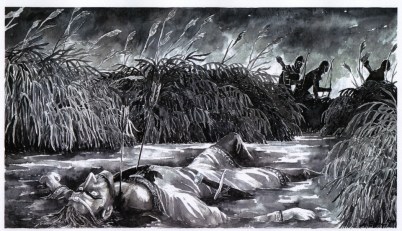
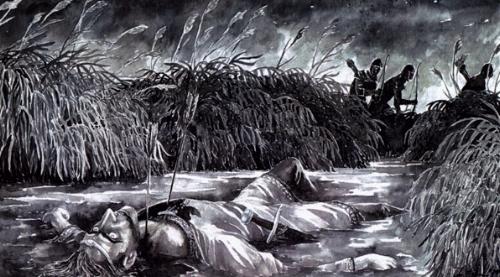
Isildur cloaked himself with the ring, and made a run for the valley parting ways with his armies and tried to cross the river. Unfortunately the rivers waters were flowing to hard and Isildur being exhausted got tangled in the reeds and in doing so the ring slipped from his finger. Nearby Orc’s caught sight of Isildur in the waters and out of fear quickly shot him and fled.

eiszmann42Wake of Destruction 

Only Ohtar, Elendur, Estelmo, and a handful of men survived the battle. Isildur’s body was never recovered, and was presumed captured and mutilated by Sauron’s forces  The orc army that ambushed the Dunedain were scattered among the lands by a relief force but they were to late.  Estelmo after being recovered spoke of how Isildur and Elendur related to each other about the One Ring. Isildur remarked: “I cannot use it. I dread the pain of touching it. And I have not yet found the strength to bend it to my will. It needs one greater than I know myself to be. My pride has fallen. It should go to the Keepers of the Three.”

Probably the biggest fall of the Gladden Fields was the union of Arnor and Gondor were broken by blood, and Isildur never managed to give the ring of power to the three.  Elrond, Galadriel, and Celeborn if given the chance probably would have destroyed the ring of power long before Sauron would have gathered his spirit and refortified Mordor.  But we all know how this story ends as Sauron does finally fall to the hands of many brave souls, and one very important little hobbit named Frodo.

The Kings of Gondor – Part Seven – Death to the Corsairs

Hail and Well Met Friends!

When we left off on our last episode, we had just seen the Kin Strife come to a boiling point and watched civil war break out amongst the people of Gondor.  We also saw the crowning of Aldamir and the beginning of the Corsairs of Umbar.

HaradThe New Kings Constant Battle

Aldamir was the second son of King Eldacar and succeeded his father in TA 1490 because his elder brother Ornendil was murdered by Castamir. Aldamir’s fifty year reign was marked with constant warfare with the Corsairs of Umbar and the Haradrim, which called in Westron the Southrons and once the “Swertings” by Hobbits, were a race of Men from Harad in the region of Middle-earth directly south of Gondor. Aldamir was slain in battle against the Men of Harad in 1540 and had one son who later took the throne.

Aldamir’s son, born as Vinyarion took the throne in TA 1540 and reigned until 1621. Vinyarion wished to avenge his fathers death, which he accomplished in 1551 by invading the Harad and defeated them. It was then when he proclaimed himself Hymarmedacil II, which menat “South-Victor” in Sindarin.  This was a name one of his great ancestors took in the twelfth century.  He died in TA 1621 after a rule of eighty-one years and two hundred thirty years of life and was succeeded by his son Minardil.

The House of Hurin

Minardil was born in TA 1454 during the reign of his great grandfather Eldacar. Minardil’s reign was brief and tormented with conflict. His steward, Hurin of Emyn Arnen, would found the line of the House of Hurin, who became ruling stewards centuries later.  In TA 1634 he was slain at Pelargir when it was attacked by the Corsairs of Umbar. Minardil ruled for thirteen years and was succeeded by his eldest son Telemnar.

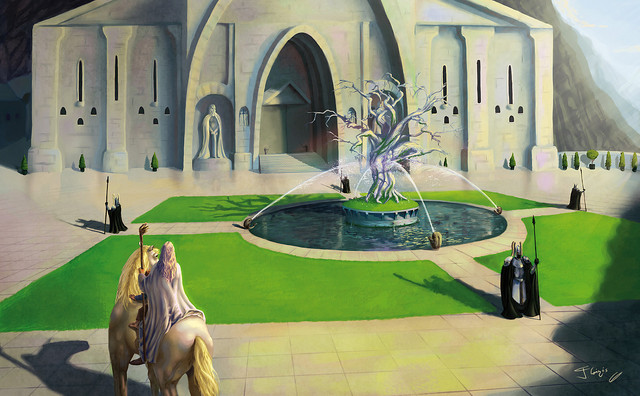
Telemnar became king in TA 1634, and due to the growing threat from the Corsairs, he immediately began building up Gondor’s fleets to defeat them but his plans came to an end when the Great Plague struck Gondor.  The Great Plague ravaged Gondor and it’s outlying hold of Osgiliath, and in result the king and his family died. The White Tree also withered and died during this time. He was succeeded by his nephew Tarondor, who was the son of Telemnar’s younger brother Minastan.

gondor treeThe White Tree

Tarondor took the throne at a young age in TA 1636 after his uncle passed.  He was the longest reigning King of Gondor, but war and plague had tortured his country and strove to rebuild the land and it’s great power. The most significant event in his reign was the removal of the capital from the now depopulated Osgiliath to Minas Anor and the replanting of the White Tree. However, Gondor at this time was drained of its resources and man-power and could no longer afford to tend to the forts guarding the ancient entrances to Mordor, thus they fell into decay paving the way for evil things to return.  He died in TA 1798 after one-hundred and Sixty-two years of rule was succeeded by his son.

Telumehtar became king in TA 1798 after his father passed.  His reign was largely uneventful except for problems the Corsairs continued to bring to the land. The long descendents of the defeated king Castamir the Usurper; the Corsairs raided the coasts of Gondor and terrorized shipping in the area. Telumehtar wanted to rid the seas of the Corsairs, so he assembled a large army in 1810 and recaptured their base in Umbar. After this event he took the title Umbardacil, meaning “Victor over Umbar”. In this war, the Corsairs suffered total defeat and the descendants of Castamir all died and Umbar was yet again held by Gondor.  Telumehtar ruled for fifty-two years and was succeeded by his son Narmacil II.

Until next weeks episode, I’m your host Iogro Merrybelly and I bid you a fine farewell!

scr.ee tags:

#KingsofGondor #LOTRlore

The Kings of Gondor – Part Six – The Kin Strife

Hail and Well Met Friends!

I know it’s been a while since our lest episode in the Kings of Gondor series and I do apologize for the long wait.  My schedule has been insanely busy lately, but I’m back on schedule with everything and you can expect regular episodes again.

When we left off last episode, we had just concluded the reign of Valacar and with his age came the rebellion of the coastal lands.  When he passed it brought a blood bath of a civil war called the Kin Strife among the people.

OverthrownThe Kin Strife

This week we pick up with his son Eldacar which was born as Vinitharya in the Kingdom of Rhovanion.  In 1260 of the Third Age he was brought to Gondor by his father. His reign saw the breaking of his people and the start of a civil war.  He was the son of princess Vidumavi, a daughter of the Northmen, King Vidugavia. After ascending the throne in 1432, he reigned for five years when he was deposed and driven from Osgiliath into exile to Rhovanion by a distant vile relative.  While Eldacar was exiled he slowly gathered support from the Northmen and the Dunedain from the northern parts of Gondor.  This army that Eldacar had gathered had a mass hate for the one who overturned the throne, and exiled Eldacar.  They hated this man because he executed Eldacar’s firstborn son, and they wanted revenge.

The great-grandson of King Calmacil, Castamir was not in line for the throne, but his royal background had made him the Lord of Ships under the previous king, Valacar. His lineage and influence left him in a position to challenge the current king, Eldacar, who was only half Numenorean.  As King Valacar’s only son, Eldacar was the legitimate heir to the throne, but his half Rhovanion lineage angered citizens who believed that pure Numenorean blood must be maintained. Capitalizing on the protest of the people against the the current king, Castamir was able to incite rebellion and surrounded Eldacar within the city Osgiliath 1437 of the Third Age. The city was set on fire by Castamir’s troops, destroying the famed Dome of Stars. Shortly thereafter, Eldacar fled the city and into exile in Rhovanion, to the north.

osgiliathThe Taking of a Kingship

With the defeat of the king, Castamir seized the throne.  For ten years Castamir ruled Gondor with an iron fist, while Eldacar quietly regained power. Castamir ruled cruelly, and committed many foul deeds, including executing Eldacar’s own son, Ornendil. At first the people of Gondor tolerated Castamir because of his pure Numenorean blood. Then, in 1447, Castamir, now called “The Usurper” by his people was overthrown after a decade of wicked rule with the people now rallying around the true king, Eldacar. He was slain by Eldacar’s forces at the Battle of Erui, the battle of the Kin-strife as which it came to be known for the rest of time.

Castamir’s influence did not end there though. Some of his forces, and surviving sons, retreated from the Battle of Erui to the port of Pelargir and escaped by ship to Umbar, far to the south. These descendants of Castamir became the so-called “Corsairs of Umbar”, the great pirates who terrorized the ports of Gondor. They were perhaps the greatest threat to Gondor for nearly 400 years, commanding massive fleets of ships. Their most infamous exploit was the Raid of Pelargir in 1634, in which a Corsair fleet led by Castamir’s great grandsons Angamaite and Sangahyando‎ sailed up the river Anduin to the port of Pelargir. This raid coincided with King Minardil’s visit in which he was slain by the attacking Corsairs.

The Corsairs remained a significant threat until 1810, when King Telumehtar retook Umbar for Gondor. After the victory Telumehtar was known as Umbardacil, which literally means “victor over Umbar”. In this battle the last descendants of Castamir were finally killed.

Until next weeks episode, I’m your host Iogro Merrybelly and I bid you a fine farewell!

scr.ee tags:

#KinStrife #KingsofGondor #LOTRlore

The Kings of Gondor – Part Two – A Bloodline Continues

Hail and well met readers!

Week before last we left off after Elendil and his people had settled in Middle Earth and raised the two great Kingdoms of Gondor and Arnor.  This week we kick things off with his son Isildur.  Everyone enjoy!

numenor23The Numenorian Line

Isildur was born in Numenor in the second age year 3209.  He had a younger brother named Anarion, born in 3219. They lived at Romenna on the east coast of the island of Numenor. Their father was Elendil and their grandfather was Amandil, the Lord of Andunie. The Lords of Andunie were descended from the Kings of Numenor through Silmarien, the daughter of the fourth King of Numenor, Tar-Elendil.

Elros, the Half-elven and the first King of Numenor, had chosen a mortal life of men, while his brother Elrond chose the immortal life of elves. Over time, the Kings of Numenor grew to resent their ancestor’s choice and desired immortality for themselves. They became estranged from the elves and from the powers called the Valar and they neglected the worship of Eru, who created them. Though a small group of Numenoreans remained friendly with the elves and faithful to Eru and the Valar. They were called the Faithful and among these men were the Lords of Andunie.

In year 3262, King Ar-Pharazon took Sauron captive and brought him to Numenor.  Sauron the deceiver allowed himself to be taken because he wanted to corrupt the Numenoreans in order to bring about their downfall. He used their desire for immortality and power to convince them to renounce Eru and worship Morgoth.

Isildur learned that Sauron wanted Ar-Pharazon to cut down Nimloth, the White Tree that had come from the Undying Lands. Isildur disguised himself and went secretly to the King’s Court and took a fruit from Nimloth. The guards discovered and attacked him and, although receiving grave injuries, he managed to escape with the fruit. For this deed, Isildur received much praise. He stood near death for many months, but when the fruit of the White Tree began to sprout, he awoke and his injuries had healed.

As Sauron’s influence increased, the Faithful began to prepare to leave Numenor. They filled their ships with their families and many of their prized possessions, including the Palantíri. Isildur had three ships of his own, and he brought aboard the seedling of the White Tree as well as his wife and his son Elendur.

Isildur’s grandfather Amandil hoped to plead with the Valar to spare the Faithful. He sailed westward toward the Undying Lands, but what became of him is not known and he was never seen again.

As Ar-Pharazon felt the approach of old age, Sauron’s lies finally convinced him he could achieve immortality in the Undying Lands. In 3319, Ar-Pharazon set out with a great fleet to take the Undying Lands by force, but when he set foot on the shore, Iluvatar caused the Seas to open up and Valinor was hidden. The fleet sank and Numenor was destroyed by a great wave.


minasmorgul2Kingdoms Forged in Middle-Earth

The ships of the Faithful were spared, and a great wind from the west sent them to the shores of Middle-earth. Elendil landed in the north, while Isildur and Anarion came to the Mouths of the Anduin in the south. Elendil and his sons established the North-kingdom of Arnor and the South-kingdom of Gondor.  Elendil was the High King of both realms, but he dwelt in Arnor and committed the rule of Gondor to his sons.

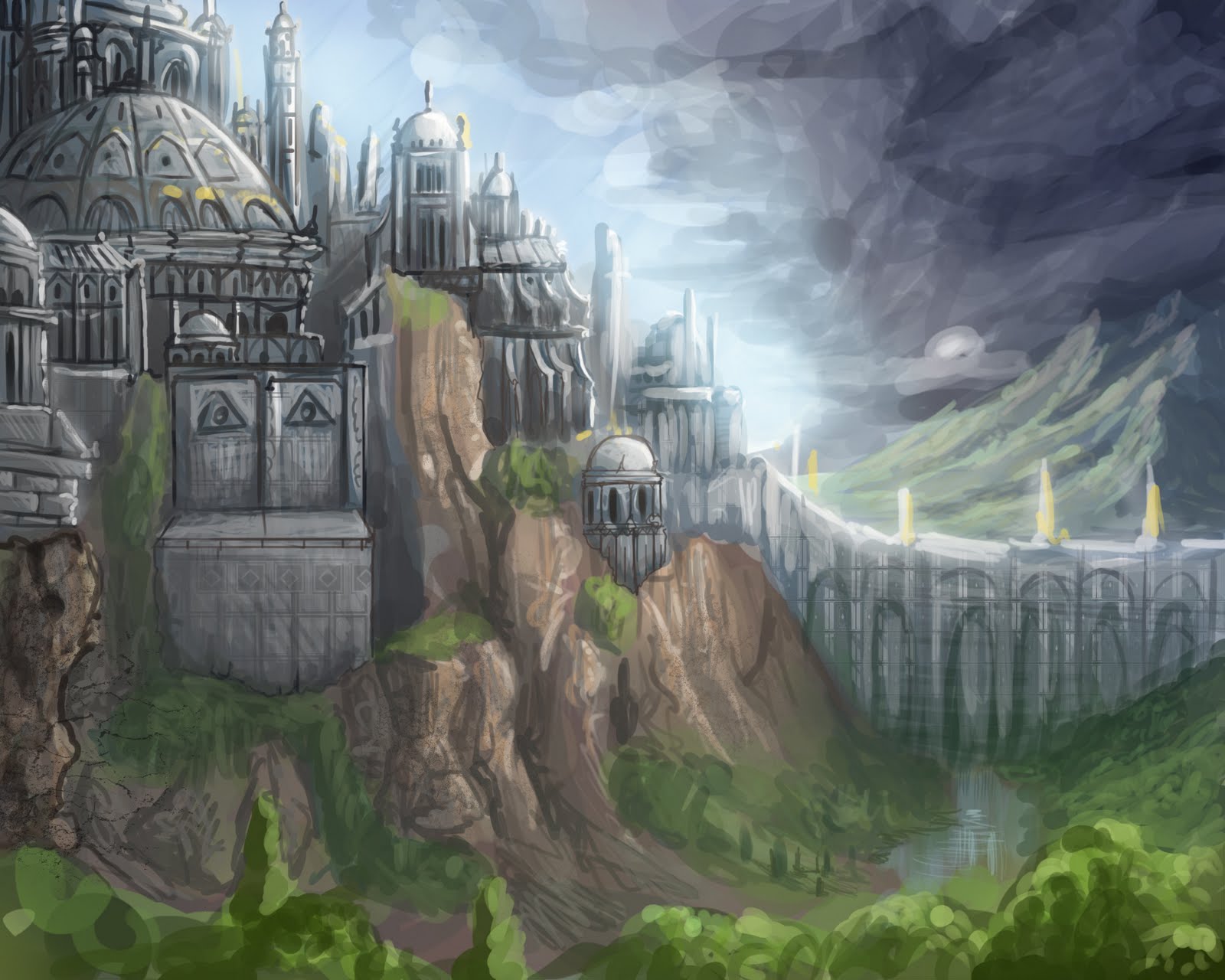
Isildur and Anarion had their thrones side by side in the Great Hall of Osgiliath, the city they founded on the Anduin. Anarion lived in Minas Anor on the western side of the Anduin, while Isildur made his home in Ithilien on the eastern side of the Anduin. Isildur built Minas Ithil in a valley of the Mountains of Shadow on the border of Mordor. Minas Ithil was a beautiful white city, but it was also a stronghold to defend against the evil that might still dwell in Mordor.  Not knowing that Sauron had already returned there in secret and had begun rebuilding his strength.

Isildur had one of the Palantír called the Ithil-stone, which he used to communicate with his brother and father. He planted the seedling of the White Tree in front of his house. Isildur and his wife had two more sons while living in Gondor – Aratan and Ciryon.

In the early days of Gondor, Isildur went to the Hill of Erech at the entrance to the Blackroot Vale in the White Mountains. On the hilltop he placed the Stone of Erech, a great black sphere that he had brought from Númenor.  Isildur met with the King of the Dead, who swore allegiance to Isildur upon the Stone, but later when Isildur called upon the Men of the Mountains to join the fight against Sauron, they refused. Isildur cursed them and said that they would never rest until they fulfilled their oath, so from that day forth they haunted the Paths of the Dead.

Sauron did finally attack and capture Minas Ithil in 3429 but Isildur escaped with his wife and sons and another seedling of the White Tree. Isildur and his family boarded a ship at the Mouths of the Anduin and sailed around the coast of Middle-earth to Arnor, where hit father lived. Elendil consulted with Gil-galad, the last High King of the Noldor in Middle-earth who lived in Lindon west of Arnor. Gil-galad and Elendil formed the Last Alliance of Elves and Men to oppose Sauron in 3430. That same year, Isildur’s youngest son Valandil was born at the home of Elrond in Rivendell.


images (33)The Last Alliance

The army of the Last Alliance gathered at Rivendell in 3431 and marched to war to defeat Sauron. Isildur and his three oldest sons – Elendur, Aratan, and Ciryon – went with the army, while Isildur’s wife and their infant son Valandil remained in Rivendell.

The War of the Last Alliance began in the second age of 3434. Sauron’s forces were defeated in the Battle of Dagorlad on the plain outside Mordor, and the army of the Last Alliance entered Sauron’s realm and laid siege to Barad-dur. The siege lasted seven years and many died, including Isildur’s brother Anarion.

In 3441, Sauron himself came down from his black tower to fight Gil-Galad and Elendil at the base of Mount Doom.  Both Gil-galad and Elendil died in the battle and Elendils sword broke during the struggle.  Isildur took up his fathers sword and used the broken blade to cut the One Ring from Sauron’s hand. Sauron’s spirit fled from his body, but as long as the Ring that held much of his power survived so would his spirit. Elrond tried to convince Isildur to cast the ring into the fire of Mount Doom and destroy it, but Isildur refused and left.

The power of the Ring was such that no one could willingly destroy it. The lure of the Ring began to act on Isildur as soon as he took it. The great heat of the Ring burned Isildur’s hand, but he still thought it was beautiful and precious.  Isildur noticed that there was writing on the Ring that showed when it was still hot, but disappeared when it had cooled. He wrote a description of the Ring on a scroll that he left in the archives of Minas Anor for future generations.


gladden_fieldsThe High Kings Death

Isildur assumed the Kingship of both Gondor and Arnor, but he intended to return to the North and leave Anarion’s son Meneldil to rule in the South. He remained in Minas Anor for a few years to give counsel and instruction to Meneldil. Together they took a journey through all the lands belonging to Gondor. On the summit of Halifirien in the Firien wood, Isildur entombed the body of his father Elendil. Before leaving Minas Anor, Isildur planted the seedling of the White Tree in memory of his brother Anarion.

On the second year of the third age, Isildur set out from Minas Anor with his three elder sons and two hundred of his knights. They marched up the Vales of the Anduin on the eastern side of the River, heading for the High Pass over the Misty Mountains.

Thirty days later, Isildur’s company was attacked by Orcs near the Gladden Fields. The Orcs did not know that Isildur had the One Ring, but they were drawn by its power. Isildur’s men were outnumbered ten to one, and though they initially managed to repel the attack, the Orcs renewed their assault after nightfall and the men were overwhelmed.

Before the battle had begun, Isildur had sent away his esquire Ohtar with the Shards of his sword. Isildur kept the One Ring, but it was useless in defending his men against the Orcs. He realized now that he did not have the strength to wield the Ring and could not even put it on without great pain to himself. Isildur regretted the foolish pride that had led him to keep the Ring.  Isildur’s son Aratan was wounded, and his son Ciryon was killed. His eldest son Elendur begged him to flee in order to prevent the Orcs from capturing the Ring. Isildur agreed but his son Elendur was killed during the battle.

Isildur put on the Ring though it pained him and headed for the Anduin. He removed his armor and waded into the River intending to try to cross it. The current was strong and despite his great strength, it pulled him toward the marshes of the Gladden Fields. Then the Ring slipped off Isildur’s finger and was lost in the waters. Isildur felt an overwhelming loss, but was then relieved as if a great burden had been lifted from him. He rose out of the water, but he was spotted by orcs who shot him with arrows killing him.

The One Ring remained in the Gladden Fields until Deagol found it in the year 2463 of the third age.  Isildur’s body also lay in the waters, undiscovered by his kin.  While searching for the One Ring, Saruman found the Elendilmir that Isildur had been wearing.  Some have even speculated that Saruman may have found and even burned Isildur’s remains in one of his furnaces, but whether this is true is not known.

Until next weeks episode!

I’m your host Iogro Merrybelly and I bid you a fine farewell

The Origins of Evil – Part One


Hail and well met everyone!

This week we continue in our lore with a brand new series.  We are taking a look at someone who truly is the creator of evil. I hope you enjoy the series!

dark_lord_by_rinthcog-d3ki4nhThe First Dark Lord

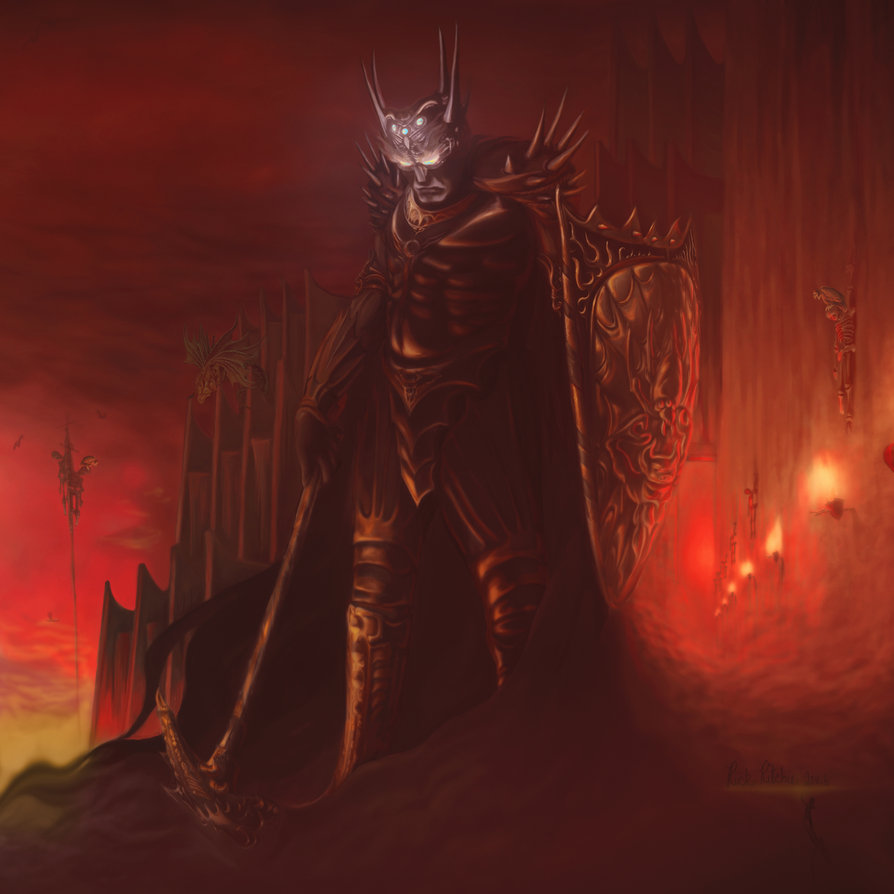
That’s right I said the First Dark Lord, as Sauron was not the first… Originally the most powerful of the Ainur created by Eru was Melkor and he rebelled against his creator because of pride and sought to corrupt Arda, becoming Morgoth.  After committing many evils in the First Age, such as the theft of the Silmarils and the destruction of the Two Lamps, Morgoth was defeated by the Host of Valinor in the War of Wrath. According to an unpublished portion of Tolkien’s conclusion to The Silmarillion, Morgoth will return at the end of the world to fight against good in Dagor Dagorath, the final battle.

Melkor was made in the beginning as an Ainu created by Eru Iluvatar in the Timeless Halls, at the beginning of creation. Manwë is said to be brother to him, yet Melkor was greater in power than any of the Ainur. Melkor was gifted also with the greatest knowledge of all the Ainur, and had share in all of the gifts given to his fellow Ainur by Eru. Desiring to create things of his own and knowing of but not understanding the Flame Imperishable, Melkor often went forth into the Great Void outside of the Timeless Halls in search of this flame. His quest was in vain; he found not the Flame Imperishable for it lies with Eru alone. Melkor grew ever more impatient of the unclear designs of Eru and the emptiness of the Void, and was often alone and apart from his fellow Ainur. It was during these lonesome periods that Melkor began to have ideas and thoughts of his own that were not in accordance with his fellow Ainur.

When the Ainur sang the Great Music before Eru, some of these stray thoughts he wove into his music, and straightaway discontent arose around him. Some of those nearby attuned their music to his, until two musical themes were warring before the Throne. Then Eru introduced a Second, and then a Third Theme into the music. Melkor succeeded in holding back the Second theme, of which Manwe was the chief instrument. The Third was the theme of Elves and Men, and while it was not overwhelmed by the Discord, it too failed to correct it. When Eru brought the Music to an end, he rebuked Melkor, praising his strength but telling him that all he did redounded only to the glory of Eru’s work. Melkor was ashamed, and resented it; for he thought his Discord an improvement. When the Music was made incarnate as Arda, it was already flawed through the Discord, and immoderate heat and great cold stalked it. He then took in the interest of the World and put his evil wherever he could put it.

67aadf5b93e2ca801a31c3a4f04cf77fBefore the Two Trees

When the Valar entered into Arda and began to shape the unwrought matter, Melkor saw the Field of Arda and claimed it for his own, striving against the Valar. He took various shapes. Whenever the Valar did something, Melkor disrupted them. For a long while, Melkor fought alone against the might of all the other Valar and Maiar of Arda, and he long held the upper hand. Then Tulkas came, his strength tipping the balance in favor of the Valar, and Melkor fled before him.

afe6a06255b84d74a3fabff74539c5bcThe Dark Lord Chained

The Valar had built for themselves the isle of Almaren in the midst of Middle-earth, between the Great Lamps. Then, Melkor delved a mighty fortress at the very north-most part of the World and named it Utumno. To defend it he raised the Mountains of the East in the northeast of Middle Earth, east of the Sea of Helcar. Decay arose in the North, and the Valar knew that he was there.

When the Valar had built Valinor, Melkor built his second, lesser fortress of Angband in the west, as a defense from the West should they attack. Angband was delved into the Iron Mountains, and was given to Sauron to command. While the Valar were unsure where the Children of Iluvatar would awake, they were reluctant to wage war against Melkor, fearing the clash of powers might result in massive collateral damage. Due to this, Melkor discovered the Elves before the other Valar, captured many of them, and transformed them by torture and other foul craft into orcs.

When it was discovered by the Vala Orome where the elves were, the Valar took immediate action against Melkor. This action was called the War of the Powers. When he saw the Valar winning, he retreated into Utumno and shut the great doors. The Valar smote the doors open and Melkor was cast down by Tulkas. Melkor was bound in Angainor and brought back to the Halls of Mandos for three Ages.

You will have to wait until next week to find out what happens after Melkor was bound in the halls for three ages.

Until next week, I’m your host Iogro Merrybelly and I bid you a fine farewell!

scr.ee tags:


The Nazgul – Part Two

Back in action this week and when we left off last time we had just seen the return of the nine in the Third Age.  This week we pick up with the Nazgul in search for the One Ring.


NazgulFinalBLOGThe Hunt for the One Ring

Near the beginning of the War of the Ring in 3018, Gollum, who once had the Ring in his posession, was captured and tortured in Mordor.  This lead Gandalf to think the Enemy had now heard and learned of hobbits, the Shire, and even the name Baggins.  He was absolutely correct and knew the Ring Wraiths would soon be on the doorsteps of The Shire looking for the Ring.  Gandalf knew the only thing to do was advise Frodo to leave the Shire and make for Rivendell, taking the Ring with him.

When the Nine entered the Shire, they learned the Ring was in the possession of Bilbo Baggins’ nephew, Frodo Baggins.  While searching for Frodo, one of the Nine, Khamûl the Easterling, had his first encounter with him.  As Frodo and his friends, Sam, Merry and Pippin, took Bucklebury ferry to reach Crickhollow, The Wraith Khamûl, who had missed them at the ferry, was forced to go around to the Brandywine Bridge. Shortly after this, the Nine arrived at Frodo’s new home in Crickhollow.

Though Frodo had already left for Bree by the time the Nine arrived, they were soon given information regarding Frodo’s whereabouts by Bill Ferny, a spy of Saruman.  This being the cause of the Nazgûl attacking Bree, where Frodo was awaiting Gandalf.  However, during the time it took the Nazgûl to reach Bree, Frodo and his friends were hidden away by Aragorn for protection against the Nazgul.

tumblr_lk49n0SoPE1qj19qpo1_500The Journey and Battle at Weathertop

Unable to find the Hobbits, the Nine left Bree, and several days later they encountered Gandalf at Weathertop who was searching the area while on his way to Rivendell to meet up with Frodo.  This lead to a massive battle between Gandalf and The Nine which Gandalf escaped but four of the Wraiths pursued him.  The other five Wraiths remained near Weathertop.  Several days later,  Frodo and his group made camp at the base of the ruins of Amon Sul.

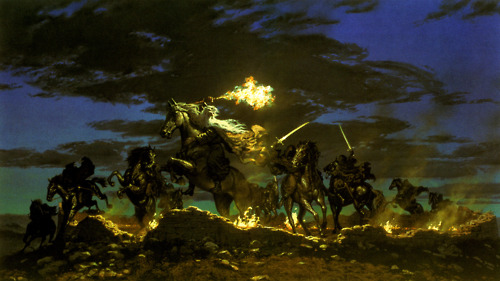
Discovering them, the five Nazgûl attacked and as they confronted the four Hobbits, Frodo put on the Ring and attempted to resist the Nazgûl. The Nazgûl leader The Witch King of Angmar stabbed Frodo with a Morgul-blade.  Aragorn arrived and was able to drive off the Nazgûl with fire.  Aragorn realizing Frodo didn’t have long to live he knew they needed help and that the Nazgul would be back.

flighttothefordCrossing The Ford of Bruinen

The Nazgûl, now regrouped continued the pursuit of Frodo and his company. They caught up with Frodo who was riding the horse of Glorfindel and making his way to Rivendell.  The Nine chasing Frodo to the Ford of Bruinen demanded Frodo hand over the Ring.  Frodo refused and defied them, the Nazgûl began crossing the river to take the Ring.  However, the water, enchanted by Elrond and Gandalf, formed a great wave and swept the Nine away, killing their horses.

Lacking the means to successfully attack Rivendell, where Frodo and his companions took refuge, the Nazgûl were forced to retreat to Mordor on foot and stop their hunt for the Ring.

We are getting close to wrapping this series up as next week we will take a final look into the demise and fall of the Nazgul.

Until next time.

A Look Into Bree

This week we’re taking a quick look into the village of Bree which is one of my favorite places in   Middle-Earth.  When I was a boy I used to day dream of living in Bree as I could just picture how fascinating of a place it was. Though we don’t get to see a lot about Bree we do have some historical facts that Tolkien wrote about this wonderful place.

The name Bree means “hill” according to Tolkien, referring to the fact that the village of Bree and the surrounding Bree-land were clustered around a large hill.

Bree sets East of The Shire and just South of Fornost if you’re looking at the map of Middle-Earth and was a settlement of men in Eriador which was established by the time of the third age. After the collapse of the Arthedain kingdom, Bree thrived but it did so without any government for some time.  Bree lies at the center of two major roadways, one being the Great East Road and the other the Greenway.  It was a place of trade for goods and a quick shelter to many travelers.

One interesting real life fact is JRR Tolkien base Bree off of the Buckinghamshire village of Brill which Tolkien visited quite often while teaching at Oxford.  It is also said that Tolkien lived in Brill for a short period of time as well.

Tolkien wrote of two different origins for the people of Bree. One was that Bree had been founded and populated by men of the Edain who did not reach Beleriand in the first age. The other origin was that the men who founded Bree came from the same line as the Dunlendings did.  Though these two histories of men are not completely contradictory as the Dunlendings were descended from Haladin who were counted the second house of the Edain.

Gandalf and Thorin Oakenshield met in Bree on pure happenstance which started the events we read about in The Hobbit and the quest of Erebor.  This event started the finding of the One Ring by Bilbo Baggins and by the time of the War of the Ring Bree was the westernmost settlement of men in Middle-Earth, and there was no other settlement of men within a hundred leagues of the Shire.

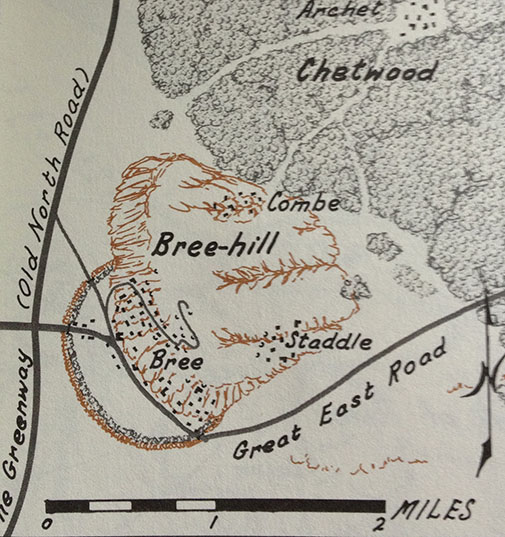
bree-land-map-archet-combe-staddleBree was the main village of Bree-Land, and the only place in Middle-Earth where men and hobbits were found together.  Bree-Land had four main villages that made up that portion of land.  You have…

  • Bree which was the largest settlement. Mainly populated by men but you also had hobbits who worked at the Prancing Pony Inn which had special hobbit-sized rooms. A lot of commercial trade happened within Bree at its peak and on occasion you would have some adventurous hobbits make their way from The Shire and visit Bree.
  • Staddle was mainly a hobbit population and made their living off of farming. This land produced such things as fruits, vegetables, and even pipe-weed. Staddle was on the south-eastern side of Bree-hill.
  • Combe was populated primarily by men, with some hobbits, and again this was another farming community. Combe was right at the borders of Chetwood if you were looking at the map. .
  • Archet was the furthest north. Located in the Chetwood, it was populated by men.