The Third Age
Despite his defeat, Sauron was not vanquished permanently. Though greatly weakened, and in non-corporeal form, he still existed, due to pouring most of his native power, strength, and will into the One Ring. Thus, as long as it existed, he could never be truly defeated, and during the first thousand years of the Third Age, he lay in hiding, slowly recovering his strength until he was once again able to create a body for himself.
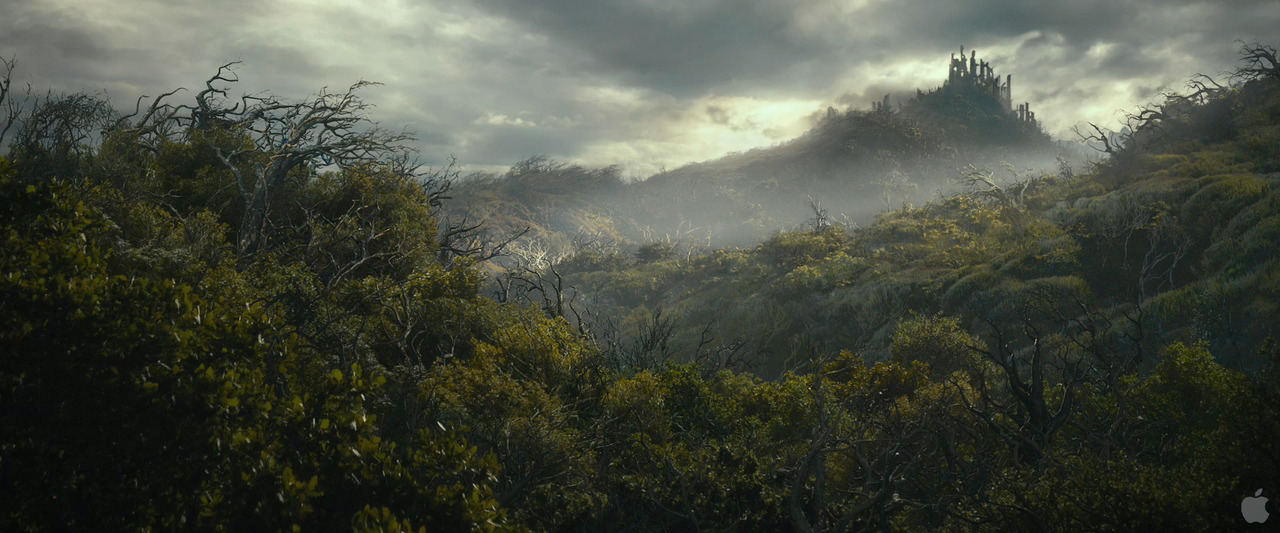
The Necromancer of Dol Guldur
In the year TA 1000, Sauron at last began to rise again, taking the stronghold of Dol Guldur, the Hill of Sorcery, in southern Mirkwood in TA 1050. There, he was disguised as a dark sorcerer known as the Necromancer, and the Elves did not realize at first that he was actually Sauron returned.
Around this time, the Valar sent the five Wizards, or Istari, to oppose Sauron and rally the free peoples of Middle-Earth against him.
While Sauron continued to gather his strength, the Ringwraiths reappeared in the year TA 1300, and began steadily assaulting the Numenorian kingdoms in exile until, one by one, they fell. Whether the Witch King was acting on his own, or was being guided by Sauron, is not known.
Suspecting that Sauron had returned and was guiding the Nazgul, the wizard Gandalf infiltrated the fortress in TA 2063 to confirm his theory, but Sauron fled into the East to conceal his identity. This marked the beginning of the Watchful Peace, which ended with Sauron’s return to Dol Guldur in TA 2460. During the same year, the One Ring was finally discovered by the stoor Smeagol and his friend Deagol.
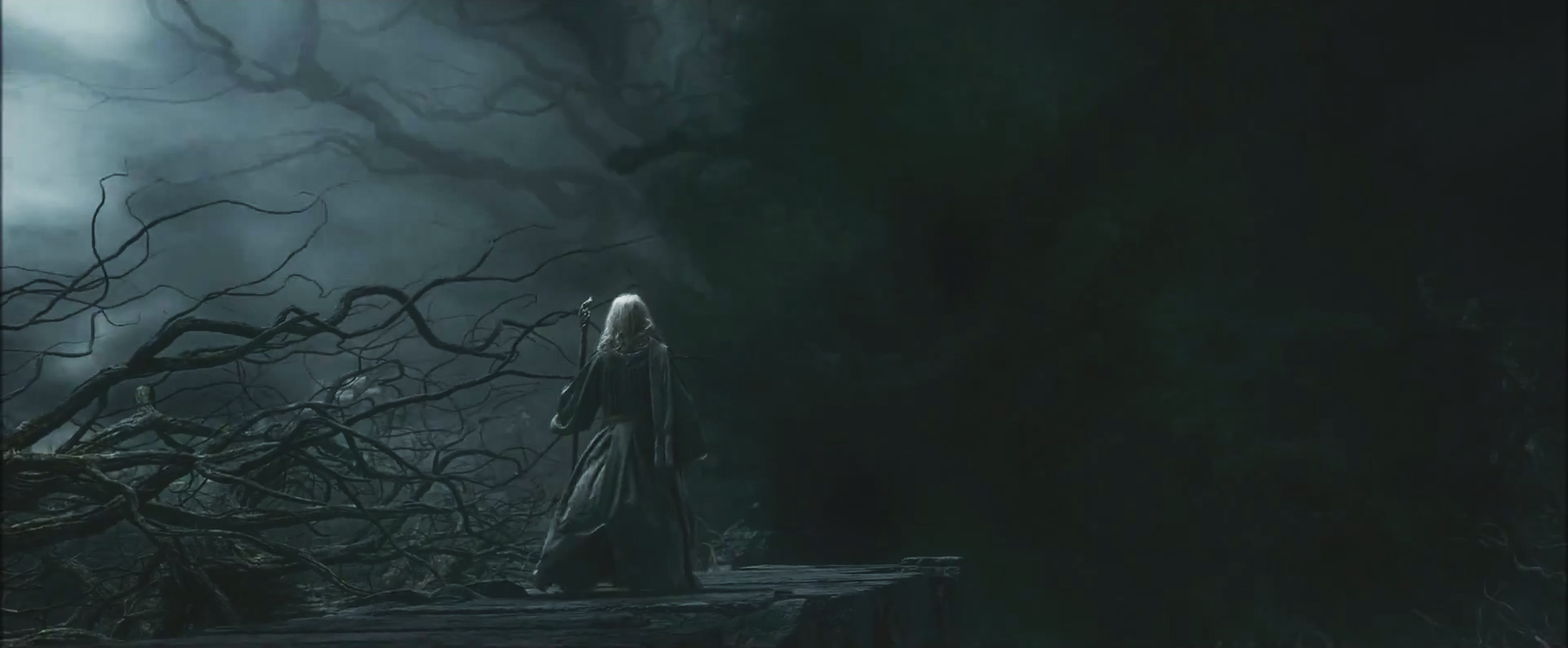 Sauron reveals himself to Gandalf at Dol Guldur
Gandalf the Grey made a second intrusion into Dol Guldur in TA 2850, and finally discovered that the Necromancer was indeed Sauron. Eventually, the White Council put forth their might and drove Sauron from Dol Guldur permanently in TA 2941. Without the Ring in his possession, Sauron could draw on only the smallest fraction of its strength, so that his enemies were able to drive him from Dol Guldur with relative ease. However, the Dark Lord, having had ample time to prepare, was willing to abandon Dol Guldur, and returned to Mordor, where he openly declared himself in TA 2951, and began preparations for his final war against the free peoples of Middle-earth.
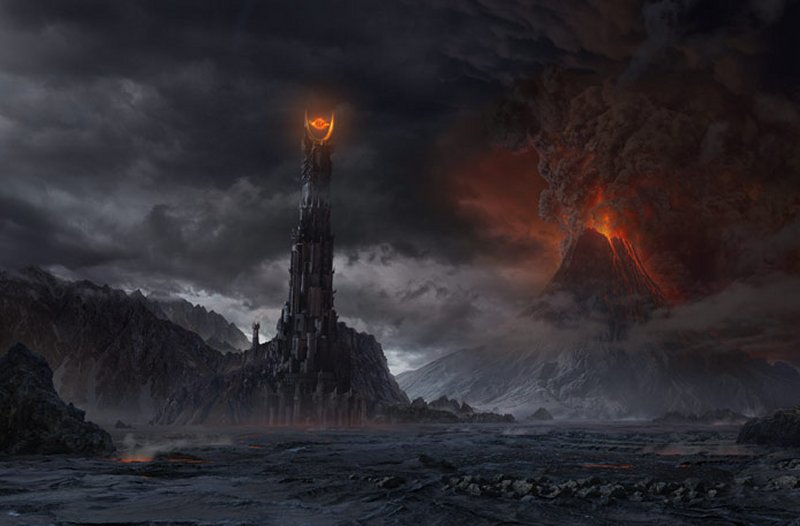 Mordor
The Tower of Barad-dûr, Sauron’s Mordor fortress. The Eye of Sauron looks out from the topmost pinnacle.
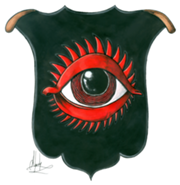
Sauron bred immense armies of Orcs and allied with and enslaved Men from the east and south. He gathered his most terrifying servants, the Nazgûl (airi in Quenyan), or Ringwraiths, each wearing one of the nine rings designed for mortal men. He adopted the symbol of a lidless eye, and was able to exert his will over Middle-earth, so that the Eye of Sauron became a symbol of power and fear. But while Sauron had much of his former strength, he was still much weakened without the One Ring and remained hidden in the shadows, directing his armies from afar.
War of the Ring
After the creature Gollum, who had previously possessed the ring, was captured, Sauron had him tortured and learned that he once had a magic ring, and from him he heard the words Shire and Baggins. He deduced that Gollum’s ring was the One Ring, and sent his servants the Nine to find Shire and search for Baggins, so that the One Ring might be found and brought back to him.
Sauron discovers Aragorn through the Palantír
Meanwhile, Sauron had allied with the wizard Saruman, whom he had ensnared into his service, expecting the wizard to move against Rohan and thus remove one of the major threats Sauron faced in his planned conquest of Gondor and the remaining Elves. Saruman failed however, and Sauron lost his most potent ally as well as Saruman’s massive army of Uruk-Hai.
Shortly after Saruman’s defeat, Peregrin Took looked into the Palantír that Saruman had possessed, and accidentally communicated with Sauron, who believed that Saruman had captured the Halflings bearing the Ring, but when Aragorn took the palantir and revealed himself, Sauron realized that Saruman had failed. Concluding that the Heir of Isildur carried the ring, and could possibly use it against him, Sauron sped up his plans and attacked the city of Minas Tirith much sooner than he had planned, seeking to crush it, and with it the last true resistance to his rule.
But due to the combined efforts of Gondor, Rohan, and the Army of the Dead, Sauron’s army was defeated. He still had many armies in reserve, however, and enough military strength to easily conquer Middle-earth once Gondor fell. Yet, instead of striking out and covering Middle-Earth in a second darkness akin to Morgoth’s near-victory, Sauron feared that Aragorn was attempting to master the ring’s powers for himself, and waited for a period of strife between Aragorn and other potential Ringlords in which he would move out and take the Ring for himself.
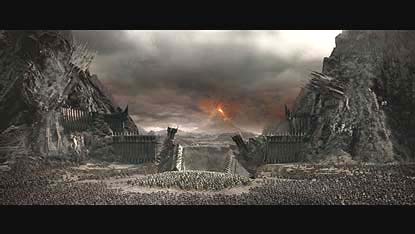 The Eye of Sauron glaring at Aragorn’s army at the Morannon
In order to buy time for Frodo to reach Mt. Doom, and to distract Sauron from the peril in his own land, Gandalf and Aragorn led the remaining host from Minas Tirith to the Black Gate, making Sauron believe that Aragorn did indeed intend to challenge him directly.
All the rest of the Orc armies from Barad-dur had gotten to Udun, once Sauron foresaw their coming, to utterly crush the Men of the West, and regain his prize. Gandalf and Aragorn’s ploy worked: Frodo was able to reach Mount Doom, and upon putting on the Ring, Sauron suddenly became aware of him. Though enraged, he was suddenly gripped with terror, realizing his own folly, and frantically sent the Ringwraiths towards the mountain to retrieve the Ring. He was too late however, and Gollum, after taking the Ring from Frodo, slipped into the Cracks of Doom, and the Ring was unmade. The earth shook, Barad-dûr fell, and Orodruin (Mount Doom) belched fire, consuming the eight remaining Nazgul, who had left their combat with the Great Eagles to race to Mount Doom, in its fiery ruin.
With his physical form utterly destroyed, Sauron’s spirit hovered above Mordor like a “huge shape of shadow, impenetrable, lightning-crowned, … terrible but impotent,” only to be blown away by a great wind.
With his source of power destroyed, Sauron was utterly defeated and his armies were destroyed or scattered, bereft of the driving will behind their conquest.
 Death and Barad Dur’s Downfall
All of Sauron’s old strength that was “native to him in his beginning”, in the words of Gandalf, was forever lost. Since his new body was based solely on the powers of the Ring, it was destroyed when the Ring was unmade. Without the strength of the Ring to aid him, he would never regain enough power to form the weakest body in Arda, and thus was restricted to existing as a hateful spirit, weak, and forever unable to take part in the events of Middle-earth. While evil would continue to exist, Sauron could never emerge as a Dark Lord again and never would have the power to create an army or draw evil creatures to his rule as he once did.
“”If [the Ring] is destroyed, then he will fall, and his fall will be so low that none can foresee his arising ever again. For he will lose the best part of the strength that was native to him in his beginning, and all that was made or begun with that power will crumble, and he will be maimed for ever, becoming a mere spirit of malice that gnaws itself in the shadows, but cannot again grow or take shape. And so a great evil of this world will be removed.””


 A Hobbits Journey