Creative Writing – What, How, Why of a Fantasy Novel

Writing a fantasy novel is great fun – you can literally let your imagination run wild.  It’s a little different when writing a novel set in the real world as unlike books set in reality where you can use real life as examples, you’ll have to invent everything in your new fantasy world.  Do you enjoy writing, are you working on a fantasy novel, or have you had the notion to start one?  I hope the next few minutes while reading this helps you no matter what stage you might be in for writing a novel.

One of the best things you could do to kickstart things is read as many classics as you can find!  No matter the type of book you begin writing this will give you a good idea about what works and what doesn’t.  Remember though that reading other peoples works is something to help with idea spawning and relax your mind.  You must take note not to simply copy the ideas you’ve read from any of the good old classics or other pieces of work you find.  If you find yourself dealing with elves, half-lings and orcs whilst being a reluctant hero on a quest to destroy a powerful item, it’s probably best to scrap it and start again. It is true that all stories are a combination of those the reader has encountered over the years. But, you should always try to find an original angle and it certainly should not be obvious what the source material was. Reading the classics will also allow you to discover how well-crafted characters interact with each other as the story progresses.

Tip 1. Use established myths and legends as the basis for your fantasy world. Think about what your fantasy world might be like.  Do your studying and find out what your world and culture is most like….Is it Celtic, Roman, a medieval world or a blend of multiple cultures with your own twist on it? Once you’ve chosen, go and read about the myths and legends that relate to those cultures. The mythological creatures and characters and their stories will give you a great basis for your new world.

Tip 2. Get to know your imaginary world – you need to be able to describe it in detail if you are going to convince your readers, for the duration of the book at least, that it exists. Be thorough and detail everything you can possibly imagine about the world you are creating.

  • Physical – what does your fantasy world look like? Think about and make a note of:
    • the colour of the sky
    • what other planets can be seen from the surface
    • whether the air is breathable
    • what the plants look like
    • what creatures live there
    • whether there are seas
    • what the landscape looks like
    • futuristic world or something older
  • Residents – decide who lives in your newly formed fantasy world. You should spend time thinking about how they look, what they eat, how they move, whether they need sleep, how they speak to one another etc…
  • Society – what kind of society exists? Do they need money to buy things? Is there a complex system of politics they follow? Do they have a police force, a king or president? Is there a religion?
  • Special powers/magic – Do the residents have any special powers or use magic? If so, what are they and why do they exist? Does everyone have use of them or only certain people?

Tip 3. Make your characters believable. This is one of the most essential parts of the book if you want to hook and keep readers interested in the story. A great way to achieve this is to apply logic to every character in every fantasy world you create. This means creating a set of rules that apply to the world and the character. The rules can be based on either real life or they can be simply invented by you.  Remember if you are creating the rules of the world, don’t let a BOX hold you back from being creative.  Sometimes creating our own ways is just the push we need to make that next step in our creative writing.

Tip 4. Make sure you keep careful notes of all the details you invent for your new fantasy world. This will help you maintain continuity throughout the novel. There are many ways of doing this, some writers like to have a set of cards with the details on, others set up spreadsheets; so play around with different systems to find one that suits you the best.  I personally use a book mapping chart I created in excel that helps me track all major parts of the book I need.  I hope these few steps help you get started, or give an idea of what steps to take next in writing your new fantasy novel!

Remember, have fun!! That is the first and foremost thing I can say when writing… Have Fun and lots of it!

Have you Thought of Guest Blogging Before?

I have explored the option of guest blogging in past and have even done a bit of it myself, and over coffee yesterday with a fellow writer he asked if one should ever consider blogging/writing for others? – Great Question, as I’ve heard both sides of the story and some say yes, but others say no.  Personally I think it’s a great way to branch out in the blogging community if you know how to manage your time that is.  It’s fairly easy to write blog posts and most blogs have themes they are shooting for so it’s easy to come up with ideas.

Blogging is a hobby of mine and I have a family of five (myself, my wife, and six year old triplets) plus a full time job, so I have to do some heavy schedule adjusting at times to keep up with my hobby.  Guest blogging is no different as most of the times it probably cuts into an already busy schedule you have and that is a down side honestly, because your time is precious and being paid for that precious time is always a plus, but guest blogging or hobby blogging doesn’t bring much if any on the financial side.  What it does bring in my past experience is exposure, and if you are a new blogger exposure is always a good thing because you not only have the chance to learn, but possibly even write in areas you aren’t familiar with so it gives you a chance to expand.

Here are some ways in past I’ve used for guest blogging so if you are considering to take a gander down this path I hope these help you.

1. Think about signing up to receive newsletters that list blogs looking for writers.

  • Like the following – Blogger Link Up. (http://BloggerLinkUp.com/).  This site is one that i’ve used in past and has worked great for me.

2.  Setup a time to browse through the blogging newsletters you sign up for regularly.

  • You can spend just a few minutes browsing through the newsletters to see if anything catches your eye. These newsletters can be lifesavers if you are looking for places to write and want to save precious time and frustration being wasted on searching the web, just to find nothing.

3. Look for blogs that interest you and have a reader base you want to try and reach.

  • Whether you write articles for gaming, sports, photography, it doesn’t matter, you have to try and target the audience…as they will be the ones to take hold of what you write most.

4. Make sure the blog host allows link backs with your post.

  • If the readers can’t simply click on a link to find out more about you then you’ve accomplished nothing. You want to make yourself as easy to find as possible.

5. Follow up on the blogs where you have posted.

  • Make sure the site host actually posted your blog when they said they were going to. If they are dependable you can always choose to guest post once again. If they are not dependable, don’t bother with them anymore.


6. Thank the blog host for allowing you to write for them.

  • Maybe that blog host will one day write a review and post it for you.  Use social media when they post back to your blog to let others know about it.  Help grow that relationship and mutually work for one another in growing each others site.


Writers Block!

Today I’ve been free writing due to having so many ideas floating around in my head I wanted to write about.  Free writing is something I’ll mention a bit lower down in this post.  Today has been very creative and I’ve gotten a lot accomplished from a writers/bloggers point of view.  But in the same sense just last week I had a “bloggers block” like you wouldn’t believe.  Being creative and bringing new ideas to the table when a bloggers/writers block happens is like fishing for that prized deep see marlin in the local pond….you just aren’t going to catch what you want.  Below are just a few ways I like to get out of that writing funk and I hope they help you as well.

?????????????????????????????????Change your Environment

Step away from the computer is what I have to tell myself!

If I run out of ideas and inspiration which happens pretty frequently as my mind wonders so easy, I like to get out of the house for a bit.  I find that when my environment changes the ideas start spawning again.  Their is a wonderful Art Museum where I live called Crystal Bridges that my family and I love to visit which is one place I go for an environment change. It’s a great place to people watch, grab a coffee, or just go and walk around and honestly not really think about anything.  Low and behold when I do this, I usually get back on track for ideas on what I was writing or get new ideas for things in the future I want to write about.

Getting away from your computer and blog can definitely help but so can blogging from a different location.  About once a month I will write in a new location just to keep things different and not get stuck in a rut.

  • Coffee Shops  – I have multiple coffee shops in my area that I visit quite frequently.  Some have free WiFi, and some don’t.  I like going to both, but I choose to go to places that don’t have free WiFi for a reason.  It forces me to remember how to write with a pen and paper.  I try to always keep a journal and a pen handy just for this occasion.
  • Public Libraries – I went to our public library for a couple of weeks straight as it gave me a new perspective on writing.  So much information to read and it’s all at your fingertips to read.  Ideas came by the truck loads on what to write about.
  • Multiple locations in your house – I am not really a creature of habit, but a creature of randomness but my wife says I have writing habits while at the house.  If I am home and want to write I usually start in the kitchen with a cup of coffee and a laptop staring me in the face.  If nothing works there, it’s on to my office, then the living room couch, and last is usually the patio furniture.  This is a constant changing environment within a personal space….wireless is great isn’t it.

Change up your environment and see what wonders it does for the writing block and hopefully a new perspective it brings for your creative skills.


hard_black_collection_1Keep a Journal

I have little Moleskine notebooks laying around everywhere it seems filled with ideas.  I use it for those random thoughts that pop in that may one day turn into something I use for writing a piece on the blog.

Journals are great as they are great for popping those random things I think about all day long.  These become a creation of ‘to do’ lists for me…though some of my thoughts i’ve jotted down are just unused creative ideas that I never get around to doing anything with..

It’s often when reading through my journals that an idea hits me in the face. It’s usually days, weeks, even months after an idea is written down that it seems to come to life at times.  Perfect example is on a book i’m writing….I went back through an old idea log I was keeping on character creation and “BAM” why didn’t I see this before moment hit me!


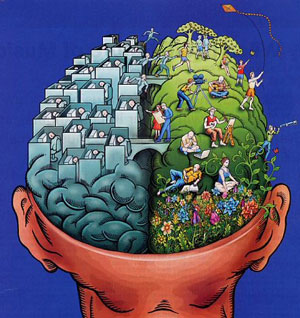
right-brain-free-writeFree Writing

Remember in the top portion of this blog…I said I would talk about “Free Writing” which is what writers call – writing when the idea pops into your head.  This is the hardest style of writing for me as I have a hard time staying focused long enough to remember why I started writing.

I do this every once in a while just to see what pops out of my brain honestly, plus it really does help the creative come to life.  Forcing myself to write has been a great tool as it challenges my randomness and keeps my brain challenged to create a story.

It’s amazing to see what comes from this type of writing….there have been times I’ll start writing on a topic and it flows great, and others seem to go no where.  It’s a fun challenge to take and it truly will make you a better writer.