Writing A World Of Fantasy

content-writing-typewriter-paperballs-ss-1920Doing something a little different for today’s post!  I’ve been putting a ton of time into plotting, world-building, and just getting that much needed time into writing on my novel series, so I wanted to share some fun tips I’ve learned along the way about writing in the fantasy genre.

Writing a fantasy novel is great fun – you can literally let your imagination run wild.  It’s a little different when writing a novel set in the real world as unlike books set in a reality where you can use real-life as examples, you’ll have to invent everything in your new fantasy world.  Do you enjoy writing, are you working on a fantasy novel, or have you had the notion to start one?  I hope the next few minutes while reading this helps you no matter what stage you might be in for writing a novel.

One of the best things you could do to kickstart things is to read as many classics as you can find!  No matter the type of book you begin writing this will give you a good idea about what works and what doesn’t.  Remember though that reading other people’s works is something to help with idea spawning and relax your mind.  You must take note not to simply copy the ideas you’ve read from any of the good old classics or other pieces of work you find.  If you find yourself dealing with elves, halflings, and orcs whilst being a reluctant hero on a quest to destroy a powerful item, it’s probably best to scrap it and start again. It is true that all stories are a combination of those the reader has encountered over the years. But, you should always try to find an original angle and it certainly should not be obvious what the source material was. Reading the classics will also allow you to discover how well-crafted characters interact with each other as the story progresses.

Tip 1: Use established myths and legends as the basis for your fantasy world. Think about what your fantasy world might be like.  Do your studying and find out what your world and culture are mostly like….Is it Celtic, Roman, a medieval world or a blend of multiple cultures with your own twist on it? Once you’ve chosen, go and read about the myths and legends that relate to those cultures. The mythological creatures and characters and their stories will give you a great basis for your new world.

Tip 2: Get to know your imaginary world – you need to be able to describe it in detail if you are going to convince your readers, for the duration of the book at least, that it exists. Be thorough and detail everything you can possibly imagine about the world you are creating.

  • Physical – what does your fantasy world look like? Think about and make a note of:
    • the color of the sky
    • what other planets can be seen from the surface
    • whether the air is breathable
    • what the plants look like
    • what creatures live there
    • whether there are seas
    • what the landscape looks like
    • futuristic world or something older
  • Residents – decide who lives in your newly formed fantasy world. You should spend time thinking about how they look, what they eat, how they move, whether they need sleep, how they speak to one another etc…
  • Society – what kind of society exists? Do they need money to buy things? Is there a complex system of politics they follow? Do they have a police force, a king or president? Is there a religion?
  • Special powers/magic – Do the residents have any special powers or use magic? If so, what are they and why do they exist? Does everyone have the use of them or only certain people?

Tip 3: Make your characters believable. This is one of the most essential parts of the book if you want to hook and keep readers interested in the story. A great way to achieve this is to apply logic to every character in every fantasy world you create. This means creating a set of rules that apply to the world and the character. The rules can be based on either real life or they can be simply invented by you.  Remember if you are creating the rules of the world, don’t let a BOX hold you back from being creative.  Sometimes creating our own ways is just the push we need to make that next step in our creative writing.

Tip 4: Make sure you keep careful notes of all the details you invent for your new fantasy world. This will help you maintain continuity throughout the novel. There are many ways of doing this, some writers like to have a set of cards with the details on, others set up spreadsheets; so play around with different systems to find one that suits you the best.  I personally use a book mapping chart I created in excel that helps me track all major parts of the book I need.  I hope these few steps help you get started, or give an idea of what steps to take next in writing your new fantasy novel!

Remember, have fun!! That is the first and foremost thing I can say when writing… Have Fun and lots of it!

Lost in Space Season 2 – Announcement & Official Trailer

We won’t have to wait much longer for Netflix’s Lost in Space Season 2 as it was just announced at New York’s Comic-Con it’s coming to the streaming service on December 24th, 2019.  Netflix also released the first trailer for season 2 shown below.

It feels like ages have passed since I finished watching that last episode of Season 1 thinking I can’t wait for Season 2 but that wait is coming to a close very fast.  Season 2 is going to take place seven months after the events of Season 1 wrapping up, and this season is going to have some major plots to work through.  Everyone is a bit older, hopefully wiser, and somewhat battle-scarred from the previous tasks they went through.  So I’m sure we are going to see some of the coming of age drama and the kids taking on a bit more of a grown-up roll.

Netflix also revealed a new cast member is joining the crew for Season 2 which is JJ Field playing the character of Ben Adler, the “Chief of Advanced Systems and Artificial Intelligence”.  This new character seems to have a big tie into the overall larger plot of the story unfolding as a clip shown during the panel had Alder telling the Robinsons of another AI, called Scarecrow which will tie the story together from the mysteries the Robinsons uncovered in Season 1.

lost-in-space-season-2-will-mom.jpgNetflix wasn’t shy about showing new things coming to the show as they also previewed a clip of the Robinsons turning the Jupiter into a “Space Sailboat” to cross a sea on one of the planets they’ve landed on.  It looks like Season 2 will see the Robinsons exploring multiple planets in the five-planet system they discovered at the end of Season 1, and also find out more details about the origins of the mysterious Robot and where it truly came from.   I’m sure throughout the 10 episodes of Season 2 we will see more surprises and mysteries that the Robinsons will have to uncover and of course get themselves out of those tricky situations they are oh so good at.

 

The Beauty & Challenge of Writing Fantasy

1_gR4JdoxLh-qGgRTWtXLphwSince I’ve been back to a more frequent schedule of writing both on my novel and here on the blog I wanted to take a look at some of the challenges of writing fantasy, scheduling time for it and doing what you love.
First of all, I just want to say how much I love epic fantasy, both as a reader and as a writer. To me, this genre is unmatched in the way you can make anything possible, with no boundaries on your creativity or imagination.  This type of freedom in writing opens up so many possibilities but also brings in a lot of challenges as well.

I think everyone who has put a pen to paper or their fingers on a keyboard has run into the issues of staring at a blank page and thinking about all the things you could put down on the said page. It’s hard because once you start writing, you can and will be constrained at times by what you write on that page.  When that light bulb moment kicks in and the initial idea becomes a reality for you it’s like a thrill ride honestly.  Not really knowing where it’s going to take you, or what is coming up around the corner can be exciting and frighting all in the same moment.

For me, one of the biggest challenges and joys of writing comes with the creative freedom you have over the story and how it’s being told.  Ultimate possibilities are within the power of your fingertips and absolutely no one can tell you what should or shouldn’t be done when writing.  There really isn’t a rule book when it comes to this stuff, as you as the author can invent entire worlds filled with culture, history, and whatever you want it to have.  The challenge though comes in once you start writing those ideas, as it must be consistent across the story just as things would be in real life, but you have a different set of rules you can play by per-say.

Another challenge you will probably encounter is around world-building and unfolding the history and creation in the story itself. I tend to immerse myself in the process, inventing names, cultures, beliefs, trying to envision them all in my head. This is extremely challenging and time-consuming, but once you have that idea solidified like you want it is very rewarding and freeing.

Building characters is also another challenging place when writing. It’s hard to stick to one point of view when writing an epic fantasy novel, so finding a balance between points of view to that character’s personality and connecting them with the audience can be tough.  I’m working on my first novel right now and it’s been a long enjoyable, tiresome, exciting time but the challenges have been overwhelming at times.

Overall I wrestle with myself a lot and the world I’m creating as I will spend hours trying to make things perfect before they ever hit the page.  Unfortunately this has caused a lot of unwritten things that probably could have been written badly and fixed while editing.  I began book plotting which helped with this madness and over the last few years has kept my mind somewhat straight on where the story needed to go…..and allows me to visually see the overall plot, sub-plots, and timeline.  When I began seeing things tie together, I simply could not believe what I was reading honestly.  I was kinda shocked that things were making sense and that what I was reading was working.  Ultimately, seeing this epic story, set in a made-up world come together is my reward.  Having that sense of freedom and joy while writing is hard to explain but for everyone out there who has experienced it and managed to push through the challenges knows how rewarding writing can be.

Keep pushing through those challenges, have fun with your writing, and pursue those dreams as the process of learning and seeing your world come together is so worth it.

The Dragonlance Chronicles – A Nostalgic Review


Dragonlance-Logo.jpg

I’ve been feeling a little nostalgic lately, and for whatever reason, the Dragonlance novels have been standing out over the last few weeks.  So, what better way to scratch that itch then dig out your old book collection from when you were a kid and re-read said novels.  Yes, I still have books from when I was a kid tucked away in boxes in the attic…..mainly because we’ve run out of space in all our bookshelves in the house.

If you haven’t read the Dragonlance novels and want a great high fantasy novel to get lost in then I personally would recommend these.

Dragonlance Novels:

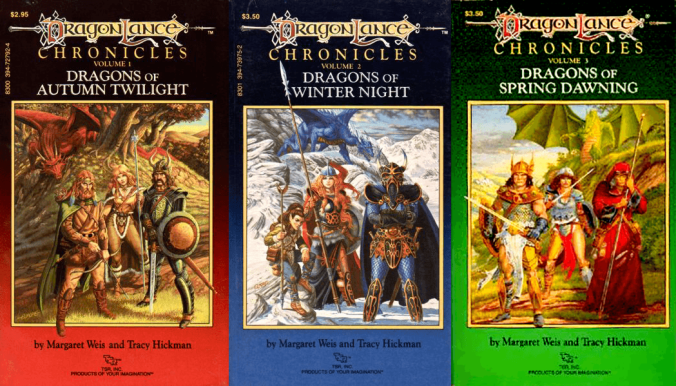
dragonlance-chronicles-books.png

History Behind The Books

The Dragonlance novels were based on a series of Dungeons & Dragons game modules. The books came about because the designers wanted novels to tell the story of the worlds they were creating.  After Tracy Hickman came to TSR it was announced that development was to happen on his series of dragons based role-playing adventures.  Hickman’s storyline was chosen for the Dragonlance books due to the twelve-part storyline.  Margaret Weis came into the picture as she was assigned to edit Hickmans “Project Overlord,” as it was initially called, a novel intended to be coordinated with a trilogy of Dungeon & Dragons modules.  The newly formed team plotted the novel and hired an author who didn’t work out.  By this time, Weis and Hickman were so into the project they felt they had to write it and the rest is history.

Breakdown of the Novels

9bb39109e3a6149a1f1e27e4fadc4bcfThe Dragonlance Chronicles were one of the first novel series I read that introduced my love for the world of fantasy.  The first novel series that I fell in love with of course was JRR Tolkien’s The Hobbit, and The Lord of the Rings.  The Dragonlance Chronicles holds a high place on my list though mainly because I was one of those role-playing geeks of the 80’s. 

Let’s take a look at the first book, Dragons of Autumn Twilight which has a strong character base but the first book does feel over the top at times.  What really stood out to me about the first book were the “Major” characters in the story, and there are a few that were very distinct.  Unfortunately, the story has some downsides and one major part is the characters seem lost, as does the navigation of the overall plot. But, as an introductory novel, it sets events in motion without giving anything away which is impressive to do no matter the genre.  The second and third novels develop completely different, which felt more organic and that the writers were given much more freedom with the plot.

Here’s what I like about the original Dragonlance Chronicles and what brought me back to read them once again:

  1. The novels continue to throw extremely creative scenarios and locations at you. Which keep the interest up while reading, as you gotta know what is coming up next.
  2. The authors did a fantastic job of balancing the character development, action, drama, and overall plot.
  3. The world of Krynn itself as the authors did an amazing job adding a level of mystery to the world which kept you wondering what’s next.
  4. The overall pace of the book is done quite well in story development, especially as you get into books 2 & 3.
  5. Ultimately the book is called Dragonlance…..so what better than the Dragon War and the evil queen that returns.

To me, these books are such a good mix of the Sword & Sorcery and the High Fantasy genres of the ’80s which I fell in love with at a young age so it’s hard not to like them.  How about you all, what are your thoughts on the Dragonlance Chronicles?  Have you read them?  Let me know in the comments below.

Creating the Inner Workings of a Fantasy Novel

BlaugustRebornLogo2018

I’m doing something a little different again for today’s Blaugust post!  Personally I have been writing a ton on my own novel series, and I wanted to share some fun tips I’ve learned along the way about writing in the fantasy genre.

Writing a fantasy novel is great fun – you can literally let your imagination run wild.  It’s a little different when writing a novel set in the real world as unlike books set in reality where you can use real life as examples, you’ll have to invent everything in your new fantasy world.  Do you enjoy writing, are you working on a fantasy novel, or have you had the notion to start one?  I hope the next few minutes while reading this helps you no matter what stage you might be in for writing a novel.

One of the best things you could do to kickstart things is read as many classics as you can find!  No matter the type of book you begin writing this will give you a good idea about what works and what doesn’t.  Remember though that reading other peoples works is something to help with idea spawning and relax your mind.  You must take note not to simply copy the ideas you’ve read from any of the good old classics or other pieces of work you find.  If you find yourself dealing with elves, half-lings and orcs whilst being a reluctant hero on a quest to destroy a powerful item, it’s probably best to scrap it and start again. It is true that all stories are a combination of those the reader has encountered over the years. But, you should always try to find an original angle and it certainly should not be obvious what the source material was. Reading the classics will also allow you to discover how well-crafted characters interact with each other as the story progresses.

Tip 1: Use established myths and legends as the basis for your fantasy world. Think about what your fantasy world might be like.  Do your studying and find out what your world and culture is most like….Is it Celtic, Roman, a medieval world or a blend of multiple cultures with your own twist on it? Once you’ve chosen, go and read about the myths and legends that relate to those cultures. The mythological creatures and characters and their stories will give you a great basis for your new world.

Tip 2: Get to know your imaginary world – you need to be able to describe it in detail if you are going to convince your readers, for the duration of the book at least, that it exists. Be thorough and detail everything you can possibly imagine about the world you are creating.

  • Physical – what does your fantasy world look like? Think about and make a note of:
    • the colour of the sky
    • what other planets can be seen from the surface
    • whether the air is breathable
    • what the plants look like
    • what creatures live there
    • whether there are seas
    • what the landscape looks like
    • futuristic world or something older
  • Residents – decide who lives in your newly formed fantasy world. You should spend time thinking about how they look, what they eat, how they move, whether they need sleep, how they speak to one another etc…
  • Society – what kind of society exists? Do they need money to buy things? Is there a complex system of politics they follow? Do they have a police force, a king or president? Is there a religion?
  • Special powers/magic – Do the residents have any special powers or use magic? If so, what are they and why do they exist? Does everyone have use of them or only certain people?

Tip 3: Make your characters believable. This is one of the most essential parts of the book if you want to hook and keep readers interested in the story. A great way to achieve this is to apply logic to every character in every fantasy world you create. This means creating a set of rules that apply to the world and the character. The rules can be based on either real life or they can be simply invented by you.  Remember if you are creating the rules of the world, don’t let a BOX hold you back from being creative.  Sometimes creating our own ways is just the push we need to make that next step in our creative writing.

Tip 4: Make sure you keep careful notes of all the details you invent for your new fantasy world. This will help you maintain continuity throughout the novel. There are many ways of doing this, some writers like to have a set of cards with the details on, others set up spreadsheets; so play around with different systems to find one that suits you the best.  I personally use a book mapping chart I created in excel that helps me track all major parts of the book I need.  I hope these few steps help you get started, or give an idea of what steps to take next in writing your new fantasy novel!

Remember, have fun!! That is the first and foremost thing I can say when writing… Have Fun and lots of it!

The Kings of Gondor: Part Nine – A Bloodline Lost

Welcome back fellow hobbits and people of Middle Earth! It’s been a very long time since I last wrote about the Kings of Gondor, but after a long break and much time away with family I felt it time to return and continue writing.  So, looking forward to continuing this series and many others just like it.

83600606The Unwise King

Earnur was the son of Earnil II. He like his father was a great warrior and became a great leader of armies before he became King.  His greatest victory was against Angmar in the Battle of Fornost, in which he defeated the Witch-king, whom he intended to slay had his steed not panicked in terror of the Witch-king’s darkness.  Earnur became King in TA 2043, and was challenged by the Witch-king of Angmar.  The King of the Ringwraiths, who then resided in Minas Morgul wanted this King of Gondor dead and gone.  Earnur, being quick to anger and wrath, would have accepted his challenge had the wise Steward Mardil Voronwe not held him back, and so the first challenge went unanswered.  Just seven years later a second challenge came, mocking Earnur, and the steward Mardil was not able to stop the King this time.  Ernur accepted the challenge, and after entering the gates of Minas Morgul with a small escort, Earnur was never heard from again.  The unwise King was thought to be dead, so his crown now rests upon his father’s tomb in the Hallows of Minas Tirith.

Prophecy_GlorfindelThe Battle of Fornost

A year prior to the battle, the armies of Angmar conquered Arthedain, the last realm of Arnor. Angmar’s armies had taken Fornost, the capital of the Dunedain, and Arvedui, the last King of Arnor, had drowned in the Ice-Bay of Forochel. A year later, a fleet of ships under King Earnur arrived in the Grey Havens and set off toward what was left of the once-great northern kingdom. With the armies of Gondor came men from Rhovanion, elves from Lindon, and the remainder of the Dunedain (among them Aranarth, the Prince of Arthedain).

The battle itself did not take place in the city of Fornost, but on the plains to the west of the city, near Lake Evendim. The armies of Angmar hurried west to meet the assault, and seeing this, the cavalry of Gondor rode north into the Hills of Evendim to wait in ambush. As the main part of the army of Gondor met the enemy in battle, the Gondor cavalry set out from the hills to strike the rear of the army of Angmar. This served as the turning point in the battle, and allowed the combined armies of the west to gain the advantage. Realizing that his forces were all but completely destroyed, the Witch-king of Angmar fled eastward. As he fled, an army led by Glorfindel came up out of the south and blocked his escape, destroying what was left of his crumbling army; the Witch-king himself was able to escape during the night and fled southward. Though the battle itself had been lost and Angmar utterly destroyed, Sauron was extremely pleased with the Witch-King’s work, for the destruction of the northern kingdoms of the Dunedain was a victory for the Dark Powers which far exceeded the loss of the Witch-King’s realm.

Glorfindel,_Elrond_and_King_Earnur_unite_against_the_Witch-King_of_AngmarA Broken Bloodline

The Line of Anarion was broken with the disappearance of Earnur, and the rule of Gondor passed to the Stewards beginning with Mardil Voronwe, the Steward who had tried to restrain Earnur from going to Minas Morgul to face the Witch-king. The Stewards were to rule “until the King returns” for it wasn’t sure at first whether Earnur had been killed dueling with the Witch-king or not. In addition, Earnur left without naming an heir, and while many nobles in Gondor could lay some sort of claim to the kingship, those claims were generally held in doubt, and no one wanted to risk another civil war like the one that had devastated and weakened Gondor.

The Stewards of Gondor were firstly the chief high councilors to the Kings of Gondor and then the rulers of Gondor, until the return of the rightful king (Aragorn Elessar).

First created by the powerful King Romendacil I, Steward was the traditional title of a chief counselor to the Kings of Gondor.  The Quenya name for the title is Arandur , “Servant of the King”.  The steward was was usually an elderly man not from the Royal House chosen for his wisdom and integrity, and was never permitted to go to war nor to go abroad.  During the time of the Steward Pelendur, from the famous House of Hurin, the title became hereditary, passing the station of counselor from father to son, much like the Kingship.

The House of Hurin was founded by one Hurin of Emyn Arnen, Steward to King Minardil, the twenty-fifth King of Gondor. They were of high Numenorean blood, but not descendants of Elendil in the ruling line.

After the death of King Earnur, who left no heir to the throne of Gondor, the Steward Mardil Voronwe became the first of the Ruling Stewards. Mardil was the first of the Stewards to administer Gondor, and his descendants did so for 25 generations.

The Stewards watched over the throne until it could be reclaimed by a true King of Gondor, an heir of Elendil. When asked by his son Boromir how long a time must pass before a Steward could become a King, if the King did not return, Denethor II replied, “Few years, maybe, in other places of less royalty … In Gondor ten thousand years would not suffice” (The Two Towers).

The Stewards never sat on the throne of the King; instead, they sat on a simple chair of black stone placed below it.

I hope you all are enjoying this series as it has been an absolute blast to write and put together!  We are nearing the end of the series but still have a lot more writing to do, so stay tuned to the site and think about following so you never miss one of my series.

You all stay awesome and I bid you a fine farewell!

Cheers,

Iogro Merrybelly


Creating Great Fantasy

creating-great-fantasyWhile some have looked down on fantasy fiction as derivative, poorly written or childish, the fact is that our oldest literature is fantasy fiction. From The Epic of Gilgamesh or the Odyssey, or one of my absolute favorites Beowulf! All of these stories that have survived the disappearance of ancient civilizations are stories of gods and magic and quests and monsters. It’s undeniable that fantasy is one of the most popular and favorite of many across all ages.
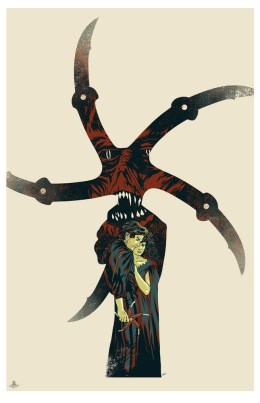
J.R.R. Tolkien is generally considered to be the father of modern English-language fantasy fiction for adults. There were fantasy novels written prior to Tolkien’s The Hobbit and Lord of the Rings, such as Lud In The Mist by Hope Mirrlees and The Worm Ouroboros by E.R. Eddison, but it was the commercial success of Tolkien’s work that kicked the modern genre into high gear.

Like every genre, fantasy is capable of producing fiction that is well-written and thoughtful with original characters, settings and plots. Modern classics such as the Earthsea series by Ursula K. LeGuin or Jack Vance’s Lyonesse series stand as proof that fantasy series can have wide appeal among readers of all ages and reading preferences. One of the biggest hits of today’s generation is, George R. R. Martin’s Song of Ice and Fire series which is wildly popular with critics, readers and viewers of the TV series adaptation, Game of Thrones.

Despite the success of G.R.R. Martin, some still argue that the last thing the fantasy genre needs is more long series of novels. However, this view does not appear to be shared by either readers or writers.

Writing A Series That Contributes Something New:  A Few To-Do & Not To-Do’s

Read A Lot of Fantasy
This advice is sort of a cliché in itself, but something that is quite necessary in my opinion. If you are thinking about writing a fantasy series, then you are probably already well-acquainted with the genre, but you may only read a certain type of novel or a handful of authors.

Becoming familiar with the genre’s clichés and pitfalls means reading a lot of fantasy novels. This includes the good, the bad and the awful, and as you are reading think about the plot and what works, or doesn’t work. Read what is popular and what is critically acclaimed as the broader the scope of your reading, the better you will know what kinds of fantasy worlds and subtopics are still to be told.

In addition to reading contemporary writers, you should also read older fantasy. In part, this is important for understanding the history of the field, but it’s also important because it often provides insight on where clichés come from. When Tolkien penned the Lord of the Rings trilogy there was nothing cliché about elves and long quests and magic rings and using Northern European myth as the basis for a long fantasy series, but that is no longer the case.

Knowing the history of the fantasy genre and the realm you’ve decided to dive into will help you understand how to write a fantasy series. It also shows that elements of the fantasy genre that critics sometimes ridicule are not inherently bad but simply have been done 30 or 40 years ago and have been worn thin through overuse.

Forget The Big Guys

Tolkien, C.S Lewis, L. Frank Baum, and a countless number of others are the best the genre has ever known.  They have in sorts cast a very heavy shadow across the field. Too many would-be and actual novelists who hope to follow these giants and their footsteps have shoddily constructed languages and maps and worlds and created thinly veiled versions of his characters.  I myself have even been inspired by these authors, but it’s important you move away from big authors like this as to not get sucked into any overused work.  Burly dwarves and angelic elves can be interesting, but if you use stock characters such as these, try incorporating them in an innovative way in your fantasy books.

Fantasy Traditions

Some writers feel that using the traditions of a culture that is not your own is a kind of appropriation, but we could say that about any genre of book if we take an honest look at the author’s inspiration.  Drawing inspiration from the history, art, literature, and folk lore is just good practice for great idea churning! This does require a level of sensitivity and a lack of condescension, if you want to steer clear of possible backlash, but it’s quite possible to do without offending a culture or misusing these ideas.

Looking at a lot of culture and legends that have been used over the fantasy genre, you can look no further then Europe.  Some people say it’s been overused in the modern fantasy but George R.R. Martin turned this so called overused idea into a fantasy classic with his Fire and Ice series.  He chose a period of history that is largely overlooked and he approaches his novels as if they were historical fiction.  Martin brings something fresh and rejuvenated even though his inspiration seems to come from a part of the world that has been reworked to death by fantasy novelists before him.

Stop When It’s Time to Stop 

One of the biggest complaints about fantasy novels / series is they don’t end.  At times the story is lacking depth and stretches to broadly across many books.  Don’t overstay the book series welcome among the readers as they can quickly be burnt if you don’t know when to stop.  Leaving the audience gritting for more is the best way to end a book as it’s way better then complaints rolling in about you needing to throw the pen away ages ago. Keep track of when you write, how long the series are running and what kind of feedback you get and it will make things much easier on when to stop writing vs. continuing something that’s not working.

How Do I Get Readers Hooked Across Story Arcs?

If you are looking at having multiple books then planning is key!!!

I can’t stress enough on how important it is to have the overall story arc planned out and tracked.  Each book should be plotted out and each individual story arc should be tracked as well.   You simply cannot write a three, five or even eight book series that sustains the necessary narrative drive and focus to keep readers interested without some idea of where the story is going. Planning also helps you avoid introducing subplots and characters in earlier books that go nowhere.  Errors like this can be frustrating enough to make your reader put your books down halfway through the series and never return.

Your books must be self-contained to some degree as well. You must balance the progress of the overall arc along with the smaller arcs.  Readers will easily become frustrated and may lay the book down if you move away from the main arc for an extended period. This becomes a fine balance of holding the readers attention and being able to switch between multiple stories through a books overall story arc.  Different readers will naturally have some characters and story lines that interest them more than others, but you need to keep all of your story lines engaging enough to keep the reader turning pages. One way to do this is by writing emotionally-engaging characters. Another is to ensure that the main arc of the story is furthered through subplots.

Finally, one of the most important points to keep in mind is that writing a fantasy series is in many ways no different from writing a novel. You ultimately have to approach your series as though it is one very long novel.  This can be very tough and challenging because you need a fully realized world that engages characters to inhabit, a plot that is going to draw readers in, and the mix of conflict / tension that will keep the readers turning pages for more.

Fantasy remains one of the most popular series among readers of all ages.  Avoiding the pitfalls of clichés and planing a strong story arc that drives the story to completion and produces something readers will grab a hold of.  Keeping the main story arc central is key throughout the novel series but avoiding the addition of too many subplots is that fine balance between readers being hooked, and dropping the book like a hot potato.  Stay focused and have fun while you write which will help you move the story along.

Sword & Sorcery Series: Remembering Krull

krullapOne of the greatest sword and sorcery fantasy movies of all time!  This is one of my top three films from this genre and it was very hard to remain objective about a film I enjoyed so much as a kid.  Krull pulled from some great influences and that is more apparent than ever in 2016 as I’ve just recently watched it again. It “borrows” freely from Tolkien, Greek and Arthurian mythology and Star Wars.  Even with all the borrowing of themes for this 80’s sci-fi / fantasy cult classic it was hard for me to not have some genuine affection towards this film. Seeing this film in the 80’s as a young boy just sparked that already intense drive I had for my wild imagination for the fantasy realm. Though this film is starting to show it’s age in places, Krull overall is a very well-made film, and far from one of those cheaply made knock-offs that showed up in the wake of the fantasy, sci-fi, and sword & sorcery era of film making.
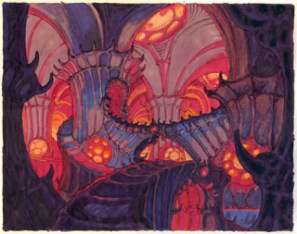
What’s notable about Krull, is the genre mixing as it draws from the fantasy / sci-fi films mentioned before with all the swords, castles, epic battles, and beasts but it, for the time period had some great laser and lighting effects.  From start to finish this film brings us an epic adventure of good vs. evil and it was never a dull moment to watch.  Krull opens with what seems to be a gigantic ship travelling through the dark of space, but this ship is in fact, the Black Fortress.

krull-black-fortressThis ship is, in fact, the Black Fortress, a massive stronghold for the Beast and his army of Slayers.  This ship touches down on the planet Krull which opens our story for a great battle of good vs. evil like most of the great fantasy films.  We have a hero of the story, a prince named Colwyn who is about to wed a fellow kingdoms daughter, the princess Lyssa.  During the wedding the Beast sends his Slayers to attack the castle where the wedding ceremony was being held to take the princess and bring her back to the Beast in the Black Fortress.
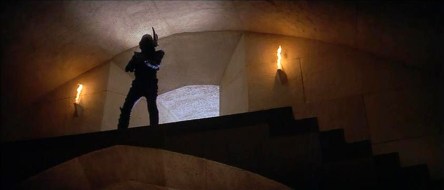
Soon after the battle a very old wiseman named Ynry from the mountains traveled down to find prince Colwyn, and together they head off to rescue the princess from the clutches of the evil beast.  Sounds like an epic story of fantasy proportions right?  Along the way Colwyn and Ynry amass a band of allies to help with their quest.  This band of allies is a rag tag group made up of a wizard named Ergo the Magnificent who can’t get a spell right to save his life.  Then you have Bernard Bresslaw who played the melancholy Cyclops and then you have a band of outlaws in which we get to see a very young Liam Neeson make his third film appearance.

Krull is a film that shines and comes to life in individual scenes rather than as a whole, nevertheless this film is full of quite captivating designs and special effects. Colwyn’s Glaive weapon, which he retrieves from a pool of lava, is one of the most iconic sword and sorcery weapons of all time.

krull4The Slayers, are one of the best parts of the film, though they are silent other than a horrific scream they emit when killed they make a mark onscreen for a foe. Their laser spears and ominous silhouette of armour, and the worm-like creature that erupts from them when they’re defeated, make them far less derivative than they may otherwise have been.  In fact, one of my enduring memories of Krull from when I was a child was just how scary it could be. There’s a great, tense scene set inside the lair of a giant spider, and a creepy sequence in a swamp, where a the Seer is taken over by a shape-shifting clone with black eyes.

The Black Fortress was full of great set designs like moving floors, and that mainstay of action fantasy, walls that sprout spikes.  It’s in Krull’s concluding act, as Colwyn and his loyal band fight their way through the Fortress, that the film becomes most exciting.  With the 70’s and 80’s being the grand era of sci-fi and fantasy themes, Krull is no stranger to this theme as it had some fantastic photography, and set locations to bring all this fantasy to a very fond place in our hearts.

The Wolf Among Us Episode 3 – A Crooked Mile Review

2499489-wolf+among+us+-+wolf+among+us+-+2014-04-04+12-40-21+(p)63.jpgA Crooked Mile slaps us right in the middle of some pretty amazing and memorable moments to date in this game.  Around every corner Telltale succeeds at introducing new characters in almost every scene which keeps the interest up, and brings some more light and story to characters we’ve only just seen a small glimpse of over the past two episodes. This episode drops some tough choices on you and some crazy consequences to boot, so overall this episode really gives you the feeling of being these characters and owning the story itself!

My biggest beef with episode two was the lack of story / plot progression you had as it just didn’t move forward enough, but A Crooked Mile is just the opposite as this 90 minute episode makes every second count.  This episode also introduces a new character which was a lot of fun, a witch of Fabletown who lives by the old world standards that really brought a sense of magic to the story which tingles the intrigue of where the story is going.

thewolfamongusepisode3acrookedmile_review_1.jpgWithout going into many spoilers here, this episode brings us one of the biggest scenes to date.  Watching Bigby finally bare his superpowers against an army of angry dwarfs is just a taste it seems of what you get to look forward to in future episodes.  This incredible moment in the game lasted about as long as a blink of an eye, so the wait for episode 4 is going to be a nail biter for sure.

One major plot line of the story that is really starting to take shape and become the star of the show is Bigby’s sadness and frustration.  With that being said, time really seems to be limited in A Crooked Mile, and always moving forward, so you can’t see everything or meet everyone.  One thing that really made Bigby’s emotions standout is due to a big change from episode 1 and 2 as you had very limited time to react to conversations which isn’t the case in this episode.  Oddly I like the fact they gave us more time in the conversations and story this time cause there are some brutal decisions to be made throughout.

Wolf-Among-Us-Episode-3-04As great as this episode was to play through I had a little beef in a couple of the scenes as they decided to cut before I had a chance to fully explore the surroundings.  Both of these scenes were packed full of things to explore and items to discover, so one moment I’m happily exploring, the next I was sliding right over into the start of the next scene which was disappointing.

This episode pushes the boundaries of brutal encounters and wacky decisions that really push the story forward and brought almost all the characters to the playing board.  This is one of Telltales best episodes to date on any of the games they’ve written, so I can’t wait to see where they take Bigby in the next episode!

Writing Fantasy – Do’s & Dont’s

writing-a-bookFantasy is a fun genre of fiction that uses magic or other supernatural elements as a main plot element, theme, or setting. Many works within the genre take place in imaginary worlds where magic and magical creatures are common. Fantasy is generally set apart and crosses paths with science fiction and horror as they all three have sub-genres in the fiction world.

Fantasy is one of those genre’s made up of many creative things and frequently includes elements from the Middle Ages.  Most fantasy is adventure based, with a conflict between good and evil which is usually the common theme of plot.  When you here fantasy you probably think of things like wizards, elves, magic, etc…Fantasy is often based on myths, legends, and folklore, that could stem across multiple cultures.

If you’ve thrown around the idea of writing fantasy then here are a few things to do.  

  • Read a lot of fiction in the fantasy, science fiction, and horror genre’s. Soak up as much as you can about the way the books flow, plot layouts, structure, etc.
  • Do the real world research on any folklore, culture, and traditions those era’s had you want to pull into the book.
  • Ask questions, find writing mentors, learn new ways to bring an idea to the page.
  • If you are setting your story in medieval times or using elements from those times, research medieval life in the real world.
  • Plan your fantasy worlds before you start, figure out all the details you want the readers to know about.  This will help you during the writing process as it will become more natural and eliminate any doubt you might have on the topics.
  • Set limits for your world and hero / heroine of the world, as this creates obstacles within the story for readers to be evolved with and helps get to know the world.
  • Bring your fantasy to life with lots of detail.  Give the readers a chance to meet everyone in the book, and make them feel at home like they are actually in the world you are describing.

Here are a few things not to do when writing fantasy. 

  • Don’t disclose everything you know about the fantasy world you’ve made.  The planning you do up front is for you to make sure the story is told correctly, but that doesn’t mean that every detail you write needs to make it to the book.  All the prep you do up front will give the readers something real to look forward to and enjoy. Give the readers some play room with things that you know about the world but they don’t yet.  Let them come up with there own ideas and conclusions about a specific personality of a person, or maybe a place in the book.
  • Don’t break the rules of the world that you have planned.  This in a way will give the readers a false sense of reading and make them feel cheated like what your telling isn’t worth the time for them to read it anymore.
  • Don’t copy people, places, things from other fantasy authors.  Use your imagination to create this magical universe you want the readers to be a part of.
  • Don’t lose track of the story and where you are at with it. Map the book out, the ideas, and all the fun details you get throughout the days while prepping to write.  It’s fun to create worlds with magical tales to tell but don’t get so caught up with the tiny details that you forget to create the main plot of the story.
  • Don’t forget to save MULTIPLE copies of this story and the details, along with any planning materials you have along the way.  You don’t want to lose that work and not have a backup to revert to.